Bucking the trend: Rattan India's solar power plans in sunset mode

The former IndiaBulls power firm to focus on thermal power
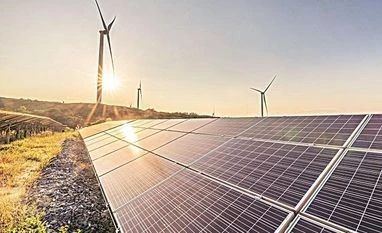
Solar energy
For much of the past few years, the group’s power business has been struggling with its two thermal plants in financial stress
Jyoti Mukul New Delhi
5 min read Last Updated : Sep 17 2020 | 6:04 AM IST
If coal-based electricity has a bleak future because renewables are rapidly replacing it and companies are pulling away from it, then RattanIndia’s exit from solar power generation earlier this month is counter-intuitive. A decade ago, its promoter Rajiv Rattan had co-founded IndiaBulls, an online stock broking company that branched out into real estate and power. In 2014, however, Rattan moved out to float his own group with the power and infrastructure businesses that now has a non-banking finance company (NBFC) licence.
 
For much of the past few years, the group’s power business has been struggling with its two thermal plants in financial stress.

Now it has sold its solar plants to Global Infrastructure Partners (GIP), one of the world’s largest private equity players in infrastructure, for around Rs 1,670 crore. “They probably need more cash so they sold solar business when companies are otherwise moving more towards renewables,” said an analyst who did not wish to be identified. Rajiv Rattan was unavailable for comments and emails sent to spokepersons remained unanswered.
 
What GIP got through the deal was a combined capacity of 306 Mw in ground-mounted and rooftop installations in 10 cities in Karnataka, Maharashtra, Rajasthan and Uttar Pradesh. GIP has $51 billion assets under management and 26,000 Mw of renewable energy generation projects across the world. The Rs 1,670 crore GIP pays to RattanIndia Solar means a valuation of Rs 6 crore per MW, almost on a par with the cost for putting up coal-based capacity. This is not only another lifeline for the debt-laden group, but underscores the investment prospects of renewable energy at large. At a megawatt level, thermal power traditionally gives more value for money since it is capable of running at higher plant load factors (PLF) compared to renewable projects that are intermittent in nature.


Nonetheless, stressed thermal power assets have found few takers and the insolvency resolution processes for them have been hit. “Power demand is low so no one wants to buy capacity right now. Besides, existing players are moving to renewable,” said the analyst quoted above. The group’s 1,350 Mw Amravati thermal power project, for instance, was available for supply at 90.44 per cent of capacity in 2019-20 but the actual PLF was 26.95 per cent owing to lower buying by Maharashtra. This was lower than 2018-19 when it was able to generate at 34.45 per cent PLF (though the availability was lower at 73.57 per cent because one of its units was shut down for technical reasons).
 
Last December, the Amravati project went through a debt resolution process under the February 2018 Reserve Bank of India’s (RBI) guidelines. Before the settlement, the company’s debt was around Rs 8,074.55 crore. Its 12 lenders led by Power Finance Corporation (PFC) and State Bank of India assigned the principal debt of around Rs 6,574 crore to a set of new foreign investors and lenders, including Goldman Sachs and Varde Partners through the Aditya Birla ARC Limited.
 
A portion of the outstanding debt Rs 3,315 crore was settled through cash payment to lenders. Another Rs 4,050 crore was settled primarily through fund infusions from global investors, and the remainder of around Rs 710 crore was settled by issuing equity and preference shares to earlier lenders.
 
The group is now grappling with its 1,350 Mw Sinnar Thermal Power in Maharashtra’s Nashik district. The plant was commissioned in June 2017 but operated at sub-optimal capacity due to low demand. Even now, it has a letter of intent from the Maharashtra State Electricity Distribution Company (MSEDCL) for power purchase of just 507 Mw. The company says it is looking for lender support to restart operations.
 
According to Rattan’s recent letter to shareholders before the company’s annual general meeting on September 20, the group is short of working capital for the Sinnar power plant, so the money from the sale of solar power assets could come in handy. The company did not respond to a query on how it planned to use the proceeds from selling RattanIndia Solar to GIP.
 
Rattan India’s solar foray came two years after it was spun off from the IndiaBulls group in 2016 and it commissioned some of the renewable capacity by FY18. That it had large land parcels helped it put up some of the projects. PPAs of 25-year duration, 95 per cent of them being with Union government entities NTPC and Solar Energy Corporation of India, helped since it reduced the risk of selling power to cash-strapped state distribution firms. It had also managed to rope in GE Energy Financial Services as one of the investors in the solar business.
 
Though Rattan India Power made a loss of Rs 45 crore in the quarter ending June 2020 because of the Covid-19-induced lockdown, it did manage to post its first profit in FY20 (Rs 16.51 crore) after recording losses for previous five years. The stress on its thermal portfolio could be easing but there is no comfort of any near-term recovery in power demand. Meanwhile, the sale of solar assets has pulled the group away from a sunrise industry.

One subscription. Two world-class reads.

Already subscribed? Log in

Subscribe to read the full story →
*Subscribe to Business Standard digital and get complimentary access to The New York Times

Smart Quarterly

₹900

3 Months

₹300/Month

SAVE 25%

Smart Essential

₹2,700

1 Year

₹225/Month

SAVE 46%
*Complimentary New York Times access for the 2nd year will be given after 12 months

Super Saver

₹3,900

2 Years

₹162/Month

Subscribe

Renews automatically, cancel anytime

Here’s what’s included in our digital subscription plans

Exclusive premium stories online

  • Over 30 premium stories daily, handpicked by our editors

Complimentary Access to The New York Times

  • News, Games, Cooking, Audio, Wirecutter & The Athletic

Business Standard Epaper

  • Digital replica of our daily newspaper — with options to read, save, and share

Curated Newsletters

  • Insights on markets, finance, politics, tech, and more delivered to your inbox

Market Analysis & Investment Insights

  • In-depth market analysis & insights with access to The Smart Investor

Archives

  • Repository of articles and publications dating back to 1997

Ad-free Reading

  • Uninterrupted reading experience with no advertisements

Seamless Access Across All Devices

  • Access Business Standard across devices — mobile, tablet, or PC, via web or app

Topics :Rattan Indiasolar energysolar power Thermal Power

Next Story



