Cipla ring-fences promoter holding

The promoter shareholding is valued at over Rs 16,600 crore
graph
graph
Aneesh Phadnis Mumbai
Last Updated : Sep 08 2017 | 1:46 AM IST
Cipla’s promoter Yusuf K Hamied built his business challenging multinationals with low-priced, life-saving drugs, and now with promoters signing a pact to restrain sale of family shareholding to outsiders, he has ring-fenced the company to ward off unwanted suitors. 

Cipla notified the stock exchanges on Wednesday about the shareholders’ agreement executed by promoters, under which a promoter wishing to transfer shares would first offer them to other promoters. 

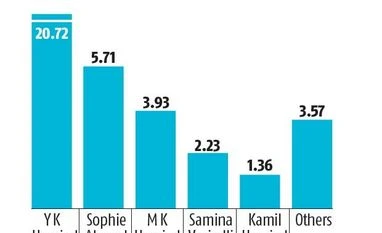
The 81-year-old pharmaceutical company came under the global spotlight in the early 2000s by making cheap anti-HIV drugs. Non-Executive Chairman Y K Hamied, with other family members and group entities, owns over 37 per cent shares in the company. The promoter shareholding is valued at over Rs 16,600 crore, according to Thursday’s closing stock price. Y K Hamied is the largest promoter shareholder and holds a 20.72 per cent stake, while other family members hold the remaining shares.

Experts say promoter groups of other companies may have such covenants in their family agreements, but they are not available in the public domain. While the promoters of groups such as GMR, Dabur and Murugappa have a family constitution in place, whether the right of first refusal is included is not known. 

“In family-run businesses, the family constitution normally provides an exit mechanism, which sometimes includes pre-emptive rights on disposal of shareholding. These rights are required to maintain integrity of control and ownership on family business,” said Praveen Bhambani, partner and leader-private and entrepreneurial services, PwC India. 

Hamied had made a beginning towards such a move in 2015, when it sought the market regulator Securities and Exchange Board of India’s (Sebi’s) approval for Cipla’s promoters exercising their voting rights as a single unit, which was accepted by Sebi. The promoters had agreed that they would act jointly as a single unit under the supervision of Y K Hamied for exercising voting rights.


“In the light of recent issues at companies like Tata Sons, Infosys and Raymond, it may have been felt by the promoters of Cipla that if there is any dispute among family members of the promoters it is important to retain control of the company within the family rather than dilute the shareholding of promoters,” said Shriram Subramanian, founder and managing director, InGovern Research Services, a corporate governance advisory firm.

Cipla has often faced questions of succession and has been seen as a target for takeover by rival companies. The move is seen as an attempt to retain family control over the company and prevent any sort of hostile acquisition of shares. Samina Vaziralli, daughter of non-executive vice-chairman M K Hamied, was inducted on the board in 2015. Vaziralli is the executive vice-chairperson and looks after strategy, mergers and acquisitions, and new ventures at Cipla. 

Subramanian said this was a mechanism to ensure that inter-generational transfer of wealth happened in a structured manner without any family member feeling that their rightful shareholding was not being valued adequately by other family members. 

“Such an arrangement allows any family member to encash wealth and pursue their interests without the shareholding going to any outsider,” said Subramanian. As Sebi guidelines allow for inter-se transfer of shares amongst promoter shareholders, these do not trigger any changes of control or takeover guidelines. Pre-emptive rights on disposal of shares are also a fairly common feature of all joint venture agreements entered into by unrelated parties, said Bhambani.

In an email response, Cipla spokesperson said, “This is an arrangement between the promote /promoter group and their relatives. The disclosure is self-explanatory and the company has nothing further to add in this matter.”


One subscription. Two world-class reads.

Already subscribed? Log in

Subscribe to read the full story →
*Subscribe to Business Standard digital and get complimentary access to The New York Times

Smart Quarterly

₹900

3 Months

₹300/Month

SAVE 25%

Smart Essential

₹2,700

1 Year

₹225/Month

SAVE 46%
*Complimentary New York Times access for the 2nd year will be given after 12 months

Super Saver

₹3,900

2 Years

₹162/Month

Subscribe

Renews automatically, cancel anytime

Here’s what’s included in our digital subscription plans

Exclusive premium stories online

  • Over 30 premium stories daily, handpicked by our editors

Complimentary Access to The New York Times

  • News, Games, Cooking, Audio, Wirecutter & The Athletic

Business Standard Epaper

  • Digital replica of our daily newspaper — with options to read, save, and share

Curated Newsletters

  • Insights on markets, finance, politics, tech, and more delivered to your inbox

Market Analysis & Investment Insights

  • In-depth market analysis & insights with access to The Smart Investor

Archives

  • Repository of articles and publications dating back to 1997

Ad-free Reading

  • Uninterrupted reading experience with no advertisements

Seamless Access Across All Devices

  • Access Business Standard across devices — mobile, tablet, or PC, via web or app

Next Story



