Coronavirus outbreak: Consumer durables firms stare at uncertain future

With the coronavirus pandemic now spreading its tentacles across the country, manufacturers are now staring at an uncertain future
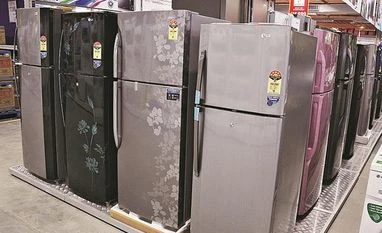
Refrigeretors
Representative imageSector experts said the latest crisis could not have come at a worse time.
Arnab Dutta New Delhi
4 min read Last Updated : Mar 18 2020 | 7:18 AM IST
If 2019 had been the year of hope for makers of consumer electronics and appliances in the country, the current year has so far turned the tide. From rising taxation to disruption in supply and demand, several factors have affected their fortunes.

With the coronavirus pandemic now spreading its tentacles across the country, manufacturers are now staring at an uncertain future.

As people stay away from public places, demand for large appliances like air conditioners (ACs) and refrigerators are set to take a hit in the next few weeks. Traditionally, sale of ACs and refrigerators begin by February, with the onset of summer in Kerala, followed by Tamil Nadu. But a lockdown in the badly-hit southern state has severely impacted sales this year.

While over half of AC sales take place between mid-February to July, advent of late summer has further muted offtake.

Further, with all major metros reeling from fear of an outbreak sales is yet to pick up in top markets like Delhi, Mumbai and Kolkata.

Kanwaljeet Jawa, managing director (MD) of Daikin India, said, while the firm is somewhat immune to supply disruption from China, as it has its manufacturing base in Indonesia. The impact of COVID-19 there could be felt in the near term. 

“The crisis will impact the overall business environment in the coming months,” he said. B Thiagarajan, MD at Blue Star, said it is still uncertain how much the impact will be on the AC market this year.

 “However, if China had failed to contain the outbreak, then we would have run out of stock by now,” he said.

“While we have begun to receive consignment from China, the lower footfall in marketplaces is surely a concern. If the trend continues beyond mid-April, then yearly sales will be impacted,” said Krishan Sachdev, MD, Carrier Midea.

According to Avneet Singh Marwah, chief executive of Superplastronics Pvt Ltd (SPPL) – the brand licensee for Kodak and Thomson TVs, the ongoing crisis is leading to massive loss of revenue. 

“Not only have components become expensive by 25 to 50 per cent – leading us towards a price hike – but postponement of the Indian Premier League and poor consumer sentiment will badly hit the sector,” he said.

Sector experts said the latest crisis could not have come at a worse time. After struggling to grow volume uptake for two consecutive years – in 2017 and 2018 – due to higher taxation in the form of goods and services tax (GST) and rising raw material prices, last year key categories like AC, refrigerator, TV and washing machine grew by double digits.

However, while in 2020 a round of hikes in customs duty on components like compressors, motors and printed circuit boards aggravated the situation, coronavirus crisis is now leaving manufacturers with no option but to hike prices despite fall in sales.

Marwah, for example said, prices of TV sets larger than 32 inches are set to rise by 15 per cent by end-March. Jawa from Daikin said, the firm has already affected price hikes in the tune of 5 per cent.

Moreover, hike in GST rate on finished mobile handsets – from 12 per cent to 18 per cent – is set to impact margins of smartphone makers. 

Dinesh Sharma, mobile business head, Asus India, said, “Additional cost burden due to higher taxation, coupled with rupee depreciation and higher input costs due to the impact of COVID-19, will lead to a significant escalation in prices and affect demand negatively.”

Indian Cellular and Electronics Association predicted that the GST rate hike will not only lead to economic slowdown in the mobile handsets industry, but will also job losses. These will adversely impact the retail sector and consumer confidence.

One subscription. Two world-class reads.

Already subscribed? Log in

Subscribe to read the full story →
*Subscribe to Business Standard digital and get complimentary access to The New York Times

Smart Quarterly

₹900

3 Months

₹300/Month

SAVE 25%

Smart Essential

₹2,700

1 Year

₹225/Month

SAVE 46%
*Complimentary New York Times access for the 2nd year will be given after 12 months

Super Saver

₹3,900

2 Years

₹162/Month

Subscribe

Renews automatically, cancel anytime

Here’s what’s included in our digital subscription plans

Exclusive premium stories online

  • Over 30 premium stories daily, handpicked by our editors

Complimentary Access to The New York Times

  • News, Games, Cooking, Audio, Wirecutter & The Athletic

Business Standard Epaper

  • Digital replica of our daily newspaper — with options to read, save, and share

Curated Newsletters

  • Insights on markets, finance, politics, tech, and more delivered to your inbox

Market Analysis & Investment Insights

  • In-depth market analysis & insights with access to The Smart Investor

Archives

  • Repository of articles and publications dating back to 1997

Ad-free Reading

  • Uninterrupted reading experience with no advertisements

Seamless Access Across All Devices

  • Access Business Standard across devices — mobile, tablet, or PC, via web or app

Topics :CoronavirusConsumer Durablesconsumer durable stocksair conditioners

Next Story



