The furious speed at which Covid-19 has spread from the most populous of all continents, Asia, to Europe and then to the US killing thousands of people is sending the global economy reeling. As country after country, including India, is enforcing comprehensive lockdown of life, the economic cost of which remains anybody’s guess, all stakeholders of shipping and ports across the globe are scurrying for cover. The possibility of a repeat of lockdowns in India and elsewhere cannot be dismissed at this stage. Thanks to Covid-19, maritime operators are likely to contend with a crisis bigger than they faced in the wake of the economic meltdown of 2008-09.
London-based analytics group, IHS Markit, said in an early January report — well before coronavirus started spreading its fangs across the globe and lockdowns in major trading nations — that after global trade grew by a disappointingly low 0.6 per cent in 2018 and 0.3 per cent in 2019, the “world merchandise trade volume is forecast to grow 2.7 per cent in 2020.” This happening, global merchandise trade volume this year would reach 14.175 billion tonnes (bt) from 13.804 bt in 2019. But the IHS Markit forecast was based on world real GDP growth of 2.5 per cent in the current year, so trade growth prediction will too fall on its face. Shipping is, therefore, destined to bear the brunt as around 90 per cent of world trade is carried by sea.
Headwinds buffeted global dry bulk trade through most of last year. Trade tensions between the US and China left in their trail collateral damage on many other trading nations. Major mining disasters in Brazil and then weather-related disruptions in prominent Australian mining regions upset iron ore and coal shipment. A toxic combination of geopolitical tensions, trade restrictions and low GDP rise restricted global trade growth to around 1 per cent in 2019. As a result, points out New York-based maritime consulting, Seabury, global container cargo volume last year amounted to around 152 million twenty-foot equivalent unit (TEU), a piffling growth of 0.8 per cent on 2018.
In a tone similar to Maersk, Germany headquartered Hapag-Lloyd says: “The year 2020 will be very unusual, after we have seen that conditions in many markets have changed very rapidly in recent weeks as a result of the coronavirus.” China, on which the rest of the world has become heavily dependent on supply of components and semi-finished and finished products, claims to have controlled Covid-19. But the global shipping crisis was progressively spawned by Chinese ports becoming non-operational January onwards as logistics support, including movement of goods-carrying trucks and wagons, came to a standstill due to nationwide lockdown. China is an important trading partner of India — our 2019 imports from China were $74.72 billion and exports to that country $17.95 billion — and major disruptions in sailings between the two countries upset production schedules of many companies here.
Hapag-Lloyd says China returning to normal is “positive news” for the shipping industry. But this is “considerably overshadowed” by all the major economies of the West standing in the throes of “collapse.” Such developments can only have serious consequences for the shipping industry. Indian port operators are experiencing a drop in cargo volumes since February start and no one is certain about turnaround time. Container shipping lines are idling vessels at a record pace, resulting in growing numbers of boxes being removed from trade network, as they go on cutting sailings on all major trade lanes.
Only a few very large shipping lines with plenty of cash such as Cosco of China, Maersk and Hapag-Lloyd will be able to weather the current storm, albeit with profits taking a hit. But how will smaller companies as they are found in India forced to cancel sailings generate cash to pay for chartered ships, ship maintenance and staff salaries? In the current situation, New Delhi is left with no option but to shelve the disinvestment of Shipping Corporation of India whose performance is uninspiring for a long time.

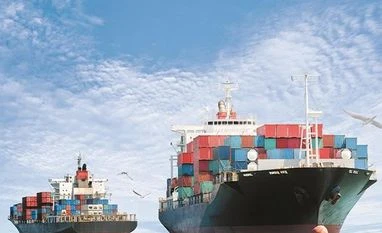 "Coronavirus pandemic adds a major blow to struggling shipping industry")












