Despite Nano pullout, Tata still the largest employer in Bengal
The group is largest employer in eastern state; most of additions came in after Nano project pullout
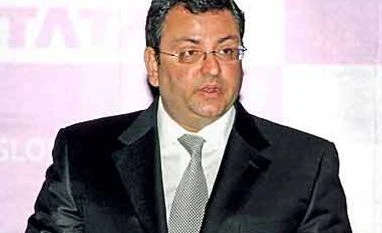
Ishita Ayan Dutt Kolkata A few weeks ago, Tata Group chairman Cyrus Mistry had said if there was an opportunity in West Bengal, absolutely nothing would stop it. As it turns out, it wasn’t an empty assurance. The Tata group is the largest employer in West Bengal in the private sector, and most of additions came in after the pullout of Tata Motors’ Nano project from the state.
The group employs around 35,000 people across its various companies, with TCS accounting for the major chunk of the figure, in the state. Tata Metaliks and Tata Hitachi Construction Machinery Company Private Limited that have manufacturing units in Bengal have 1,000 and 500 people, respectively.
Around 1,000 people would be working out of the Tata Centre building that house employees of Tata Steel and its associate businesses. Indian Hotels has two properties, Taj Bengal and the Gateway more recently, but employee figures were not available.
What makes Mistry seem more credible is that most of the expansion happened after 2008, when the group decided to relocate the Nano plant to Sanand in Gujarat after the Trinamool Congress (then in the Opposition), led an indefinite agitation against the project.
Reports suggest that in 2006-07, TCS had employed 7,000 people in the eastern states, including West Bengal and Odisha. The number zoomed to 14,000 by 2012. The current headcount is 32,000 and the new campus has a seating capacity of 20,000.
For Tata Metaliks, the employee strength was at 300 in 2008-09, while the number is currently at around 1,000. “That’s just direct employees; it supports an equal number of employees,” said a former Tata Metaliks executive. In fact, Tata Metaliks DI Pipes Limited (formerly Tata Metaliks Kubota Pipes Limited), started its commercial operations in 2009 with an installed capacity of 110,000 tonnes per annum.
Similarly, for Tata Hitachi which inaugurated its facility in 2013, it was said to be a twin project of Nano, as it was announced alongside by Ratan Tata in 2006. Naturally, Tata Hitachi’s headcount has gone up from 78 in 2010 to 494 currently.
The Tata group employment figures are just behind public sector behemoth Coal India at 50,000. In the private sector, among the major groups, the RP-Sanjiv Goenka has around 20,000, Emami 15,000; in the services sector, Cognizant has approximately 14,500, Wipro 7,500; in financial services, the newest bank, Bandhan, has 19,500.
“An industrial group is not driven by emotions. The Tata group invested because it made sense for them. Higher education in Bengal is still quite good and hence companies like TCS are expanding,” said Dipankar Dasgupta, former professor of economics at the Indian Statistical Institute.
The spotlight on the Tata group is in the wake of the history that it shares with the current state dispensation. In 2006, the then Tata group chairman Ratan Tata had announced Nano, the global project in West Bengal with much fanfare; it coincided with the second innings of the then Chief Minister Buddhadeb Bhattacharjee.
At the joint press conference to announce the project, a beaming Bhattacharjee had asked reporters, “How do you like the beginning?” For Bhattacharjee, however, it turned out to be the beginning of the end of his innings as the Chief Minister.
A section of the land losers led by Trinamool Congress chief Mamata Banerjee led an agitation against the project, which ultimately led to its pullout in 2008. It was against this backdrop that Mistry was asked by shareholders at the Tata Global Beverages annual general meeting recently about expansion in Bengal. He didn’t seem to disappoint.
While unveiling the Nano, Ratan Tata had said in a lighter vein “some of us said, let’s call it Buddha (after Buddhadeb Bhattacharjee); others said, let’s call it Mamata or Despite Mamata. Finally, we settled on Nano.” Despite its chequered history in the state, figures suggest that the Tata group continued to invest in Bengal.

 "Despite Nano pullout, Tata still the largest employer in Bengal")


