Bankrupt housing finance company Dewan Housing Finance Corporation (DHFL) used different loan accounting software to hide fraudulent transactions involving fictitious borrowers, said the forensic report prepared by Grant Thornton.
It said the software helped the company hide the transactions from regulators and auditors and show inflated income to the stock exchanges.
The report said the company used FoxPro software to prepare codes for concealing actual disbursements and collection of funds by creating 260,315 fictitious home loan accounts. These codes then had three components, including disbursement distribution, and were used to make the actual disbursements to fictitious entities, which included several home loan accounts of smaller amounts. These fictitious home loans accounts were randomly picked up from DHFL’s own database of closed loan accounts.
Then collection distribution code was used to show funds flow from Bandra Book Entities (Grant Thornton’s name for fictitious companies) to numerous other fictitious accounts. The funds were wrongly shown as payment of principal amount from fictitious home loan borrowers. These were adjusted as principal loan repayments instead of payment of interest component first. Therefore, the “Bandra Book Entities” portfolio was gradually brought down by showing repayments of principal and not the interest amount.
By the month end, in order to falsely show the fictitious home loan accounts were serviced and EMI (equal monthly instalment) was paid by the non-existent borrowers, the process of dues generation was triggered in FoxPro, which calculated the EMI and pre-EMI.
Since all the accounts were fictitious, there was no question of receiving payment from these fraud entities. The code was again used to adjust loan disbursement (not actual flow) from DHFL as per the EMIs on books. The non-receipt of the amount in DHFL’s books was concealed.
Accordingly, the EMIs were settled via disbursement made by DHFL for the month.
“There was a form of ever-greening the loan account without actual disbursement of funds but by just generating accounting entries. In doing so, DHFL generated fictitious interest income entries, thereby artificially inflating its income,” the report said.
The report, which has been now been submitted to the NCLT (National Company Law Tribunal), has stated the Rs 14,000 crore hole in DHFL books includes a Rs 9,320-crore loss in the wholesale portfolio, Rs 1,707- crore loss in SRA (slum redevelopment) book and another Rs 3,000 crore of fund diversion in the retail portfolio. The recoverability of these loans are now under doubt, the report said.
The administrator appointed by the RBI to oversee the housing finance company, told the court that further amount of Rs 3,348 crore is due and outstanding towards notional loss to the company on account of fraudulently charging lower rate of interest to the “Bandra Book Entities.”
The company owes Rs 15,000 crore to fixed deposit holders and another Rs 38,000 crore to banks. The total debt of DHFL is estimated at a whopping Rs 88,000 crore, including to mutual funds and bond holders.

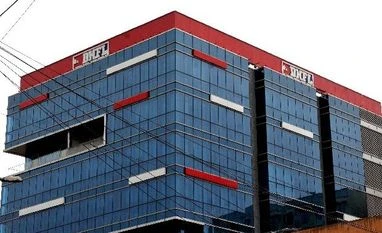 "DHFL used multiple software to hide fraudulent deals: forensic report")












 Connect with us on WhatsApp