Disney is spending more on theme parks than it did on its iconic movies

Now Disney World - and Disney's global vacation empire - is about to get much, much bigger
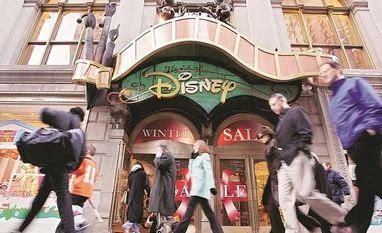
Disney
NYT
Last Updated : Nov 17 2018 | 10:47 PM IST
There is nothing small about Walt Disney World. It is made up of four separate theme parks in Lake Buena Vista, Fla., near Orlando, with combined annual attendance of 56 million. The resort sprawls across 25,000 acres, an area nearly twice the size of Manhattan. A steel beam needed to build an “Avatar” attraction last year was so massive that Disney had to borrow crawler-transporters from NASA.

Now Disney World — and Disney’s global vacation empire — is about to get much, much bigger.

With its television business facing significant challenges in the streaming age, and lots of popular movie franchises to put to use, Disney is spending billions to supercharge its theme park division, which has emerged as a surprisingly strong moneymaker.

For the 2018 fiscal year, Walt Disney Parks and Resorts had an operating profit of $4.5 billion, an increase of more than 100 percent from five years earlier. For comparison, Disney Media Networks, home to ESPN and ABC, had a profit of $6.6 billion, a 3 percent decline.

Each of Disney’s six theme park resorts around the world is undergoing major expansion, along with Disney Cruise Line. Michael Nathanson, a longtime media analyst, estimates that Disney will spend $24 billion on new attractions, hotels and ships over the next five years. That’s more than Disney paid for Pixar, Marvel and Lucasfilm combined.

“It can’t just be special — it has to be spectacular,” Bob Chapek, Disney’s theme park chairman, said during a hard-hat tour of a 14-acre construction site at Disney World where “Star Wars”-themed rides, shops and restaurants were taking shape. Overhead, crews were sculpting spires designed to look like the petrified remnants of once-towering trees on a distant planet.

Mr. Chapek called the overall growth plan “enhancement on steroids.” Here is a look at what Disney is doing and why — along with the risks involved in such an aggressive undertaking:

Disney faces an enviable challenge: Even with steady price increases for peak periods — single-day peak tickets at Disneyland in California now run $135 — visitor interest often exceeds capacity at some properties. “You can only let so many people in a park before you start to impede on satisfaction level,” Mr. Chapek said.

So Disney’s expansion plan is more ambitious than building a “Black Panther” roller coaster here or introducing an “Incredibles” character there. The goal is transformation — adding significant capacity to Disney’s most popular parks (Disneyland, Tokyo DisneySea) and giving others major upgrades (Epcot, Disney Studios Park at Disneyland Paris) to help attract visitors more evenly throughout the empire.
An abundance of popular Disney film franchises makes this kind of mega-expansion possible, Mr. Chapek noted. “Frozen” and Marvel rides are coming to multiple resorts.

‘Star Wars’ is in a galaxy all its own

In terms of attracting crowds and creating excitement, nothing quite compares to the “Star Wars” franchise.

In 2019, Disney World and Disneyland will open matching 14-acre “lands” called Star Wars: Galaxy’s Edge. On one lavish attraction, guests will board an Imperial Star Destroyer, where roughly 50 animatronic stormtroopers await in formation. On another, guests will be able to pilot an interactive Millennium Falcon.

“It’s a personalized intergalactic ride — live your own ‘Star Wars’ story,” said Scott Trowbridge, the Disney creative executive overseeing the Galaxy’s Edge projects. “If you crash into a wall, that’s what you will see out the cockpit window.”

The Millennium Falcon ride will use real-time video rendering technology invented by Industrial Light & Magic that responds to the way guests use 200 cockpit controls.

Increased investment means increased risk

The theme park business will always be sensitive to swings in the economy, said Jessica Reif, an analyst at Bank of America Merrill Lynch. Disney has greatly increased security in recent years, deploying undercover guards and installing metal detectors, but these teeming resorts could become relative ghost towns if a violent incident took place.

Even so, Ms. Reif said she was pleased that Disney was spending so heavily on its parks. “It’s the highest return on investment that Disney has,” she said.

Disney Cruise Line will also nearly double in size by 2023. Disney has ordered three new ships costing an analyst-estimated $1.25 billion apiece. It is buying 746 acres on a Bahamian island to build a second Caribbean port. (Disney already has one private island port.)

© 2018 The New York Times News Service

One subscription. Two world-class reads.

Already subscribed? Log in

Subscribe to read the full story →
*Subscribe to Business Standard digital and get complimentary access to The New York Times

Smart Quarterly

₹900

3 Months

₹300/Month

SAVE 25%

Smart Essential

₹2,700

1 Year

₹225/Month

SAVE 46%
*Complimentary New York Times access for the 2nd year will be given after 12 months

Super Saver

₹3,900

2 Years

₹162/Month

Subscribe

Renews automatically, cancel anytime

Here’s what’s included in our digital subscription plans

Exclusive premium stories online

  • Over 30 premium stories daily, handpicked by our editors

Complimentary Access to The New York Times

  • News, Games, Cooking, Audio, Wirecutter & The Athletic

Business Standard Epaper

  • Digital replica of our daily newspaper — with options to read, save, and share

Curated Newsletters

  • Insights on markets, finance, politics, tech, and more delivered to your inbox

Market Analysis & Investment Insights

  • In-depth market analysis & insights with access to The Smart Investor

Archives

  • Repository of articles and publications dating back to 1997

Ad-free Reading

  • Uninterrupted reading experience with no advertisements

Seamless Access Across All Devices

  • Access Business Standard across devices — mobile, tablet, or PC, via web or app

Next Story



