DTH companies seek relief from multiple taxes
Currently, the DTH operators pay the central govt 10% (of annual revenue) in the form of licence fee and 12.3% as service tax
BS Reporter Mumbai With the change in government at the Centre, direct-to-home (DTH) operators are hopeful of getting some respite from the multi-layer taxes they have to pay. On behalf of the six private DTH players, Dish TV has appealed to finance minister Arun Jaitley and information and broadcasting (I&B) minister Prakash Javadekar for an audience to discuss the issue.
The industry had raised the issue of multi-layer taxation in the past as well. Currently, DTH operators pay 10 per cent (of annual revenue) to the Centre in the form of licence fee and 12.3 per cent as service tax. Additionally, they pay entertainment tax to individual state governments as prescribed by them. “In some states, like Uttar Pradesh, the entertainment tax is as much as 33 per cent. On a pan-India level, each private DTH player pays roughly nine per cent in entertainment tax. Adding this to the licence fee and service tax we pay, the total comes to nearly 32 per cent, which is very high,” says R C Venkateish, chief executive, Dish TV India.
He adds DTH has brought transparency in tax revenues, something which was impossible to ascertain and collect in the analog regime. Dish TV, along with other members of the DTH Association of India, hopes to meet the respective ministers this week.
Venkateish points out the DTH players have collectively invested nearly Rs 2,500 crore towards establishing systems and back-end for the industry and that the multi-layered tax burden is preventing them from making profits.
“Dish TV is taking the lead to appeal to the finance minister to provide relief from the twin burden of entertainment tax and service tax. It appeals to allow abatement in service tax to the extent of entertainment tax paid or 60 per cent of service tax - whichever is lower. The flawed taxation structure of this industry has encumbered the growth of this otherwise promising industry,” he adds.
There are seven DTH service providers in India out of which six are private operators - Dish TV, Airtel DTH, Videocon d2h, Tata Sky, Reliance Digital TV and SunDirect.
The seventh player, DD Direct, is part of state-run Doordarshan.
Last year, the Telecom Regulatory Authority of India (TRAI) has come out with a recommendation that the licence fess charged to DTH operators should be reduced from 10% to 8% of annual revenues. However, no step has been taken towards this. "We will take this up with the I&B minister as well. We are not using a public spectrum and still are expected topay such high license fees," said an executive from another DTH operator on the condition of anonymity.
The industry is hopeful that these considerations will be included by the ministries in the upcoming budget and the tax burden will be lowered.

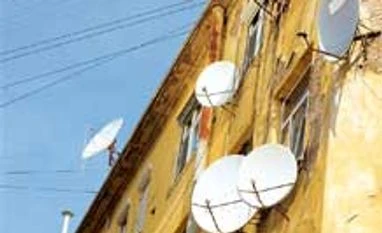 "DTH companies seek relief from multiple taxes")


 Connect with us on WhatsApp