Explained: Why the Nikkei-FT merger is all blue skies and sunshine

Four years after Nikkei paid a record price for FT, the merger is flourishing on every front
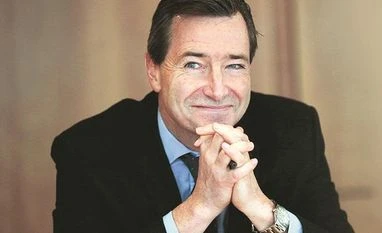
"The FT is 100 per cent owned by Nikkei, which is hundred per cent owned by its employees. Therefore, we are able  to take a long-term view independent of corporate pressure" John Ridding CEO, Financial Times
“The FT is 100 per cent owned by Nikkei, which is hundred per cent owned by its employees. Therefore, we are able to take a long-term view independent of corporate pressure” John Ridding CEO, Financial Times
Vanita Kohli-Khandekar New Delhi
5 min read Last Updated : Aug 27 2019 | 10:15 PM IST
Exactly four years ago, the $3.3-billion Nikkei Inc, one of Japan’s largest media firms, paid £844 million to buy the UK-based Financial Times Group or FT, from Pearson.

The FT Group has been on a roll ever since. Last April, its flagship global newspaper The Financial Times crossed 1 million paid users, up from 800,000 when Nikkei took over. About three-fourths of these subscribers are digital.  It has been buying all sorts of firms in events, data analytics and video to beef up its digital offering. Last week, it bought a minority stake in The Business of Fashion, a UK-based digital media start-up for the fashion industry. It is now looking at the Indian market after an earlier, unsuccessful attempt. 

“Under Nikkei, every year has seen a profit and revenue increase,” said John Ridding, CEO, Financial Times. In 2018, the FT Group’s revenues were £383 million compared with £378.4 million in 2017 with the total operating profit going to £25 million from £24.5 million in the same period. These numbers, incidentally, are good numbers because, unlike India, the FT operates largely in markets where newspapers are under tremendous pressure. 

Nikkei’s three flagship publications reach more than 3 million people across digital and print. Plus, it has over 40 affiliated companies that are into publishing, broadcasting, events, and database services, among other things.  “Before the acquisition, our digital products were less recognized outside of Japan. Joining forces with the FT has strengthened our presence in the global media industry in a very short period of time. We have experienced the power of the FT’s global brand,” said Hirotomo Nomura, Nikkei’s senior managing director for global business. 

 How on earth is a merger between a Japanese media company and an iconic British newspaper thriving? Sitting in his office at Bracken House in London, Ridding answers with a smile. “When I was a journalist and used to write about M&As (mergers and acquisitions), conventional wisdom was that mergers fail. But it has been different with Nikkei. They respect editorial independence plus support investment in the long term quality of the digital environment.”  

More than 9,500 km away in Tokyo, Nomura agrees. “Since the acquisition, Nikkei has committed to invest in the FT’s strategy to create ‘quality growth.’ This means growth because of mid to long-term investments as opposed to profit creation through cost-cutting,” he said.  Most London-based media observers have mixed reactions to this view. But what no one contests is the fact that the FT is getting to do things that any news firm would give an arm and a leg to do. It is investing in tools, technologies and markets to get more readers and revenue streams without compromising on the quality of its journalism. These then feed its big revenue stream which is subscription. 

What the Nikkei-FT partnership is doing falls into three main categories.  One, is the acquisitions. Most are small, targeted and bring in some expertise. For instance, Alpha Grid, a London-based firm specialising in branded content which the FT acquired in 2016 brings digital and video skills. Next Web, an events company acquired in March this year, is big in the area of technology and start ups and hosts the biggest conference in Amsterdam. 

Two, are the joint projects. Earlier this year came Tech Scroll Asia, a joint weekly newsletter about the region’s rising tech industry, available to both FT and Nikkei Asian Review digital subscribers. On the commercial side, Nikkei-FT Integrated Solutions offers opportunities to advertising clients across both brands. “In March 2018, we launched our first joint corporate venture, scoutAsia, a data and news service that provides insight into more than 730,000 Asian companies across 24 countries,” explained Nomura.  Three, and perhaps most importantly, is FT’s digital expertise. It is by far one of the most successful publishers online. It has for over a decade tinkered with a subscription model that is now delivering.  

“Advertising cannot sustain because most publishers cannot beat Google and Facebook on reach. Publishers who don't think of reader revenues have a difficult time; there is a need for publishers to develop reader revenues. The barrier is technological expertise. There is a lot of hard work involved in building your readership (on digital) and you have be thoughtful of GDPR (General Data Protection Regulation, a European Union data protection law in 2018). You need expertise in areas like churn, retention. Once you get it, it is a virtuous circle,” said Ridding.  

This is an expertise that Nikkei is happily dipping into. “Since we acquired the FT, Nikkei's digital paid-for subscribers in Japan grew by 60 per cent from 420,000 to 680,000. Nikkei’s total paid-for users stand at 2.98 million. We know that our knowledge-sharing with the FT contributed to this growth, from learning about their digital-first newsroom and responsive web design to audience engagement, digital marketing and beyond,” said Nomura.

So there is this healthy give and take. But the biggest reason the merger works, arguably, is Nikkei's ownership structure. “The FT is hundred per cent owned by Nikkei which is hundred per cent owned by its employees. Therefore, we are able to take a long-term view independent of corporate pressure,” said  Ridding. 

Ownership structure has proven to be the biggest variable determining a news media firm’s success. Some of the best media brands such as The Economist, The Guardian, and the BBC, have ownership structures that aid long-term investment in quality and growth. With Nikkei, the FT has found just such an owner. No wonder Ridding is all smiles.

One subscription. Two world-class reads.

Already subscribed? Log in

Subscribe to read the full story →
*Subscribe to Business Standard digital and get complimentary access to The New York Times

Smart Quarterly

₹900

3 Months

₹300/Month

SAVE 25%

Smart Essential

₹2,700

1 Year

₹225/Month

SAVE 46%
*Complimentary New York Times access for the 2nd year will be given after 12 months

Super Saver

₹3,900

2 Years

₹162/Month

Subscribe

Renews automatically, cancel anytime

Here’s what’s included in our digital subscription plans

Exclusive premium stories online

  • Over 30 premium stories daily, handpicked by our editors

Complimentary Access to The New York Times

  • News, Games, Cooking, Audio, Wirecutter & The Athletic

Business Standard Epaper

  • Digital replica of our daily newspaper — with options to read, save, and share

Curated Newsletters

  • Insights on markets, finance, politics, tech, and more delivered to your inbox

Market Analysis & Investment Insights

  • In-depth market analysis & insights with access to The Smart Investor

Archives

  • Repository of articles and publications dating back to 1997

Ad-free Reading

  • Uninterrupted reading experience with no advertisements

Seamless Access Across All Devices

  • Access Business Standard across devices — mobile, tablet, or PC, via web or app

Topics :nikkei

Next Story



