Home / Companies / News / Five business decisions of Ratan Tata that Mistry couldn't implement
Five business decisions of Ratan Tata that Mistry couldn't implement
Tata had great hopes for his hospitality business but the hotel chain hasn't been expanding as was originally envisaged
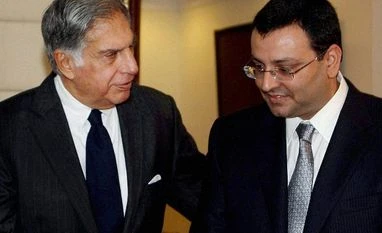
In this file photo of Ratan Tata with Cyrus Mistry. Tata Sons on Monday removed Cyrus Mistry as its Chairman, nearly 4 years after he took over the reins of the group. Tata makes a comeback, taking over as the company's interim boss for 4 months.
Ratan Tata had grand plans for five of his businesses for which he expected Cyrus Mistry to deliver. But Mistry for a variety of reasons, some of them not entirely under his control, failed to realise Tata’s vision
1) The Automotive Business: Tata wasn’t able to replicate the success or the hype surrounding the launch of the Nano in 2008. After Mistry’s took over, Rata Tata envisioned launching two new passenger vehicles every year. Mistry seemed to have failed miserably. Tata’s main launches included a sedan called the Zest and two hatchbacks called the Bolt and the Tiago. The Zest launched in 2014 has managed an average sale of around 2000 units a month. This is way below the Maruti Suzuki Swift Dezire sedan and almost half the numbers of its other competitor Honda Amaze. The launch of the Bolt was also subdued. The Bolt turned out to be little less than a revamped version of the Indica. The Tiago meanwhile was jinxed from the start. Tata Motors had christened the car “Zica”. But following the outbreak of the Zika disease that caused enlarged foreheads in newborns, Tata had to tweak the launch despite launching an expensive ad campaign with Argentine football legend Lionel Messi. The car launched in 2016 failed to enthuse buyers despite its affordable price tag.
2) The Defence Business: Tata Advanced Systems (TAS) incorporated in 2007 had been doing good business as an early private sector entrant in the defence industry. It was making helicopters, heavy lift transport aircraft, trainer jets and Unmanned Aerial Vehicles (UAVs). Then Reliance Defence Ltd entered the market in 2015. This year the Anil Ambani-led defence firm signed a $6 billion agreement for the manufacture of air defence systems for India’s defence forces. Reliance Defence Ltd also took complete control over Pipvav Defence Ltd this year giving it further access to building warships and patrol boats for the Indian navy. Reliance’s gain was a big loss for the Tatas despite being in the business for a longer time.
3) The Telecommunications Business: After DoCoMo completed its stake purchase in Tata Teleservices in 2011, expectations were high for a profitable run. However, a couple of years after Mistry took over, Docomo decided to call off its partnership with Tata Teleservices. The company’s debt had spiralled to over Rs 24,000 crore, its losses exceeded Rs 6000 crore and its net worth eroded. Then came another jolt. Dococmo decided to exercise its pre agreed put option to sell its 26% stake back to the Tatas. The case turned ugly after Docomo won the case after going to arbitration in London. Dococmo now wants the Tata Group’s foreign assets to be sold in a bid to make them pay up over $1 billion for its stake sale.
4) European Steel Business: Mistry along with his team was put in charge of ensuring profitability of the Tata’s European steel business in 2012. The steel business was facing severe losses and the prospect of job losses loomed large. The Tatas were in precarious position as cutting jobs would have led to complications for their other business interests in the UK. However, Mistry failed to turn around the fortunes of the ailing steel business. Global steel prices plunged and demand from China declined. Mistry tried to divest steel assets in Germany, France, New Zealand and other nations but still couldn’t get Tata Steel UK Holdings back on track.
5) The Budget Hotel Business: Ratan Tata had great hopes for his hospitality business. In an interview with the Tata Group’s magazine in 2006, he had highlighted the importance of getting into the no-frills hotels business that was accomplished with the launch of the Ginger brand. However, the Ginger brand failed to live up to its reputation and posted a profit of just over Rs 2 crore in 2014. The hotel chain hasn’t been expanding as was originally envisaged. Reports suggest that Ratan Tata wanted the hospitality business to move away from an ownership model in a bid to introduce more reasonable tariffs to increase occupancy. Those plans do not seem to have worked as well as expected under Mistry.

 "Five business decisions of Ratan Tata that Mistry couldn't implement")

