Cairn Vedanta’s Bhagyam oilfield (in Rajasthan’s Barmer district) and four fields of Oil and Natural Gas Corporation (ONGC) have been approved for fiscal incentives under the government’s Enhanced Recovery (ER) policy.
However, the Directorate General of Hydrocarbons (DGH) is yet to take a call on whether Cairn’s flagship field, Mangala, and ONGC’s Jhalora (Cambay Basin) fields qualify for sops under the policy. The crucial issue that is to be decided is if the field development plans that entail use of ER techniques had been approved prior to the policy being notified.
The ER policy was notified in October 2018, to promote use of new techniques to increase the recovery rate for oil and gas. Though the policy can be availed for around 215 fields, officials say companies find ER and IR (improved recovery) techniques viable for only a few fields, since these involve a lot of time and capital expenditure. “Ninety five per cent of the country’s production comes from 66 fields, while 149 fields produce less than five per cent of the crude oil,” said a person in the know.
For Cairn, the incentive under the policy works out to around $600 million (Rs 4,300 crore) over 10 years. The policy would waive half the the oil industry development cess on crude production — the government levies 20 per cent cess on every barrel of oil produced, currently $12 a barrel. To qualify for fiscal incentives under the policy, the fields should have a minimum three years of commercial production. The incentive is available from the start of production for unconventional oil.
In the case of natural gas production, 75 per cent of royalty is waived on incremental production if ER technique is used and on the entire production after a threshold, if it is IR technology. In the case of unconventional gas production, the 75 per cent waiver is on entire production. The royalty rate is currently 20 per cent of the oil price.
Cairn has done experimental projects with alkaline surfactant polymer (ASP) flooding of the reservoir to produce more oil. This ER technique is expected to increase oil recovery by 10-15 per cent from the company’s Mangala, Bhagyam and Aishwarya discoveries.
Though the company began studies way back in 2014, it first applied for incentives for the Mangala ASP only in December last year. The following month, however, the government notified six institutes — ONGC’s Institute of Reservoir Studies, Pandit Deendayal Upadhyaya Petroleum University, the Indian Institutes of Technology at Delhi, Mumbai and Kharagpur, and Indian School of Mines, Dhanbad — for validating the applications. Following this, the application was re-sent in July 2019.
The ASP techniques involve investment of about Rs 7,000 crore, raising the cost of production to $25 a barrel from the current $18. ONGC is a 30 per cent partner in the Barmer block of Cairn.
The four ONGC fields that have been cleared are Bombay High (South) and the onland fields of Becharaji, Sanand and Lansa. They have DGH approval under the scheme and would now need a go-ahead from a six-member ER committee, comprising officials of the ministry of petroleum and natural gas, DGH and experts.
Incentive to Produce More
OIDB cess on crude oil production halved to 10%
Reduced govt share in profit petroleum or revenue if cess not applicable
Waiver not applicable if monthly Indian oil basket above $80 a barrel
75% waiver on royalty levied on natural gas with cap of $0.3, $0.4/mmBtu
Cumulative incentive not to exceed capital expenditure
Read this article for free
Register to continue reading premium journalism and analysis from Business Standard.

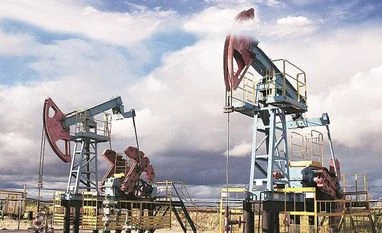 "Five oilfields qualify for fiscal incentives under enhanced recovery policy")












 Connect with us on WhatsApp