
Future of co-working bright, operators may face trouble in next yr: Expert
Co-working segment has a bright future and will grow post-Covid-19 pandemic, but operators may face a lot of pain in the next one year, according to top property consultants
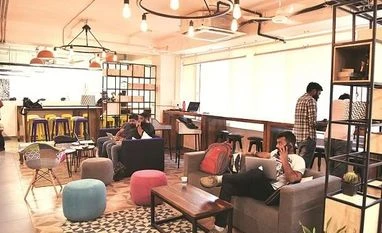 "Future of co-working bright, operators may face trouble in next yr: Expert")
WebinarsNew
Deep DiveNew
Explore Business Standard
Co-working segment has a bright future and will grow post-Covid-19 pandemic, but operators may face a lot of pain in the next one year, according to top property consultants
Co-working segment has a bright future and will grow post-COVID-19 pandemic, but operators may face a lot of pain in the next one year, according to top property consultants.
The co-working operators should focus on large enterprises for selling desks as demand for flexible workspace from start-ups and freelancers would be low in short-term, the consultants said during a webinar organised by Workplace Trends India founder Tushar Mittal.
The co-working segment was growing at a healthy rate before the pandemic, the experts said.
"Future of co-working will be bright. Today a lot of companies and enterprises want flexibility. Lot of corporates don't want to make capital expenditure on office interiors and they are increasingly opting for co-working spaces," JLL India Country Head and CEO Ramesh Nair said.
However, he said there would be "a lot of pain the next one year", but if co-working operators survive this period then the future looks great.
"Average co-working space has doubled to 70,000 sq ft in 2020 from 35,000 sq ft in 2019. Enterprises are taking up space in co-working setup and these co-working players are now catering not just to freelancers and start-ups but to larger enterprises and hence they are taking up bigger spaces," Nair said.
Anarock Chairman Anuj Puri also sounded optimistic on the future of co-working spaces.
"Fundamentally, co-working is great business, as a concept it is a fantastic business. The future is bright. There are companies who now want to seat their employees closer to the operations and are opting for co-working spaces," Puri added.
Anshul Jain, MD-South East Asia and India, Cushman & Wakefield, said co-working operators need to concentrate on enterprise clients to stay afloat.
"There were two-three different types of customers for co-working or managed office space. There were individuals, there were start-ups and then there was enterprise," Jain said
"The first two, individual and start-ups may continue to work from home and they may not come back until 2021. By 2022 they might come back, therefore focus on enterprises," advised Jain.
Nair said net office space leasing is estimated to drop to 25-27 million sq ft this calendar year from record 46.5 million sq ft last year. He said absorption is expected to cross 31 mn sq ft, which is the average leasing of last 10 years.
The adoption of work from home (WFH) would have an impact on absorption of office space, the experts said.
"If we have to put a number for the next two years of how much real estate office absorption is going to be impacted because of WFH, it would be around 20-25 per cent for the next two years," said Nair.
Property consultants also noted that only around 10 per cent of employees have returned to office for work in large IT parks because of WFH.
"Our research shows it is actually 8 per cent at large campuses. There are two main reasons for it. There are many companies which have gone ahead and announced remote working plans till March 31, 2021 and employees don't need to come to office," Nair said.
Secondly, employees themselves are not very confident given the public transport situation, he said.
Puri said, "We don't think we are going to see people coming until the vaccine is there. It is 9-11 per cent at various office parks, and companies are not pushing their employees. Whether WFH works or not is a question mark, but until the vaccine comes in, the percentage will continue to remain low.
(Only the headline and picture of this report may have been reworked by the Business Standard staff; the rest of the content is auto-generated from a syndicated feed.)
First Published: Dec 06 2020 | 5:56 PM IST


 Connect with us on WhatsApp