Garment exports show early signs of revival after two years of decline

After falling for two years in a row, garment exports are showing early signs of a revival. But it will take more than just government support to sustain it
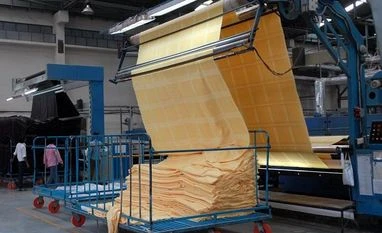
textile
Many have also started to think beyond cotton clothing
T E Narasimhan
6 min read Last Updated : May 28 2019 | 8:31 PM IST
India’s garment exports have been on a steady slope downwards, falling for a second year in a row in 2018-19. At $16.37 billion, apparel shipments were 2 per cent lower than in FY18.  This fall has come after exports grew an impressive 9.8 per cent annually during 2009-10 to 2017-18.

The reasons for the slowdown range from intense competitive pressure from Bangladesh, Vietnam and Sri Lanka, which have a cost advantage over India, subvention of rebates after GST and over-reliance on one particular type of fabric, namely cotton, for making garments. These headwinds buffeted the growth momentum of India’s exports over the past two years but created opportunity for other countries to expand their markets. In the period that India’s exports shank, Bangladesh and Vientam’s exports grew 10-13 per cent, riding on lower manufacturing costs.

A big hit for domestic manufacturers came from the withdrawal of the 7 per cent of duty drawback on costs after the implementation of GST. At a time when Bangladesh had started to enjoy preferential duty access in key markets, this hurt Indian exporters’ profitability and competitiveness in international markets.

India is further expected to lose market share to Bangladesh and Vietnam for garment exports to the European Union (EU). Average tariff on Indian textile products is around 5.9 per cent in the EU and 6.2 per cent in the United States (US), compared to zero tariff in the US and 3.9 per cent in the EU for Bangladesh. The wages, meanwhile, for Indian manufacturers have climbed, growing from 9 per cent of overall cost in FY10 to 13 per cent in FY18, according to CARE Ratings.


A quick revival of exports is crucial as textiles has a significant share in the economy — it contributes approximately 7 per cent to industrial output in value terms, 2 per cent to the Gross Domestic Product (GDP) and 15 per cent to the country’s export earnings. It also provides direct employment to over 45 million people and is the second largest provider of employment after agriculture, according to a CARE Ratings report. Of this, ready-made garments (RMG) account for 50 per cent of industry revenue.

Although it is too early to call it a revival, government measures undertaken late last year have started to bear some fruit. After falling for the first six months, in October exports showed a promising 36.36 per cent growth over the previous year. The six months since October have maintained the positive momentum.

Some of it is the result of government measures such as increasing the Rebate of State and Central Taxes and Levies (ROSCTL) by 3.2 per cent to 4.5 per cent depending on the item, says Raja M Shanmugham, president, Tirupur Exporters Association.

“I feel we are finally turning the corner after stagnancy or slight de-growth. The government support has gone up. Bangladesh is becoming expensive and Vietnam is showing signs of reaching the peak of its capacity,” says Rahul Mehta, president of Mumbai-based Clothing Manufacturers Association of India.

Yet the pace is going to be slow and the peak growth rate of FY10 to FY 18 is unlikely to be achieved soon. “Notwithstanding a depreciation in the rupee vis-a-vis the US dollar (which could increase rupee realisations), apparel exports would increase marginally in rupee terms and decline by 4-5 per cent in dollar terms in FY19 before increasing marginally in 2019-20,” said the CARE Rating report.

Currently, the US and EU together constitute approximately 60 per cent of the total apparel exports from India in value terms. The US is the single largest importer, while the EU is the largest regional importer. The US government's decision to withdraw duty free access to over 3,000 products under the Generalised System of Preferences scheme may not have a major impact on garment exporters as the current list of items does not include ready-made clothing. But if the list is expanded to include it, exports to the US would shrink 30-35 per cent from the current level.

For now, industry representatives have said that while the impact would be marginal, under the current circumstances it would not be good as exports are already dropping. They have also said Centre should compensate the price increase through susbidy or incentives and should learn from the US when it comes to protectionism.


According to the Apparel Export Promotion Council (AEPC), the US imports $586.58 million worth of RMG products under 15 categories that currently enjoy GSP. India's share of this pie is $17.97 million.

But apparel manufacturers are looking beyond these countries and focusing on diversifying their markets; thereby the apparel exports to countries such as Japan, Israel, South Africa and Hong Kong are growing at a very fast rate.

Many have also started to think beyond cotton clothing. “We are primarily dependent on cotton shirts and t-shirts, cotton blouses, etc. It is a limited summer and casual wear product basket. That is another reason why we are not able to take advantage of any growth in those areas,” says Mehta.

India loses out on a big share of the exports market as it is not competitive in the man-made fibre (MMF) or polyester-based garments and does not have the capacity to make winter-wear or active wear. A major chunk of global trade comprises formal clothing, whether it is polyester-based shirts, suits, jackets, woolen clothes, leather garments, hard winter-wear or specialised performance garments, which are not part of India's export basket. In terms of market share, cotton garments contributed around 51 per cent of the overall apparel exports in FY18, while MMF was the second-largest segment contributing about 28 per cent to the overall apparel exports from India. 

MMF has been eating away at the share of cotton apparels, mainly due to the price differential and the unavailability of cotton in many parts of the country. However, for the 11 months of FY19, cotton has increased its share to 54 per cent, while MMF's share has shrunk to 24 per cent, says CARE Ratings.

To remain competitive and grow, India needs to increase its production of MMF based apparels. Going forward, steps taken to address these challenges would be crucial for creating and sustaining a broad-based recovery across the sector. 

But all this work well when India also adopts a faster manufacturing turnaround time, from designing new clothes to delivering them. If exporters are able to take care of these things, Mehta says, Indian RMG exports can go back to 8-10 per cent growth.

One subscription. Two world-class reads.

Already subscribed? Log in

Subscribe to read the full story →
*Subscribe to Business Standard digital and get complimentary access to The New York Times

Smart Quarterly

₹900

3 Months

₹300/Month

SAVE 25%

Smart Essential

₹2,700

1 Year

₹225/Month

SAVE 46%
*Complimentary New York Times access for the 2nd year will be given after 12 months

Super Saver

₹3,900

2 Years

₹162/Month

Subscribe

Renews automatically, cancel anytime

Here’s what’s included in our digital subscription plans

Exclusive premium stories online

  • Over 30 premium stories daily, handpicked by our editors

Complimentary Access to The New York Times

  • News, Games, Cooking, Audio, Wirecutter & The Athletic

Business Standard Epaper

  • Digital replica of our daily newspaper — with options to read, save, and share

Curated Newsletters

  • Insights on markets, finance, politics, tech, and more delivered to your inbox

Market Analysis & Investment Insights

  • In-depth market analysis & insights with access to The Smart Investor

Archives

  • Repository of articles and publications dating back to 1997

Ad-free Reading

  • Uninterrupted reading experience with no advertisements

Seamless Access Across All Devices

  • Access Business Standard across devices — mobile, tablet, or PC, via web or app

Next Story


