
DoT draft rules do not allow 3G spectrum sharing
The DoT has also noted that permission for sharing of spectrum will be given for a period of five years
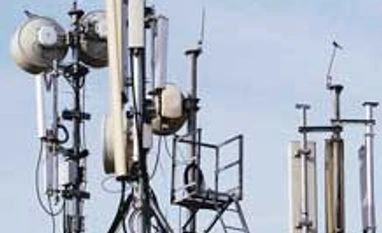 "DoT draft rules do not allow 3G spectrum sharing")
WebinarsNew
Deep DiveNew
Explore Business Standard
The DoT has also noted that permission for sharing of spectrum will be given for a period of five years
Telecom operators, having third-generation (3G) spectrum licences, will not be permitted to share spectrum among themselves, according to the draft guidelines prepared by the Department of Telecommunications (DoT) on spectrum sharing.
The DoT has also noted that permission for sharing of spectrum will be given for a period of five years, which can be extended for five more years after the first term. On the spectrum usage charges (SUC), the draft guidelines stated that the SUC will be levied on both the operators individually for the total 2G spectrum held by both the operators together. This means, if an operator X having 4.4MHz of spectrum shares 4.4MHz of another operator Y, then both X and Y will be liable to pay SUC on 8.8MHz with effect from the date of the permission of spectrum sharing.
According to the draft guidelines, operators can share 2G telecom spectrum after they pay a one-time usage charge for spectrum holding exceeding 4.4 MHz of GSM spectrum, or 2.5 MHz of CDMA spectrum. While the Government would not allow sharing of 3G spectrum, the top three operators -Bharti Airtel, Vodafone India and Idea Cellular - have intra-circle roaming arrangements between themselves for the circles where they do not have required spectrum.
While the Government had earlier opposed such agreements, the Telecom Disputes Settlement AppellateTribunal (TDSAT) has last month given an order allowing intra-circle roaming. The permission to share spectrum will be granted after the payment for the spectrum holding is done based on its reserve or auction price.
However, separate permission will have to be obtained from the DoT. The sharing of spectrum would involve both the service providers utilising the spectrum. Even as the spectrum is shared, the government says that both the service providers should individually fulfill the rollout obligations. The licence conditions for spectrum mandates the operator to complete a certain percentage of a circle to be brought under the network.
Last year, the Telecom regulatory Authority of India (Trai), in its recommendations on spectrum valuation and pricing, suggested companies be allowed to share and trade excess spectrum with the ones facing a spectrum crunch. The move, if accepted by the government, is also expected to boost mergers and acquisitionsin the sector. Trai has proposed that spectrum in all bands and technologies such as 2G, 3G and Broadband Wireless Access should be allowed to be traded. However, only an outright transfer of spectrum should be allowed without any leasing, initially.
First Published: May 15 2014 | 12:03 AM IST


 Connect with us on WhatsApp