
HDFC Bank: Is the bad loan spell catching up?
Gross NPAs rose for six straight quarters, and were higher by 52% year-on-year in Q2 to Rs 7,703 cr
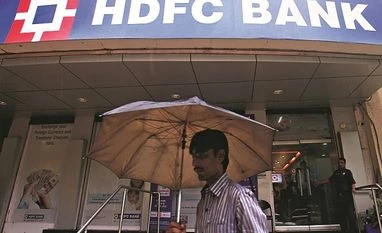 "HDFC Bank: Is the bad loan spell catching up?")
premium
WebinarsNew
Deep DiveNew
Explore Business Standard
Gross NPAs rose for six straight quarters, and were higher by 52% year-on-year in Q2 to Rs 7,703 cr
The June quarter was passed off as an aberration for HDFC Bank's asset quality. However, it appears that the spell on its asset quality may not vanish as in a rush. Gross non-performing assets (NPA), which have been on the rise lately, increased even in September quarter (Q2), making it six straight quarters of rising in bad loans. Gross NPA was seen higher by 52 per cent year-on-year in Q2 to Rs 7,703 crore. Consequently, gross NPA ratio too rose from 1.04 per cent a year-ago to 1.26 per cent in Q2, though net NPA ratio was kept in check (0.43 per cent).
Much of Q2's pain came from a specific loan account currently under Reserve Bank of India (RBI) review. The borrower who is believed to be a corporate client has remained a standard account thus far for HDFC Bank. However, RBI is in the process of ascertaining if this account should be categorised as NPA. Therefore, as a prudent measure, HDFC Bank has made a contingent provisioning towards this account, thus taking the overall provisioning to Rs 1,476 crore in Q2; almost twice the year-ago number. Not much information was revealed about the loan account. "Till decision in taken by RBI, we cannot comment on the same," Paresh Sukthankar, deputy MD, HDFC Bank, clarified.
While analysts prefer to wait for finer details a few believe that there could be more pain ahead. "The management has clarified that it may not require to further provide towards this account, but it may be early to believe that all the pain is fully absorbed," says an analyst from a domestic brokerage, not willing to be quoted.
A back of the envelop calculation, based on the bank's Q2 provision coverage ratio of 66 per cent, suggests that an additional hit of approximately Rs 400 crore may be likely on the aforesaid loan account.
That said, many feel the inching NPAs isn't much of a worry just yet. "As long as core operating performance is cushioning the provision for bad loans, comfort on HDFC Bank's earnings and profitability remains high," Sohail Halai of Systematix iterates. This was demonstrated in Q2 also with net interest income at Rs 9,752 crore growing by 22 per cent year-on-year and net profit expanding by 20 per cent to Rs 4,151 crore. Net interest margin (measure of profitability) remained strong at 4.3 per cent.
These numbers were in-line with Street expectations. Advances also grew by 22 per cent year-on-year to Rs 6,04,867 crore. The only blip was the share of low-cost CASA (current account - saving account) deposits falling to 43 per cent after touching 48 per cent in March'17, possibly indicating that customers are moving money from low-cost deposits to high yielding instruments.
Going ahead, while the fundamentals remain intact, the Street would certainly keep an eye on the bank's asset quality. After all, it is the impeccable asset quality that has helped the bank command a premium valuation over its peers. A further spike from the current levels may prompt analysts to question its 4.8x FY19 price to book valuations.
Already subscribed? Log in
Subscribe to read the full story →

3 Months
₹300/Month
1 Year
₹225/Month
2 Years
₹162/Month
Renews automatically, cancel anytime

Premium stories handpicked daily by our editors


News, Games, Cooking, Audio, Wirecutter & The Athletic
Digital replica of our daily newspaper — with options to read, save, and share


Insights on markets, finance, politics, tech, and more delivered to your inbox
In-depth market analysis & insights with access to The Smart Investor


Repository of articles and publications dating back to 1997
Uninterrupted reading experience with no advertisements


Access Business Standard across devices — mobile, tablet, or PC, via web or app
First Published: Oct 25 2017 | 12:28 AM IST


 Connect with us on WhatsApp