High business growth to sustain on strength of products: R M Vishakha

Q&A with R M Vishakha, MD & CEO of IndiaFirst Life Insurance Company
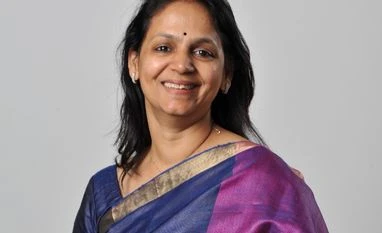
R M Vishakha, MD & CEO, IndiaFirst Life Insurance Company
R M Vishakha
B Dasarath Reddy Hyderabad
Last Updated : Aug 01 2017 | 7:39 PM IST
IndiaFirst Life Insurance Company, managing director and chief executive R M Vishakha says that high business growth is going to sustain on the strength of products and processes built by the company. "There's no point if we can't repeat the performance. That's what I like about what we are doing," she tells B Dasarath Reddy in an interview. Excerpts:

Last year's new premium business growth was 82 per cent for the company. Will it be the same this year?

We may not be able to repeat the success if we don't know why we have received the huge amount of business and premium. We have got some very solid products and processes that we have designed to create value for every stakeholder. Therefore, I am confident of repeating this kind of performance year after year.
 
How are you planning to increase the company's business among various categories?

There are three aspects — one is individual new business, individual renewal business and group business. We focus on our Individual businesses as something we need to grow. Because group businesses were our focus for the first five years and we have reached to our expected levels in those years. Our main focus is to maintain a flat growth there.

Individual segments are what we are focusing to take it up to the next trajectory. In Individual, we had 82 per cent growth last year. Considering the strength of our partners, which is a lot in retail with more than 100 million customers between Bank of Baroda and Andhra Bank, we want to use that opportunity presented by our partners and offer solutions across.

Any challenges that you are facing in the market?

Today, insurance is still a push product. Personal protection is not there as a culture among us. As a sub-continent, we don't have risk management. But the awareness is catching up. Earlier, we used to buy a life insurance product for tax benefits, but that has gone after 80C changed.

How do you compare the performance of investment products with mutual fund-plus-term?

I think we have won that battle with all the changed product regulations. If you take a Ulip product or a mutual fund-plus product, after seven years your Ulip is better than your mutual fund-plus product in terms of returns and in terms of flexibility, in terms of structure and all.

But, we offer ATBS, which is an automated trigger-based strategy. In the past one year, there are people who have booked returns 6 times, because each time the equity goes up by 10 per cent it moves funds into debt. So whenever the markets are volatile your returns are automatically getting booked.

How is this traditional vs Ulips product preference among the customers playing out for the company?

We look at it from the customer's perspective. A lot of the West goes to Ulip and a lot of South goes into traditional. When you look it from a company's perspective, the only difference between the two is: In Ulips the upfront income is lower than the trail income and in traditional policies, it is vice versa. However, over the policy period, due to multiple factors of ticket size, expense management and product structure, at an organisation level, there is no major impact.

In terms of growth opportunity it is dependent on our distribution channel. Our distribution is primarily from Andhra Bank and Bank of Baroda. We see Andhra Bank having more of guaranteed products and traditional products. Bank of Baroda has more ULIP's. So basically, in South you see a lot of people preferring guaranteed products. In West and North you see people preferring Unit Linked. The risk taking capability is slightly higher.

How much business do each of these two sets of products generate for IndiaFirst?

Between Ulips and traditional we are about 40-60 (roughly). Total, including the new business, was around Rs 1,671 crore (gross return premium). For us what is satisfying last year is that the industry grew about 33 per cent and we were 82 per cent. In renewal premium we were about 64 per cent as of March 2016 and we have improved in around 74 per cent last year. We are planning to take it up to 80 per cent of first year renewals. First year renewals happened to be 74 per cent last year.

What is your target for FY18?
 
We would like to grow above the industry average growth. We would like to double the net profit of Rs 35 crore of last year.

One subscription. Two world-class reads.

Already subscribed? Log in

Subscribe to read the full story →
*Subscribe to Business Standard digital and get complimentary access to The New York Times

Smart Quarterly

₹900

3 Months

₹300/Month

SAVE 25%

Smart Essential

₹2,700

1 Year

₹225/Month

SAVE 46%
*Complimentary New York Times access for the 2nd year will be given after 12 months

Super Saver

₹3,900

2 Years

₹162/Month

Subscribe

Renews automatically, cancel anytime

Here’s what’s included in our digital subscription plans

Exclusive premium stories online

  • Over 30 premium stories daily, handpicked by our editors

Complimentary Access to The New York Times

  • News, Games, Cooking, Audio, Wirecutter & The Athletic

Business Standard Epaper

  • Digital replica of our daily newspaper — with options to read, save, and share

Curated Newsletters

  • Insights on markets, finance, politics, tech, and more delivered to your inbox

Market Analysis & Investment Insights

  • In-depth market analysis & insights with access to The Smart Investor

Archives

  • Repository of articles and publications dating back to 1997

Ad-free Reading

  • Uninterrupted reading experience with no advertisements

Seamless Access Across All Devices

  • Access Business Standard across devices — mobile, tablet, or PC, via web or app

Next Story


