Amway to invest $3-5 mn in ramping up own e-store, enter air purifier biz

Eyeing the magic India revenue figure of Rs 20 billion by the end of 2018, Amway is planning a consumer durables push with an entry into products like air and water purifiers

amway
Photo: Shutterstock
Surajeet Das Gupta New Delhi
Last Updated : May 17 2018 | 12:33 AM IST
American direct-selling player Amway is confronted by two challenges in India. While its revenues in the Indian market have shrunk after hitting a peak of Rs 22.88 billion in 2012-13, the sale of Amway products on independent e-commerce sites like Amazon and Flipkart undermine its direct-sale model.

Talking of the first challenge, after five years of hitting a peak and with an economic downtrend reversing, Amway is now aiming to again hit the magic revenue figure of Rs 20 billion by the end of the 2018 calendar year. It is expected to have hit a turnover of Rs 17 billion in the 2017-18 financial year.

As for the challenge posed by e-commerce majors, sale of its products to consumers through third-party sites undermines the core of Amway’s direct-selling model, under which the products must be purchased from the company’s empanelled distributers.

Amway has put in place a clear strategy to address both problems. To increase its revenues, it is now making a major push into consumer durables, a category into which it had earlier made a cautious entry by launching premium cookware. Buoyed by its success – the company has already hit Rs 1 billion in sales – Amway is now planning to sell a few other products in the category, such as air purifiers (initially for cars and later for homes), home water purifiers, and so on.

Amway India Enterprises CEO Anshu Budhraja says: “We will not get into every consumer durables product, but only those that are within the health category. About 15 per cent of our global turnover comes from durables. We expect that will also be the case in India in a few years. We will be launching these products in 2019.”

The company has also made a big push in selling traditional herb range, with four of its products already registering Rs 1 billion in sales within a few months of launch. Interestingly, about 55 per cent of the buyers of these products are under the age of 35 years. To Indianise such products, the raw material is being extracted from farms in various states of the country. Amway might look at these products’ export potential, too.

What has caused the drop in Amway revenues in the past few years? Explaining the reason, Budhraja says the drop was primarily because of a rethink in the company’s strategy between 2013 and 2015 which entailed shifting from high-volume personal and home care products to nutrition and beauty products. “We decided not to make any fresh investments in personal and home care as we thought our strength and value lay in nutrition, which is the sweet spot, rather than products like soaps, which had become a commodity business,” says Budhraja. He also points out that with government rules on direct marketing unclear and a confusion in the market, Amway also decided to go slow.

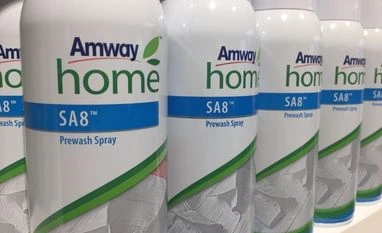
Amway also acknowledges the challenge its direct distribution system faces from e-commerce players. But e-commerce companies say they are a marketplace, so the onus lies on Amway to curb its distributors putting up products for sale on e-commerce sites in violation of the Amway distribution rules.

The US-based company has, of course, found a way out. It has revamped its own online store and is investing $3-5 million in it. It is backing that up by offering one-day delivery in as many as 30 key cities of the country. It has also invested in software by which batch numbers of products being sold online could be traced back to the distributor for the required action to be taken.

Budhraja says: “The move has helped us. Currently, 35 per cent of our sales comes from our online site, compared with 15 per cent 18 months ago. And the amount of sale that still takes place on other e-commerce sites has gone down to 8-10 per cent from around 15 per cent earlier.” 

One subscription. Two world-class reads.

Already subscribed? Log in

Subscribe to read the full story →
*Subscribe to Business Standard digital and get complimentary access to The New York Times

Smart Quarterly

₹900

3 Months

₹300/Month

SAVE 25%

Smart Essential

₹2,700

1 Year

₹225/Month

SAVE 46%
*Complimentary New York Times access for the 2nd year will be given after 12 months

Super Saver

₹3,900

2 Years

₹162/Month

Subscribe

Renews automatically, cancel anytime

Here’s what’s included in our digital subscription plans

Exclusive premium stories online

  • Over 30 premium stories daily, handpicked by our editors

Complimentary Access to The New York Times

  • News, Games, Cooking, Audio, Wirecutter & The Athletic

Business Standard Epaper

  • Digital replica of our daily newspaper — with options to read, save, and share

Curated Newsletters

  • Insights on markets, finance, politics, tech, and more delivered to your inbox

Market Analysis & Investment Insights

  • In-depth market analysis & insights with access to The Smart Investor

Archives

  • Repository of articles and publications dating back to 1997

Ad-free Reading

  • Uninterrupted reading experience with no advertisements

Seamless Access Across All Devices

  • Access Business Standard across devices — mobile, tablet, or PC, via web or app

Next Story





