At Innofest 2015 in Bengaluru last weekend, organised by tech think-tank iSpirt , the topic of choice amongst attendees, patrons and participants was jugaad. Whether it involves broken belt buckles that have been replaced with forks, small chairs tied to the front of motorcycles to provide extra seating, or washing machines used to churn out butter and lassi, examples of jugaad can be seen every day in India.
Nandan Nilekani, the co-founder of Infosys, explained that he feels that “jugaad is the result of a dysfunctional system”. This attitude is echoed by many. While it represents frugality, ingenuity and minimalism to some, others feel that the word denotes a quick, immediate fix that will eventually have long-term repercussions.
There have been several efforts to legitimise jugaad.
In response to the nation’s low rankings on global innovation boards, the Department of Science and Technology set up the National Innovation Foundation (NIF) last year. The goals of the fund are to provide support to the many grassroots innovations that emerge from India’s informal sectors.
Most acts of jugaad happen because people can’t afford better alternatives, lack access to applicable products and exist in a market that just doesn’t understand their needs.
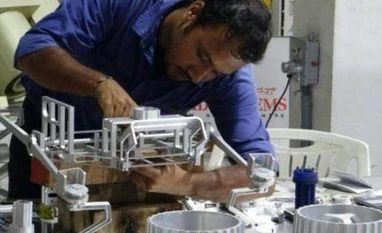
The spirit of innovation was thriving at Innofest 2015. When I entered IISc, I was greeted with the sight of a lunar lander created by Team Indus. It was built to compete in Google’s Lunar X Prize, a contest offering $25 million to design and land a robot on the moon.
Team Indus working on its Lunar Lander. Image via Tech in Asia
The Srishti Institute of Art, Design and Technology showcased work from GRIDS (Grassroots Innovation Design Studio), an initiative that focuses on developing ideas sourced by the National Innovation Foundation. They exhibited working models of grassroots ideas, including a bicycle that cleans roads and an electronic machine that sifts through rice.
This is an excerpt from Tech in Asia. You can read the full article here.

 "How India plans to turn 'jugaad' into large scale innovation")


 Connect with us on WhatsApp