India, Bhutan power plant collaborations in limbo
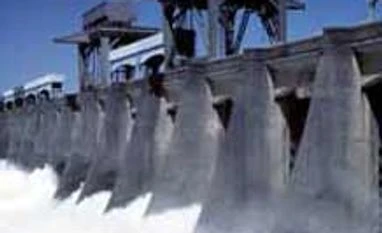
India has so far set up three projects - Tala, Chukha and Kurichu - in Bhutan under the Inter-governmental Agreement model
Sudheer Pal Singh New Delhi New hydro power projects of around 10,000 Megawatt (Mw) capacity being set up jointly by India and Bhutan in the latter's territory, are facing an uncertain future.
Work on the projects has slowed down owing to a dispute between the two sides over their model of development. The strain, if continued, may put at risk thousands of crores of Indian investment and bilateral relations with its neighbour.
A recent proposal by the Indian government to shift from the existing Inter-Governmental Agreement (IGA) model to a joint venture (JV) model has not gone down well with the Bhutanese side.
With that nation's government having refused to adopt the new model owing to funding constraints, India is now carrying out a review of the cost estimates of several Bhutan projects including those commissioned as well as under construction and planning stages.
"The project development activity has slowed down because of this issue. Because of lack of funds, we had asked them to develop future projects under a model where a JV company with equal partnership would make investment including 70 per cent debt and 30 per cent equity. But Bhutan has refused to adopt the shift, arguing they do not have the money to fund even the 15 per cent equity portion," a senior official close to the development told Business Standard.
India has so far set up three projects - Tala (1,020 Mw), Chukha (336 Mw) and Kurichu (60 Mw) - in Bhutan under the IGA mode, where the entire funding is provided as grant, or soft loans, by the Indian government to Bhutan which implements projects with technical assistance from the Central Electricity Authority under the power ministry.
In return, India imports 90 per cent of the power generated. The 10,000 Mw new capacity which is being planned to be set up include some of the large-sized projects.
This includes the 770 Mw Chankharchu-I project, which India wants developed in a JV between Bhutan's power company and National Hydroelectric Corp (NHPC), 600 Mw Kholongchu and 570 Mw Wanchu projects in a JV with Satluj Jal Vidyut Nigam (SJVN) and 180 Mw Bunakha hydro power plant planned to be set up in a JV with THDC India Ltd.
NHPC, SJVN and THDC are India's state-owned hydro power companies.
The official said India cannot afford to let the projects become a victim of the issue as power imported from Bhutan plays a significant role in bridging the demand and supply gap, particularly in the Eastern and Northeastern states. Also, India has to keep its strategic interest in the region in mind.
The external affairs ministry recently asked the power ministry to carry out an assessment of the funds deployed in the Bhutan hydro projects so far.
The idea is to guard against the tendency of Bhutan to divert assistance towards other areas by showing higher cost-escalations in these projects as compared to the Detailed Project Report (DPR) estimates. A case in point is the under construction Punatsangchhu-I project where cost has been escalated from Rs 3,514 crore at the time of DPR submission in 2006 to Rs 9,396 crore at present.

 "India, Bhutan power plant collaborations in limbo")


 Connect with us on WhatsApp