
India's e-commerce majors are outliers in seeking govt protection
India not impacted by protectionism talk, global slowdown, says FM
 "India's e-commerce majors are outliers in seeking govt protection")
premium
WebinarsNew
Deep DiveNew
Explore Business Standard
India not impacted by protectionism talk, global slowdown, says FM
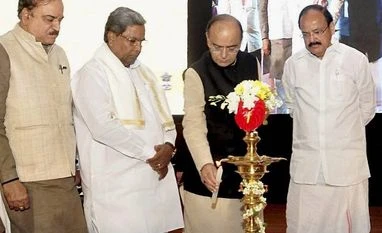
"Not a single sound or whisper of protectionism is being heard in India, it's only being heard in developed economies outside. That in itself is a tribute to the fact that India is willing to accept investment from wherever the investment wants to come," said Arun Jaitley, Minister of Finance, at the Make in India event in Bengaluru on Monday.
Jaitley, who was speaking on his experience of attending industry events across the country over the years, said that he had witnessed a positive change in the overall business environment. He added that the government was now tuning its policies in support of bringing in those investments from abroad.
However, the hotly contested Indian e-commerce space seems to have become an outlier with this respect. In the past few months, leaders such as Ola and Flipkart have stepped up their demand for India to close its doors for foreign competition such as Uber and Amazon, who they accuse of "capital dumping".
Ola was the first to raise a voice in its affidavit to the Karnataka High Court in June last when it became party to the dispute by Uber, which questioned the constitutional validity of Karnataka to regulate taxi aggregators. This was, followed by a call by Sachin Bansal, co-founder of Flipkart who made a public statement that India should say yes to foreign capital but no to foreign companies. This set the stage for a raging debate within the community with clearly demarcated sides beginning to emerge arguing for and against government protection.
They were supported by Vani Kola, founder of Kalaari Capital, a venture capital firm, which counts Ratan Tata as an advisor. Kola wrote a blog on the need for protecting Indian fims such as Ola, Flipkart and Snapdeal against global rivals such as Uber and Amazon, saying they were not generating value to the local economy.
It's not that Flipkart, Ola or Snapdeal haven't been able to bring in foreign capital into the company. In the past few years, the three companies have raised a combined $6 billion largely in foreign capital. However, as global competition began putting pressure and investors began demanding returns, the pipeline of money has dried up.
Already subscribed? Log in
Subscribe to read the full story →

3 Months
₹300/Month
1 Year
₹225/Month
2 Years
₹162/Month
Renews automatically, cancel anytime

Premium stories handpicked daily by our editors


News, Games, Cooking, Audio, Wirecutter & The Athletic
Digital replica of our daily newspaper — with options to read, save, and share


Insights on markets, finance, politics, tech, and more delivered to your inbox
In-depth market analysis & insights with access to The Smart Investor


Repository of articles and publications dating back to 1997
Uninterrupted reading experience with no advertisements


Access Business Standard across devices — mobile, tablet, or PC, via web or app
First Published: Feb 13 2017 | 5:52 PM IST

