Indian IT firms expected to be more acquisitive going forward: Peter Bendor-Samuel
Interview with Founder & CEO, Everest Group
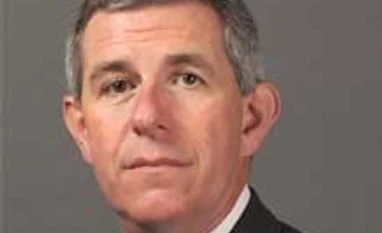
Bibhu Ranjan Mishra Peter Bendor-Samuel, founder and chief executive of management consulting and advisory firm Everest Group, has been watching the Indian outsourcing industry closely. In an interview with Bibhu Ranjan Mishra, he talks about how Indian technology firms have reached a level of maturity when they are expected to be more acquisitive. Edited excerpts:
Cognizant has shown rare aggression by acquiring US-based healthcare solutions provider TriZetto for $2.7 billion. What does it mean for Indian infotech services companies? It (Cognizant’s acquisition of TriZetto) is really going to change the competitive dynamics. But there is no doubt that companies like Infosys and TCS can do it because they have great balance sheets to do these kinds of things. My guess is they will (do it). This is time for the industry to consolidate and this is an appropriate time for Indian heritage firms to step up their inorganic growth pursuits.
Are you seeing any change in the way these companies operate now as compared to a few years ago? Clearly, the Indian infotech services majors are a matured lot. They have much more seasoned leadership. Look at TCS, it has a matured leadership team, very strategic in operation. No one else at the moment has that kind of capability. The next step for it is to be acquisitive.
How has TCS managed to get ahead of the rest? From the early days TCS took a customer-centric view. TCS thought about value to clients whereas Infosys continued to focus on maintaining high margins. So TCS was more forward looking and more consistent in its approach. I think Infosys struggled with that. It (Infosys) was too focused on growth and profits, and customers did not agree.
But TCS has industry leading profit margins... That’s true. But just think how they are doing it? From the very beginning, Infosys was focused on making a margin play, whereas TCS became a low-cost producer. It (TCS) drove huge investments in the labour pyramid to make it flatter and more efficient. It invested more in automation and productivity tools. The other aspect is scale helps in this business. So TCS was able to benefit from the scale advantage. It is particularly important in two aspects. It was able to get a large wallet share while it was able to price lower than Infosys.
With Vishal Sikka at the helm, people say Infosys is going to make a much bigger product play now. Your view? I think it is unlikely to do so at this stage. It (Infosys) has to do significant intellectual property acquisition. Infosys has a huge capacity to do that. It has a great balance sheet and the right structure. It has a separate organisation that can run differently for products. Putting the investment to the product side makes a lot of sense. That will be a very attractive strategy to look for.
What key changes you are seeing at Infosys? I think his (Sikka’s) next step will be to get talent. It is not that Infosys does not have enough of talent inside, but more to drive the kind of changes he wants. I would encourage him to bring in non-Indian talent. Infosys is very Indian-centric now.
What are your view about Wipro and HCL Technologies? Wipro has become a much aggressive company led by T K Kurien. Wipro is competing in multi-tower transactions in domains which used to be the focus of companies like IBM and Accenture earlier. So it is seeing a lot of momentum. As far as HCL is concerned, while it is focused on infrastructure services, it needs to strengthen its applications and BPO offerings.
Beyond these four companies, does any other company come to mind that can be a challenger in infotech services? You should keep an eye on Virtusa. It is very aggressive, very strong in digital; it is quite well positioned to take advantage of new technologies. It is growing very fast. So is Syntel, backed by an aggressive management team. Syntel’s success lies in its ability in turning key accounts to very large accounts. Then there are companies like Mindtree, but I think it will have to figure out how to differentiate in a market where scale matters.

 "Indian IT firms expected to be more acquisitive going forward: Peter Bendor-Samuel")


 Connect with us on WhatsApp