IndiGo scripts plan to fly higher via cheaper fares, fleet expansion

To offer up to 50% lower fares on regional routes; up to 25% lower on international flights
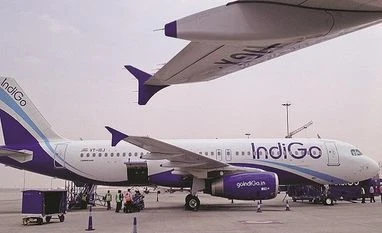
IndiGo
IndiGo
Surajeet Das Gupta New Delhi
Last Updated : Aug 28 2017 | 2:23 AM IST
IndiGo has got up an ambitious plan for growth, which includes expanding its fleet to 350 aircraft in the next five years if the airport infrastructure is supportive and slots are available, say sources in the know.

The airline has 138 aircraft. Also, it will position itself as a price warrior in the regional connectivity business, which it will launch soon, apart from its foray into the long-haul, low-cost international business.

According to sources, IndiGo could offer fares up to 50 per cent lower on regional connectivity routes, which, the airline thinks, is over-priced because of lack of competition. 

It will also bid for routes under the UDAN (regional connectivity) scheme, but will not ask the government for subsidy. On the long-haul international routes again, apart from offering flights whose timings are convenient for Indian travellers to Europe, it is looking at a fare structure that could be up to 25 per cent lower than those given by competing international carriers. 

In a clear shift from its earlier strategy to go for sale and then take as lease all aircraft, IndiGo will now acquire aircraft, of which five-six aircraft every year will be financed by its free-cash flows. 

IndiGo sources think it is more cost-effective to own aircraft from now on because it does not see any fundamental technological change in aircraft engineering in the next 20 years.

However, sources say the carrier finds large potential in expanding its current business. At the moment, it flies to only 39 cities, which is even lower than what SpiceJet does, though it has triple the latter’s market share. But it can expand in the 36 other Indian cities where jets can go.


It also sees major potential in connecting Kolkata to other cities of the country, including increasing the number of flights to Delhi (from Kolkata), for instance, say sources. It has estimated that ATR operations will constitute around 5 per cent of its capacity. A spokesperson for the company, however, declined to comment on these matters. 

Sources point out that the feeling is that short-haul regional routes are over-priced because of lack of competition, with airlines making huge margins but not growing the market. 

So a flight between Delhi and Pantnagar, one way, costs more than Rs 4,000 for a one-hour journey and is sometimes more than Rs 10,000. IndiGo wants to expand the market by cutting the fares. And in that manner, it will make more money through higher volumes. 

It has also, sources say, chosen the ATR 72-6 — turbo prop aircraft — over competing planes to keep costs under control. In the next year or so, 20 of these planes will be delivered. While the prices of most of the turbo props with the same-seat configuration are in close vicinity of one another, sources say the burn rate of fuel in ATR is 20 per cent lower than that of rivals. But the ATR is slower and takes 10 minutes more per hour than at least the best competing planes. This, the airline says, is something customers would not mind if offered lower fares. 

The airline is working on a plan for international travellers on the long haul, irrespective of whether it buys Air India’s international businesses. Sources point out that it will fly its aircraft in such a way that travellers from India can reach their European destinations by the afternoon. “Currently the flight departures from India are mostly late night and very inconvenient as one lands up in the morning and has to wait for hours before checking in at hotels (check-ins are after noon or even 2 pm). By offering a convenient flight time, say, arrival at 1 pm, the airline expects that passengers will shift,” says a source who is aware of IndiGo’s thinking on the matter. This will be backed by attractive fares. The airline could also leverage “the sixth freedom right” to fly onwards from cities in Europe. 

Sources also say that the airline will bid for Air India’s international businesses if the government sells them in bits and pieces. It says that the businesses can be turned round if the government absorbs a large part of the debt.

ELEMENTS OF THE STRATEGY
  • IndiGo is planning to scale up its fleet to 350 aircraft, from the existing 138, in the next five years
  • To offer passengers to Europe convenient flights which arrive in the afternoon
  • Use its free-cash reserves to acquire 5-6 aircraft every year 
  • Will bid for UDAN routes, but will not claim subsidy 
  • Expand existing business, as it still does not fly to 36 cities where jetplanes can land

One subscription. Two world-class reads.

Already subscribed? Log in

Subscribe to read the full story →
*Subscribe to Business Standard digital and get complimentary access to The New York Times

Smart Quarterly

₹900

3 Months

₹300/Month

SAVE 25%

Smart Essential

₹2,700

1 Year

₹225/Month

SAVE 46%
*Complimentary New York Times access for the 2nd year will be given after 12 months

Super Saver

₹3,900

2 Years

₹162/Month

Subscribe

Renews automatically, cancel anytime

Here’s what’s included in our digital subscription plans

Exclusive premium stories online

  • Over 30 premium stories daily, handpicked by our editors

Complimentary Access to The New York Times

  • News, Games, Cooking, Audio, Wirecutter & The Athletic

Business Standard Epaper

  • Digital replica of our daily newspaper — with options to read, save, and share

Curated Newsletters

  • Insights on markets, finance, politics, tech, and more delivered to your inbox

Market Analysis & Investment Insights

  • In-depth market analysis & insights with access to The Smart Investor

Archives

  • Repository of articles and publications dating back to 1997

Ad-free Reading

  • Uninterrupted reading experience with no advertisements

Seamless Access Across All Devices

  • Access Business Standard across devices — mobile, tablet, or PC, via web or app

Next Story



