Infosys Q2 results: Stability certainly important for a firm, says CFO

The company has demonstrated very strong financial performance in the last three years, M D Ranganath told Business Standard
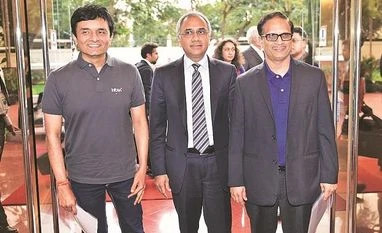
U B Rao, Salil Parekh, Infosys
Newly appointed Infosys CEO Salil Parekh (centre) flanked by CFO M D Ranganath and COO U B Pravin Rao (right). The company bosses credit stability for growth
Debasis MohapatraAlnoor Peermohamed
Last Updated : Oct 17 2018 | 5:43 AM IST
For any company, stability in management is key to sustainable growth. Infosys Chief Financial Officer M D Ranganath is set to hang up his boots next month after 18 years with the company, he tells Debasis Mohapatra and Alnoor Peermohamed that the firm is back on the growth path. Edited excerpts:

In any multi-billion dollar company, if there is a huge churn of management at frequent intervals, is it amenable to growth? Do you think stability of top management is an important aspect?

I think for any company, stability is important. Some of the business outcomes that we have achieved would not have been possible if we did not have stability. 
 
As the CFO, are you satisfied with the performance of Infosys?

The company has demonstrated very strong financial performance in the last three years, and as recent as the last quarter. So, I don't see any significant difference in our performance. Pretty much we have had a resolute focus on financial outcomes, fiscal discipline, strong return on equity, and strong cash generation. Even some of our operational efficiency parameters are at a multi-year high. Utilisation is at more than 85 per cent and per capita revenue has grown year on year. I think there have been deeply satisfying financial outcomes personally as well as for the company.

If you compare Infosys with TCS numbers, then TCS had $5.2 billion-plus revenue with a margin of more than 26 per cent. Despite Infosys’ good revenue growth, margins remained flat. What is pulling back the margin growth?

First of all, let me say, in the last three years compared with our peers, our margins are a lot more stable. Last year, despite rupee appreciation, we had very resilient margins. Our return on equity to cash generation, everything has been strong. I don't want to comment on any individual companies or competitors. If you look at the beginning of the year, we gave a revenue guidance of 6-8 on a constant currency basis. And if you look at the first half of the year, we're at 7.1, which is pretty much at the mid-point. Likewise, our margin guidance was 22-24 per cent and we are at the higher end of the guidance. Broadly, if you look at this quarter, I couldn't have been more happier as I complete my three years as the CFO during this quarter. 

One subscription. Two world-class reads.

Already subscribed? Log in

Subscribe to read the full story →
*Subscribe to Business Standard digital and get complimentary access to The New York Times

Smart Quarterly

₹900

3 Months

₹300/Month

SAVE 25%

Smart Essential

₹2,700

1 Year

₹225/Month

SAVE 46%
*Complimentary New York Times access for the 2nd year will be given after 12 months

Super Saver

₹3,900

2 Years

₹162/Month

Subscribe

Renews automatically, cancel anytime

Here’s what’s included in our digital subscription plans

Exclusive premium stories online

  • Over 30 premium stories daily, handpicked by our editors

Complimentary Access to The New York Times

  • News, Games, Cooking, Audio, Wirecutter & The Athletic

Business Standard Epaper

  • Digital replica of our daily newspaper — with options to read, save, and share

Curated Newsletters

  • Insights on markets, finance, politics, tech, and more delivered to your inbox

Market Analysis & Investment Insights

  • In-depth market analysis & insights with access to The Smart Investor

Archives

  • Repository of articles and publications dating back to 1997

Ad-free Reading

  • Uninterrupted reading experience with no advertisements

Seamless Access Across All Devices

  • Access Business Standard across devices — mobile, tablet, or PC, via web or app

Next Story



