The Ministry of Defence (MoD) is presenting Defexpo India 2018, a four-day land and naval systems exposition that will kick off in Chennai on Wednesday, as a display of Indian defence industrial capability. Underscoring that point, the first offshore patrol vessel (OPV) built by a private shipyard will join operational service that morning.
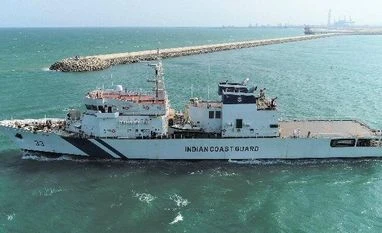
While Defence Minister Nirmala Sitharaman opens Defexpo at Kancheepuram, south of Chennai, her junior minister, Subhash Bhamre, will commission Indian Coast Guard Ship (ICGS) Vikram, a 2,140-tonne OPV, at Larsen & Toubro’s (L&T’s) new Kattupalli shipyard, north of the city.
Public sector defence shipyards such as Mazagon Dock Shipbuilders, Garden Reach Shipbuilders & Engineers, and Goa Shipyard (GSL) are infamous for time delays and cost overruns in building warships. This is especially so in delivering the first of a new class of vessels. In contrast, L&T is delivering ICGS Vikram on schedule, and without any cost overrun.
The public sector GSL earlier took 72 months to build an OPV. Only now has it begun delivering OPVs in the 36-month time frame that L&T took for its first vessel. Meanwhile, another private shipyard, Reliance Naval and Engineering’s facility at Pipavav, is struggling to deliver five naval OPVs on order.
L&T designed the Vikram-class OPVs in its warship design centre at Manapakkam, Chennai, making it the first significant warship fully designed and built in private sector facilities. Company officials claim the design centre can easily design larger capital warships like corvettes, frigates, and destroyers.
L&T brings an impressive engineering pedigree to shipbuilding. Its Hazira shipyard built the hull of India’s nuclear submarines, INS Arihant, and is supplying hulls for its successor vessels as well.
Notwithstanding those skills and even after investing Rs 50 billion in the Kattupalli shipyard, the MoD is unwilling to trust L&T with building capital warships, says Jayant Patil, who heads the company’s defence business. He says Kattupalli currently has the capacity to build 10-11 ships a year, but since capital warship orders are given ‘on nomination’ to public sector shipyards, Kattupalli currently utilises just one-fifth of its capacity.
Indian Coast Guard ship Vikram, which will be commissioned alongside Defexpo India 2018, seen here on its recent sea trials, which it cleared successfully
In three recent shipbuilding orders, public sector shipyards comfortably underbid L&T. An analysis by this newspaper (March 24, “Private warship builders live on scraps, figures tell the sad tale”) indicates that ‘nomination’ orders provide public shipyards a financial buffer that lets them underbid on competitive orders. Almost 90% of warship and submarine orders since 2000 have been ‘nominated’ to the public sector.
L&T won the Rs 13.04-billion contract to build seven OPVs in March 30, 2015. After the Vikram, it must deliver the remaining six OPVs at six-month intervals. Confident company executives say they can speed up that process if the Coast Guard is willing to accept early delivery.
The Vikram-class OPVs are almost 100 metres long. Crewed by 102 persons, these vessels can police India’s maritime zones on missions of up to 5,000 nautical miles (9,250 kilometres, or km). For anti-smuggling and anti-piracy operations, the OPVs are built both fast and lethal. They have a top speed of over 26 knots (50 km per hour) and each has a powerful 30-millimetre (mm) main gun and two 12.7 mm heavy machine guns.

 "L&T to grab early spotlight at Defexpo with first private sector warship")












