Lower credit cost to support REC's earnings; NIM to decline 49 bps in FY19

Margins may remain under pressure; liquidity, availability of funds not major concerns
chart
.
Shreepad S Aute
Last Updated : Sep 28 2018 | 2:33 AM IST
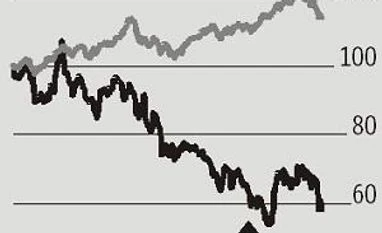
The Rural Electrification Corporation (REC) stock has corrected over 13 per cent over the last five trading sessions. Though the REC is unlikely to feel the sharp hit in terms of liquidity and funding availability like its NBFC peers, weak sentiment has impacted the power financier as well. 

“REC being a government entity, there should not be serious concerns on fund raising. However, margin pressure is likely in the near term as some portion of the borrowings will mature by FY19. But, REC also has pricing power,” says an analyst.

REC will see net interest margin (NIM) pressure in the near term due to a weak rupee and elevated levels of yields, given 84 per cent borrowings as of June 2018 are from the bond market, including commercial papers. NIM is the difference between interest earned and expensed as a percentage of average interest-earning assets. The management says it can easily pass on the high cost pressure to borrowers but with some time lag. 

Analysts expects NIM of REC to decline 49 basis points in FY19 and will recover in subsequent years. 

However, REC is likely to benefit from lower credit cost (provisioning as a percentage of average loan book). 

Even in the June quarter, a 37 per cent year-on-year growth in net profit was led by lower provisions, besides higher other income. 

More than 86 per cent of REC’s advances are to the government, typically backed by government guarantees, and are standard as of June 2016. About 24 per cent of loans are to private companies, of which close to 60 per cent (Rs196.5 billion) are already recognised as bad loans or non-performing assets (NPAs), indicating lower additional slippages in the near future.  REC has already provided over 47 per cent towards these bad loans and the management expects 40-50 per cent recoveries from these NPAs. Analysts expects credit cost of RECs to come down to 0.4 per cent from 0.6 per cent in FY18.

Moreover, support for earnings could stem from expected improvement in the loan book. REC, a nodal agency for operationalisation of the Centre’s Saubhagya scheme, believes 17.5 million households need to be electrified by 2018.

One subscription. Two world-class reads.

Already subscribed? Log in

Subscribe to read the full story →
*Subscribe to Business Standard digital and get complimentary access to The New York Times

Smart Quarterly

₹900

3 Months

₹300/Month

SAVE 25%

Smart Essential

₹2,700

1 Year

₹225/Month

SAVE 46%
*Complimentary New York Times access for the 2nd year will be given after 12 months

Super Saver

₹3,900

2 Years

₹162/Month

Subscribe

Renews automatically, cancel anytime

Here’s what’s included in our digital subscription plans

Exclusive premium stories online

  • Over 30 premium stories daily, handpicked by our editors

Complimentary Access to The New York Times

  • News, Games, Cooking, Audio, Wirecutter & The Athletic

Business Standard Epaper

  • Digital replica of our daily newspaper — with options to read, save, and share

Curated Newsletters

  • Insights on markets, finance, politics, tech, and more delivered to your inbox

Market Analysis & Investment Insights

  • In-depth market analysis & insights with access to The Smart Investor

Archives

  • Repository of articles and publications dating back to 1997

Ad-free Reading

  • Uninterrupted reading experience with no advertisements

Seamless Access Across All Devices

  • Access Business Standard across devices — mobile, tablet, or PC, via web or app

Next Story



