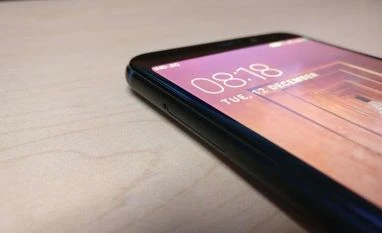
The Micromax Canvas Infinity Pro takes a step forward in the right direction, bringing a dual-camera set-up for selfies, along with the futuristic 18:9 aspect ratio screen – two major features ruling the smartphone market at present. Second in line of Micromax’s Infinity series, the Canvas Infinity Pro is an upgrade of the Canvas Infinity smartphone announced earlier this year.
While the original Canvas Infinity was marred by several issues like touch latency and inefficient RAM management, the Pro model shows some much-needed improvements.
Business Standard reviewed the Canvas Infinity Pro to test its dual-selfie camera performance and screen, besides the overall smartphone performance. Here are our observations:
Display
The Canvas Infinity Pro sports a 5.7-inch HD+ screen, like the one in the original Canvas Infinity smartphone. The screen is stretched from top and bottom to meet the futuristic 18:9 aspect ratio. But the ultra-wide screen falls short in minimising the top and bottom bezels. The phone, however, feels small despite accommodating the bigger form factor of its screen.
In terms of colour reproduction, contrast and brightness levels, the screen delivers satisfactory results. The major touch latency issue seen in the original Canvas Infinity has been addressed to a certain extent. The touch mostly feels responsive but shows signs of latency sometimes. Also, the HD+ screen (1440 x 720 pixels) makes the otherwise promising display fall short of pixels while rendering text and playing videos.
Camera
Imaging is one area where the Canvas Infinity Pro has seen a major improvement over its predecessor. The Canvas Infinity Pro sports a 16-megapixel rear camera supporting auto-scene detection and super pixel technology. This selfie camera has a dual-camera set-up, with a 20MP primary sensor, coupled with 8MP depth-sensing lens.
The rear camera captures satisfactory details in daylight conditions. The focus is prompt and the output is much better than the predecessor. However, the phone’s rear camera still faces troubles in low-light conditions and requires steady hands for taking good shots.
The front camera, on the other hand, shows more promising results. The dual cameras work in tandem to deliver detailed pictures. The front camera features the portrait mode, which keeps the object in focus while blurring the background, creating the Bokeh effect. The feature works flawlessly and the results are worth appreciating.
Performance
The Micromax Canvas Infinity Pro is powered by a Qualcomm Snapdragon 430 SoC, coupled with 64 GB of internal storage, expandable via microSD, and 4 GB RAM. It runs Android Nougat out of the box, covered under its customised theme which, unfortunately, looks like a cheap iteration of the iOS.
The processor runs regular tasks without breaking sweat. The RAM management is better than what we saw in the Canvas Infinity. But, there are still breaks and hangs here and there which the company might like to improve in forthcoming devices.
Battery and other features
The smartphone has a 3,000 mAh battery, which lasts almost a day on normal use. Watching videos over Wi-Fi or 4G networks and occasional internet browsing, however, take a toll on battery and reduce the usage time to 10-12 hours – that is still better that the battery life of the predecessor.
Verdict
The Canvas Infinity Pro brings the much-needed upgrades to its predecessor, along with the dual-camera set-up for selfies, a key feature ruling the smartphone industry at present. The handset delivers a satisfactory performance, but it may seem a little overpriced for Rs 13,999. In its price range, it competes with the likes of the Asus Zenfone 4 Seflie (dual camera variant), Infocus Snap 4 and Honor 9i.