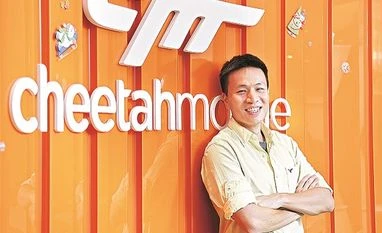
Brand advertising on mobile will reach the pinnacle as consumers shift their media viewing habit from TV to mobile devices, Morden Chen tells Ritwik Sharma.
What are your observations on Indian companies and adoption of mobile advertising?
Mobile advertising is still mainly driven by performance-based marketing with e-commerce being the biggest spender on user acquisition and revenue generation. However, growth for using mobile to run branding campaigns has been on the rise. We think that this portion of the revenue in 2017 would double that of 2016. With the ever-expanding smartphone user base in India, we at Cheetah Mobile believe mobile advertising is at a latent stage and will be the driving force of brand campaigns in the future. We worked closely with Samsung for the launch of its phone and were able to generate more than 37 million impressions. We worked with them on a combination of high market reach, impactful ad format and used machine learning to help optimise the campaign. We have over 100 active clients in India that have adopted our vertical ad format and are extremely satisfied with the results. We believe we can maintain this momentum and empower more brands to effectively reach out to their customers.
What are the challenges faced by ad marketers in India? How does mobile advertising here compare with markets in the Asia Pacific?
The key challenges would be that of infrastructure, user device and connectivity. Due to the high percentage of simple and affordable (lower tier) mobile devices, slower connectivity and the number of users on 4G connectivity, when compared to other APAC markets, creatives and advertising technologies have to consider these when launching any mobile marketing campaign. For example, slower connectivity would make video ads on mobile challenging without proper compression techniques. However, things are changing for the better due to the introduction of better phones and faster connectivity at lower cost. These would definitely allow marketers to be more creative with their mobile marketing initiatives.
Where do you see growth opportunities for mobile advertising in India, across sectors?
In the past few years, the growth has been mainly driven by e-commerce. However, in recent years we see major consolidation of e-commerce companies with lesser competition out there in the market. For example, just last week, there were talks of the merger between Snapdeal and Flipkart. As such, we think that the growth would slow down within these two years compared to previous years. Nevertheless, we are forecasting that the market would bounce back between 2018 and 2019.
Mobile gaming has always been largely neglected in India when compared with other APAC countries. As such, performance spending from this sector in India has always been negligible. We are, however, optimistic about this sector’s growth potential as the younger generation grows up with their smartphone and the games available on the platform. This generation, when they reach an age with purchasing power, might fuel the growth of the mobile gaming sector in India.
Finally yet importantly, brand advertising on mobile will reach the pinnacle as consumers shift their media viewing habit from TV to their mobile devices. Brands will soon recognise this and catch up in terms of their mobile advertising investment. This grants huge potential especially in light of the success of OTT players (e.g. Hotstar) and new aggregator apps like UC News, Dailyhunt and News Republic.
Could you share any specific app-related insights from consumers that could be applicable to the Indian market and advertisers?
In a country like India, with wide geographical coverage, O2O (online-to-offline) presents businesses who are able to bring convenience to consumers huge opportunities. Businesses, new and old, that are able to innovate in terms of new ways to make consumers’ life easier, will reap its benefits. In terms of ad network operation traffic, India comes in at number one with 20.07 per cent of all ad network operation traffic worldwide followed by US, which ranks number two with 20.03 per cent. In terms of Indian companies’ ad placement strategies, utility and productivity apps are the most active categories, accounting for 49 per cent of ad campaigns. Entertainment content and games came in second and third in terms of ad activity; advertisers sought to monetise these through increasing user demand in the leisure category.
What are the emerging applications of AI in advertising?
We are a strong believer of AI and its application in advertising. Since we announced last year that we would be investing big in AI, we have made great progress even winning an AI competition held by Microsoft with our very own OrionStar for advanced facial recognition technologies. We are confident that with our huge inventory and precise targeting abilities fuelled by our AI capabilities, Cheetah Ads will continue to help advertisers in India to effectively reach their target audience who are increasingly mobile-first. We see our mission in India as one that will continue to educate the market about the beauty of mobile advertising and work closely with our various partners to move the industry forward. We hope to incorporate this into advertising by automating the A/B testing process and the optimisation of campaigns to help advertisers achieve better RoI.