Moody's downgrades BoB's baseline credit assessment on asset quality issues

Agency also cites deteriorating operating environment for decision; affirms lender's domestic and foreign bank deposit ratings
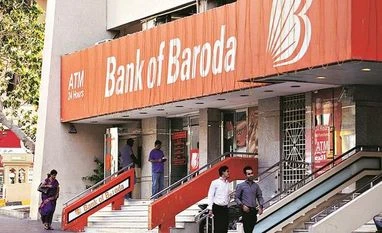
Bank of Baroda
Moody’s said asset quality in BoB's MSME and agriculture portfolio will continue to weaken further | File Photo
Abhijit Lele Mumbai
2 min read Last Updated : Mar 05 2020 | 1:26 AM IST
Global rating agency Moody’s has downgraded Bank of Baroda (BoB)'s baseline credit assessment (BCA) from “ba2” to “ba3” on weakening asset quality and further risks from the deteriorating operating environment in India.

The agency said deterioration in asset quality poses risks to BoB's profitability and capital.

Moody's affirmed the public sector lender's domestic and foreign bank long-term and short-term deposit ratings of Baa3, stable/P-3. It also affirmed Bank of Baroda (London)'s foreign currency senior unsecured rating of Baa3, stable. Two public sector banks – Dena Bank and Vijaya Bank merged with Bank of Baroda from April 01, 2019.

Funding and liquidity remain key credit strengths of the public sector bank. Similar to other PSU lenders, BoB's funding franchise benefits from government ownership, Moody’s said.

The Government of India (Baa2 negative) owned 71.6 per cent of the bank as of December 31, 2019, and plays a key role in its management. The government has made significant capital infusions into all public sector banks, including Bank of Baroda, over the last few years.

Moody’s said asset quality in BoB's micro, small and medium enterprises and agriculture portfolio, which has deteriorated, will continue to weaken further. Lower economic growth in India is negative for these sectors and will drive continued weakness in these segments.

Further, the current level of non-performing loan (NPL)-formation rates in the SME segment may be understated, because there is regulatory forbearance on NPL recognition in this segment, Moody’s said.

Another risk factor is BoB's exposure to non-banking financial institutions (NBFIs), which amounts to 16 per cent of its loan book, the highest among Moody's-rated banks in India. A few of the large NBFIs continue to face headwinds and the high exposure to NBFIs is a source of additional risk for asset quality.

If the downside risks on asset quality materialise, resulting in higher credit costs and lower internal capital generation, the pace of improvement in profitability and capital will be negatively impacted.

One subscription. Two world-class reads.

Already subscribed? Log in

Subscribe to read the full story →
*Subscribe to Business Standard digital and get complimentary access to The New York Times

Smart Quarterly

₹900

3 Months

₹300/Month

SAVE 25%

Smart Essential

₹2,700

1 Year

₹225/Month

SAVE 46%
*Complimentary New York Times access for the 2nd year will be given after 12 months

Super Saver

₹3,900

2 Years

₹162/Month

Subscribe

Renews automatically, cancel anytime

Here’s what’s included in our digital subscription plans

Exclusive premium stories online

  • Over 30 premium stories daily, handpicked by our editors

Complimentary Access to The New York Times

  • News, Games, Cooking, Audio, Wirecutter & The Athletic

Business Standard Epaper

  • Digital replica of our daily newspaper — with options to read, save, and share

Curated Newsletters

  • Insights on markets, finance, politics, tech, and more delivered to your inbox

Market Analysis & Investment Insights

  • In-depth market analysis & insights with access to The Smart Investor

Archives

  • Repository of articles and publications dating back to 1997

Ad-free Reading

  • Uninterrupted reading experience with no advertisements

Seamless Access Across All Devices

  • Access Business Standard across devices — mobile, tablet, or PC, via web or app

Topics :Bank of BarodaMoody'sMoody's RatingPSBsDena BankVijaya Bank

Next Story



