MTR revamps its supply chain

The company is strengthening its back-end operations to drive cost efficiencies as it takes on MNCs
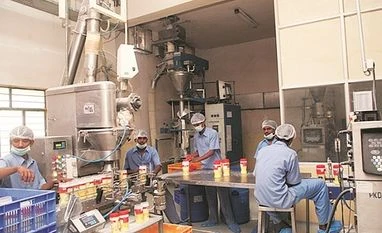
MTR foods, MTR supply chain, MTR, MTR inventory
On the back of a flexible supply chain, MTR has cut costs by reducing inventory levels by 20%
Sangeeta Tanwar
Last Updated : May 02 2017 | 5:55 PM IST
For packaged food company MTR Foods, supporting a product portfolio of 120 products that cater to cuisines from across the country and finding a pan-India presence haven’t come easy. Competing with multinationals, over the last few years MTR Foods has focused on driving cost efficiencies by strengthening its supply chain. It invests significant time and resources in setting up key performance indicators for supply chain. Further, with strong service level agreement between supply chain and logistics partners, MTR Foods claims to have achieved lower pipeline inventory and higher sales thus improving overall profitability.

The reduction in supply chain costs has come in the wake of identification of constraints along the value chain and subsequent alignment of all the stakeholders.

About 80 per cent of MTR Foods’ sales come from south. In its early years it struggled to manage the complexities in handling a large number of stock keeping units and high dependency on sales from a single region (in this case from the south). It struggled to manage available inventory effectively and faced challenges in drawing up a flexible production plan for its manufacturing unit. Essentially, the absence of adequate data impacted its forecast ability to predict the volume of products to be manufactured.

“A couple of years ago, our sales variability was high and we could not make adequate supply chain analysis to predict what would sell more and at what time. This hindered our ability to scale up and scale down our production plans and also contributed to inefficiencies in the delivery system,” says Ankur Bhaumik, chief operating officer, MTR Foods Private Limited.

The company had to reach a point where it could build strong capacity and determine sales volumes before it dipped below minimum inventory levels so as to scale up production capabilities. To address this, MTR Foods moved backwards and put in place a strong yet flexible supply chain that helped it stock below order, scale up production quickly and reduce working capital requirements. Alongside, the company’s forecasting system had to be made stronger to take care of required replenishments.

MTR Foods began by setting for itself an agenda to have a deeper understanding of sales velocity and seeing to it that within 24 months it went about reducing its high pipeline stock inventory. Following a pull-based sales strategy (where production orders begin upon inventory reaching a certain level), the company worked around significantly reducing the lead time taken to transfer stocks from its depots to distributors.

As part of the plan, the company set its eyes on supplying 90 per cent of its distributors with required stocks in two days. This approach ensured the company had a reduced inventory to deal with and was able to maintain freshness of the produce.

Taking a strategic call, MTR Foods decided that it would produce almost 85 per cent of the value-added products in-house and the rest would be outsourced. The products to be outsourced were those which did not involve any value addition and were labour intensive (such as spices).

MTR Foods has one manufacturing facility in Bengaluru that handles 85 per cent of its production. Besides, it has outsourcing units in Karnataka, Andhra Pradesh, Maharashtra, Gujarat and Madhya Pradesh. Its manufacturing unit, spread across 12 acres, also has a captive flexible packaging plant and a central warehousing unit.

Bhaumik says the company has one central distribution centre (CDC) in Bengaluru. A majority of the stocks from production plants are received at the CDC. In addition, MTR Foods has 14 depots across India with over 50 per cent outside south. These depots have been set up on the basis of product volumes coming from particular markets. The stock is moved to distributors from these depots. The company leverages Excel-based forecast tools, deployment plans and production tools to forecast inventory requirements.

MTR Foods has a 13 member in-house team that manages functions such as production planning, sales forecasting, sourcing and procurement. With an aim to keep the costs low, it has outsourced the logistics system which takes care of transportation of manufactured products from the CDC to various hubs and finally the distributors. MTR is working with 900 distributors and retails from 220,000 outlets. Its products are also available at its own e-commerce store and in marketplaces and other e-grocery stores.

On the back of a flexible supply chain, it claims to have cut costs by reducing its inventory levels by 20 per cent.

MTR Foods closed the calendar year 2016 at Rs 800 crore and expects to become a Rs 1,000-crore company by the end of this year. The company is looking at driving further efficiencies in its supply chain by going digital and improving on key performance areas to take on the bigger food MNCs.

One subscription. Two world-class reads.

Already subscribed? Log in

Subscribe to read the full story →
*Subscribe to Business Standard digital and get complimentary access to The New York Times

Smart Quarterly

₹900

3 Months

₹300/Month

SAVE 25%

Smart Essential

₹2,700

1 Year

₹225/Month

SAVE 46%
*Complimentary New York Times access for the 2nd year will be given after 12 months

Super Saver

₹3,900

2 Years

₹162/Month

Subscribe

Renews automatically, cancel anytime

Here’s what’s included in our digital subscription plans

Exclusive premium stories online

  • Over 30 premium stories daily, handpicked by our editors

Complimentary Access to The New York Times

  • News, Games, Cooking, Audio, Wirecutter & The Athletic

Business Standard Epaper

  • Digital replica of our daily newspaper — with options to read, save, and share

Curated Newsletters

  • Insights on markets, finance, politics, tech, and more delivered to your inbox

Market Analysis & Investment Insights

  • In-depth market analysis & insights with access to The Smart Investor

Archives

  • Repository of articles and publications dating back to 1997

Ad-free Reading

  • Uninterrupted reading experience with no advertisements

Seamless Access Across All Devices

  • Access Business Standard across devices — mobile, tablet, or PC, via web or app

Next Story



