
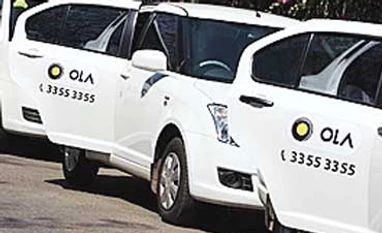
Ola pilots hourly rental plans for cabs in Mumbai
So far, Ola has followed Uber model that aims to reduce idle time for cabs between journeys by getting drivers more customers
 "Ola pilots hourly rental plans for cabs in Mumbai")
WebinarsNew
Deep DiveNew
Explore Business Standard
So far, Ola has followed Uber model that aims to reduce idle time for cabs between journeys by getting drivers more customers
So far, Ola has followed the model of Uber, the pioneer of the on demand model, that aims to reduce idle time for cabs between journeys by getting drivers more customers. Both firms work on a model that gets drivers more trips by making it easier for consumers to book these cabs on their smartphone apps.
But with Uber becoming aggressive in India on the back of recent $3.5 billion raised from Saudi sovereign wealth fund and discounting fares in its lowest category UberGo across cities, the local rival is stepping up its effort to get more cars on its platform.
Ola earlier this month began shaking hands with small taxi operators, whose business it once disrupted. It launched an app for small taxi operators that would allow owners to monitor and account multiple taxis they own on the Ola platform.
"With this launch, Ola aims to add tens of thousands of new operators onto its platform," the company said in a statement on June 3.
India traditionally has thousands of small cab operators with fleet size of five to 20 taxis that are rented to customers on hourly charges. Both Uber and Ola offered incentives to lure drivers of these small cab operators to work on their platforms. Now, Ola says that it will allow these operators to run their cabs on hourly basis on its platform and levy the same rentals to its customers that traditional taxi operators charge.
Mint reported this development first on its website.
Ola did not respond to mail sent for their comments.
With Uber burning cash to capture a larger share of the ride hailing market in India, Ola is forced to look at new avenues to grow the number of vehicles on its platform and the number of rides it does. Apart from hourly rentals, the company is also introduced intercity rides across multiple cities in India, and has offered pre-booking of cabs for quite some time now.
It is also in talks to raise funds of around $1 billion from investors to beef up its war chest o take on Uber.
Ola has 550,000 drivers on 450,000 vehicles, including 350,000 cabs on roads across 102 cities in India. Rival Uber, which launched its India operations three years ago, claims it has equaled Ola with 350,000 cabs on roads in 26 cities and has a 50% market share in terms of daily rides. Ola has challenged the numbers, claiming it still remains to be the leader of India's taxi aggregator space.
Traditionally, internet based businesses have been a winner take all situation with the runner up being a distant second. For both Ola and Uber, the more drivers they get on their platforms, compounds the number of rides they can fulfill, which in turn will help them gain a disproportionate share in the Indian taxi aggregator market. Ola, with this move, is trying to increase the gap with its global rival.
First Published: Jun 20 2016 | 4:58 PM IST

