Ore prices made phenomenal progress in the past few months: Tom Albanese

Miners are now cautiously optimistic as to how prices will play out this year, says Albanese
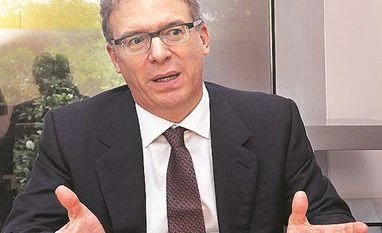
Tom Albanese, CEO, Vedanta Resources
Kunal Bose
Last Updated : Jan 10 2017 | 1:04 AM IST
Iron ore prices have risen sharply in the past few months. But, miners are now cautiously optimistic as to how prices will play out this year, says Vedanta Resources Chief Executive Officer Tom Albanese in an interview with Kunal Bose. Edited excerpts:

Defying price forecasts by research agencies, iron ore prices have more than doubled since 2016 beginning. Metallurgical Mines Association of China says the average seaborne ore price in 2017 will rise ‘moderately’ from last year’s average of $60 a tonne. As a big producer-exporter in India, how do you look at the scene?

Whatever the forecasts, ore prices made phenomenal progress in the past few months. This might be due to a combination of knee-jerk reaction to the series of global economic and political developments and the market running a little ahead of itself. For over a year, the market entertained fears of lower world metal demand on the back of China entering a mature period in its materials consumption cycle. 

But, this fear sentiment disappeared when Beijing introduced a stimulus programme in the second half of 2016. Liquidity flowed into infrastructure and real estate sectors. In the process, ore demand was reignited. Donald Trump winning the US Presidential election convinced commodity bulls of a rally in 2017. 

But, will not the bulls have to contend with high inventories of iron ore and commissioning of new large mines? 

True, ore inventories are rising and these are at this point well above historical average. Given this situation, a legitimate question is to what further extent can spot prices climb. Then, global concern over climate change will be an interesting factor to watch out for. Some softening of ore prices of late is ascribed to Beijing, asking steel mills to stay shut till the smog has cleared. The Chinese steel sector stuck with old technology has higher emission levels than its peers in many other countries.  

Are we going to see Chinese industry making a mass transition to a new environment-friendly technology or will Beijing rest content introducing a stricter regime for steel mill operation? Answers to these questions as they unravel will decide the course of ore prices. 

What could be the impact of price improvement on ore output? 

That there is a trickle-down effect of higher prices on ore production is accepted. In the past couple of years, the focus of miners was to improve operational efficiency and cut costs to weather low prices. This might now change to more action on ore price improvement and demand supply outlook being less overcast. Brazilian Vale’s $14.3 billion Eliezer Batista S11D complex near Canaa dos Carajas stands as an example of how greenfield and brownfield activities in iron ore industry may kick off. 

Miners in general are cautiously optimistic about how ore prices will play out this year. While some brokerages expect prices to average $60 a tonne, there are others who dismiss the recent rally as a ‘fluke’. They don’t see a runaway rally happening in 2017. 

Do you think liberalisation of minerals exploration policy and mines ownership coming through bidding at auctions will usher in a new era in Indian mining? 

We are in an interesting period for India’s natural resources sector. With the government going all out to boost mining activities through reforms, the regulatory environment is becoming increasingly encouraging. The amendment of Mines and Minerals (Development and Regulation) Act that allows transfer of captive mining leases not granted through auction will give a boost to the sector. Also, mergers and acquisitions will benefit from MMDR Act amendment. At the same time, there are some legacy issues such as land ownership pattern, quality of mineralisation studies and end-use restrictions that need addressing. 

The Indian mining sector conjures up images of how Australia was during the 1970s. Today Australia’s natural resources industry offers the best in class infrastructure employing low-emission technologies. India has the means and the will to come to the present Australian level speedily.

 Auction of mineral deposits is just the beginning of a transparent and efficient system of lease allocation. I have no doubt Indian natural resources sector will evolve into a robust industry making significant contribution to gross domestic product. When I also look at the country’s reinvigorated hydrocarbons policy, I find a distinct willingness to allow more private players to come on board. 

Indian iron ore industry had been through much tumult since the Supreme Court banned illegal mining in 2012. Are things getting back to normal after the ban was lifted in April 2014? 

Ahead of the ban, India was one of the world’s largest exporters of ore benefiting from China demand-driven commodities boom. But, the situation today is a far cry from what was available in pre-2012. Government concern about environment and sustainability of mining is understandable. At the same time, you have mining groups which employ best in class technologies that keep carbon emission in check. 

As for Goa, ore mining cap of 20 million tonnes (mt) is not in sync with higher production that can be sustainably mined there. Our suggestion is to lift production cap gradually. Instead of a cap, let there be checks and balances to ensure sustainable mining. 

Finally, will Vedanta opt for forward integration in Indian steel space? 

We shall be interested in any opportunity that fits our log-term group strategy. Vedanta is a big ore producer and is also in value-added business. However, we have not finalised anything in terms of setting up a steel plant.

One subscription. Two world-class reads.

Already subscribed? Log in

Subscribe to read the full story →
*Subscribe to Business Standard digital and get complimentary access to The New York Times

Smart Quarterly

₹900

3 Months

₹300/Month

SAVE 25%

Smart Essential

₹2,700

1 Year

₹225/Month

SAVE 46%
*Complimentary New York Times access for the 2nd year will be given after 12 months

Super Saver

₹3,900

2 Years

₹162/Month

Subscribe

Renews automatically, cancel anytime

Here’s what’s included in our digital subscription plans

Exclusive premium stories online

  • Over 30 premium stories daily, handpicked by our editors

Complimentary Access to The New York Times

  • News, Games, Cooking, Audio, Wirecutter & The Athletic

Business Standard Epaper

  • Digital replica of our daily newspaper — with options to read, save, and share

Curated Newsletters

  • Insights on markets, finance, politics, tech, and more delivered to your inbox

Market Analysis & Investment Insights

  • In-depth market analysis & insights with access to The Smart Investor

Archives

  • Repository of articles and publications dating back to 1997

Ad-free Reading

  • Uninterrupted reading experience with no advertisements

Seamless Access Across All Devices

  • Access Business Standard across devices — mobile, tablet, or PC, via web or app

Next Story



