Financial services platform Paytm's Gross Merchant Volume (GMV) is growing at over a 100 per cent in a year, according to its Draft Red Herring Prospectus (DRHP), filed last week.
In Q1FY22, Paytm’s GMV hit Rs 1,46,900 crore, from Rs 69,700 crore in the same period last year. In the whole of FY21, Paytm’s GMV was Rs 4,03,300 crore, highest in the payments industry as per research firm Redseer.
In its DRHP, the company defines GMV as “the rupee value of total payments made to merchants through transactions on our app, through Paytm Payment Instruments or through our payment solutions, over a period. It excludes any consumer-to-consumer payment service such as money transfers”.
While the company saw an initial dip last year due to the onset of the Covid-19 pandemic, it recovered and began to perform much better. “Since lockdowns eased in India in the second quarter of FY 2021, our GMV has increased consistently for the rest of FY21 primarily due to an increase in the transactions of our online and in-store merchants. Even during the first quarter of FY22, which was impacted by the second wave of Covid-19, we saw continued growth in GMV,” the company said in its DRHP.
The company’s focus remains on consumer to merchant transactions for growth, it said in the DRHP. Its GMV per Monthly Transacting User (MTU) has exceeded pre-Covid levels, touching Rs 9,719 in Q1FY22 as compared to Rs 6,959 in Q3FY20.
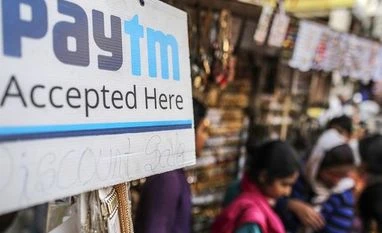
The growth has come in with Paytm’s focus on building revenue focused business models. This has resulted in a spike in its merchant base despite the Covid-19 pandemic, which has grown from 11.2 million in FY19 to 16.3 million in FY20, and 21.1 million in FY21.
Unlike many of its peers, Paytm is expanding its merchant payment ecosystem. It has realised that though it can always try to take maximum share of the Unified Payment Interface transactions, from a revenue generation point it will not have any impact.
The firm has an installed user base of about 350 million, 50 million active users, and over 20 million merchant users, while its payments bank has about 60 million accounts.

 "Paytm's gross merchant volume growing at over 100% in a year: DRHP")












 Connect with us on WhatsApp