Pfizer and BioNtech are in the final stages of talks with the World Health Organisation (WHO) to join the Covax alliance for coronavirus vaccines, Soumya Swaminathan, WHO chief scientist, told Business Standard.
“Discussions are going on with Pfizer and it should be finalised in two days. We cannot tell the number of doses or pricing of the vaccine at this stage,” Swaminathan said.
The Covax alliance, of which India is a member, is a specially created financial instrument to help countries get equitable access to Covid-19 vaccines. The messenger RNA vaccine developed by Pfizer and BioNtech has already received the emergency use approval in the UK.
On whether the UK was too fast in granting approval, Swaminathan said: “The UK has a stringent regulatory authority... We expect that they would have followed due process before giving approval.”
While Pfizer is in talks with India to make its vaccine available in the country and has applied for emergency authorisation, it has not yet applied for holding clinical trials on Indian volunteers.
The ultra-cold chain requirement of Pfizer’s vaccine, unlike most other vaccines, makes it a challenge for most countries including India to store and transport.
Pfizer has developed a special box packed with dry ice and installed with a GPS tracker that can maintain the required -70 degree temperature for ten days. Once delivered, the vaccine can be stored for up to five days between 2C and 8C temperature.
“This would mean that we need a very efficient logistics system, including transportation, skilled manpower so that we can administer the vaccine as soon as it is delivered. Requirements across states may not be homogeneous. We need to map this and plan storage, inventory etc accordingly. We should have already started building this capacity,” said Antony Prashant, Partner, Deloitte India.
India has 35 million tonnes of cold storage capacity, of which about 5 per cent is for the pharma sector. Vaccines including polio and rotavirus require low temperatures but not ultra-cold conditions. Experts say some of this capacity will have to be released for the coronavirus vaccine as well.
For Pfizer, according to experts, the cold chain requirement may require completely new infrastructure. “People are looking at this demand as short term — about 2 to 3 years. What happens to that infra…Biggest area we need to work on is get the ecosystem together,” Prashant said.
He said that the government, pharma companies, logistics service providers, regulatory bodies, airport authorities, technology service providers, ancillary suppliers etc need to work in a coordinated manner and have a common understanding of the end to end operations involved in the movement of the vaccine.
Countries would receive an initial tranche of doses through Covax, until they cover 3 per cent of the population — to allow for vaccination of highest priority populations, likely to be frontline workers in health & social care settings. This would be followed by additional tranches gradually as more supply becomes available until 20 percent of the population is covered to vaccinate those most at-risk groups.
India, under the universal immunisation programme, administers around 350-400 million vaccines to 60 million people every year, predominantly to women and children.
In an earlier conversation, Swaminathan had said the bilateral deals that some countries had entered into with vaccine makers could face risks. That is, some firms may not end up with a successful vaccine whereas in Covax, one can pool that risk by investing in a large number of candidates.
Pfizer’s phase-3 study had enrolled more than 43,000 participants with 42 per cent having diverse backgrounds. The company plans to make this data available to governments across the world to seek regulatory approvals.
India is banking on vaccines other than Pfizer because the cold chain requirements for its shot will be a challenge for most countries, and its limited number of doses would not be enough to meet the country’s demand.
Covax: Setting the stage for rollout
Covax, also known as the Covid-19 Vaccines Global Access Facility, is a global collaboration for speeding up the development, manufacture, and equitable distribution of coronavirus vaccines. It is led by Gavi — global vaccine alliance, the Coalition for Epidemic Preparedness Innovations and the WHO.

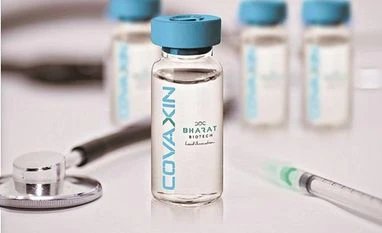 "Pfizer, BioNtech in final stages of talks with WHO to join Covax alliance")











