Philips banks on Taiwanese partner TPV Technology to woo TV buyers in India

India will be the third biggest TV market in the world with sales growing at an average 11 per cent over the next three years
Philips has a network of 200 distributors with access to 30,000 outlets and an after-sales footprint of 200 centres. It aims to drive 40 to 45 per cent of its sales from physical retail with the rest coming from online platforms
Sangeeta Tanwar
Last Updated : Dec 02 2018 | 8:40 PM IST
Making a meaningful comeback after a longish hiatus is never easy for a player in any market. Even a brief hiatus makes the task difficult for a brand owner if the market is crowded and the consumer fickle. Players such as Nokia and Nestle (Maggi) would vouch for it. So when Philips announced recently that it would re-enter the Rs 220 billion Indian television market after a year-long-gap, it raised quite a few eyebrows: There are at least 70 players — big and small, Indian and international — in the fray currently, double the number just two years back. Some of them have been in the market for decades. A bunch of large Chinese players such as Gome and Metz are waiting to throw their hats in the ring. New technology is changing the rules of the game with unfailing regularity. And price cuts is the order of the day as prices of TV sets have come down by 40 per cent on an average across models over the past couple of years.

So will consumers accept one more player? What is Philips planning to do to stand out in the melee?


The company is starting its second innings in the Indian TV market in partnership with its Taiwan-based brand licensee TPV Technology. It is debuting with seven models. TPV Technology, which has global rights for the Philips TV range, got a brand licence for India early this year, after Philips’ previous licensee partner, Videocon Industries, stopped production owing to its financial woes.

TPV Technology plans to counter competition by being present across the price spectrum. In the long-term it aims to move the needle towards larger screen sizes to get a share of the premium TV category. Arun Menon, country business head, Philips branded television and audio, TPV Technology India, says, “The focus is on bringing more value while offering a premium experience to consumers. Our products will be technology-driven and high on features. Large screen sizes will offer smart TV features.” The company will be present in screen sizes spanning 22-inch to 65-inch. The prices start from Rs 9,990 for 22-inch HD TV and go up to Rs 149,990 for 65-inch smart TV.

There is a lot of headroom for growth — by 2020, India will be the third biggest TV market in the world with sales growing at an average 11 per cent over the next three years.

Despite competition, the company can make the most of its comeback move if it succeeds in gaining consumer traction early on leveraging the strong brand equity that the brand ‘Philips’ enjoys, say experts. Commenting on Philips comeback in the TV market, N Chandramouli, CEO, Trust Research Advisory, says, “TV is a highly commoditised product category. For Philips to make an impact, it will have to offer buyers a differentiated and superior product experience. Product innovation will play a crucial role in determining consumer response to its offerings.”

He says what could work in Philips’ favour is the fact that unlike other consumer durable goods such as microwave ovens and washing machines, TV is a display product and occupies pride of place in every home. Since the product is displayed upfront, the brand begins to matter. Given its strong brand equity and legacy, Philips will certainly figure in the buyers’ consideration set along with other leading brands including Samsung, LG, and Sony.

Philips is keen on bringing the latest global innovation to Indian buyers. For example, one of its premium offerings features its three-sided ambilight technology, which uses LED lights from the back of the television screen to create ambient lighting on the opposite wall. The company claims this technology will make the viewing experience easy on the eyes over long watching hours.
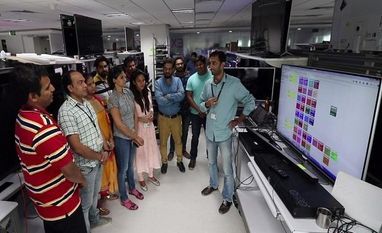
TPV Technology has sub-contracted Dixon Technologies to assemble its TV sets in India. The vendor provides product assembly services to Xiaomi as well. With a third-party vendor in the picture, it becomes critical for Philips to put in place a robust system of checks to monitor quality and output. Each product team at its Bengaluru research and development (R&D) centre uses automated testing frameworks to check various product-related quality aspects. It also goes for usability testing wherein consumers from different walks of life are invited to its R&D facility to provide feedback.

Since TPV Technology also has the licence for Philips audio products it already enjoys a robust distribution footprint. The company has a network of 200 distributors with access to 30,000 outlets and an after-sales footprint of 200 centres. It aims to drive 40 to 45 per cent of its sales from physical retail with the rest coming from online platforms.

Traditionally, Philips counts South, West and East as its strong markets. It also enjoys high brand affinity in select markets in the North such as Rajasthan. It will also push for higher reach in some underserved pockets of Punjab.

Chandramouli points out that today retailers have a paucity of space with multiple brands juggling for display even in large-format stores. Philips needs to have a strong retail presence as TV is a big-ticket product, and consumers like to experience a product before taking it home.

One subscription. Two world-class reads.

Already subscribed? Log in

Subscribe to read the full story →
*Subscribe to Business Standard digital and get complimentary access to The New York Times

Smart Quarterly

₹900

3 Months

₹300/Month

SAVE 25%

Smart Essential

₹2,700

1 Year

₹225/Month

SAVE 46%
*Complimentary New York Times access for the 2nd year will be given after 12 months

Super Saver

₹3,900

2 Years

₹162/Month

Subscribe

Renews automatically, cancel anytime

Here’s what’s included in our digital subscription plans

Exclusive premium stories online

  • Over 30 premium stories daily, handpicked by our editors

Complimentary Access to The New York Times

  • News, Games, Cooking, Audio, Wirecutter & The Athletic

Business Standard Epaper

  • Digital replica of our daily newspaper — with options to read, save, and share

Curated Newsletters

  • Insights on markets, finance, politics, tech, and more delivered to your inbox

Market Analysis & Investment Insights

  • In-depth market analysis & insights with access to The Smart Investor

Archives

  • Repository of articles and publications dating back to 1997

Ad-free Reading

  • Uninterrupted reading experience with no advertisements

Seamless Access Across All Devices

  • Access Business Standard across devices — mobile, tablet, or PC, via web or app

Next Story


