At a time when the slowdown is beginning to hurt the so-far-resilient consumer sector, analysts have increased the earnings estimates of Godrej Consumer Products Ltd. The company has launched seven new products in the past year and increased advertising spend by 40 per cent. In an interview with Malini Bhupta, Harvard-educated
Vivek Gambhir, 44, who took charge as the company’s MD on July 1, explains what GCPL is doing to drive growth. Edited excerpts:
What are the broad levers of growth for GCPL? We see significant growth opportunities in our three core categories — hair care, personal wash and home care. We have been growing at about 1.5 times the FMCG market growth rate in India. We are the number one player in hair colours and household insecticides and the number two player in toilet soaps. We believe there is a lot of headroom for growth since penetration and consumption levels are still quite low. Over the past 12 months, we have launched seven products in India and have recently entered the hair extensions market in Africa, which we believe will be a big growth driver.
What are the investments you are making in marketing? What percentage of sales are you spending on advertising? Currently, our A&P spend is around 14 per cent of revenues, whereas historically it has been around 10 per cent. We have great confidence in our launches, so we are aggressively backing those. Going forward, we will continue to support our products with competitive investments. But over time, A&P spend as a percentage of sales will moderate as our new products gain scale.
What is the revenue potential of these categories? We believe the potential is quite large. In fact, in recent quarters, almost 40 per cent of our incremental revenues has come from our new launches. Take a look at the penetration levels in household insecticides — 56 per cent of households in India don’t use a branded insecticide product. In rural India, this is as high as 72 per cent. India lags countries like China and Indonesia, where per-capita consumption of insecticides is $1 and $1.5, respectively. In India, per capita consumption is about half of that.
When you say innovation is driving incremental revenues, what do you mean?
We are building on consumers’ trust to come up with even better products with sizzle. Our innovations address the bottom of the pyramid, as well as provide premium benefits to mass consumers. So, innovation is helping us accelerate our revenue growth. Organisationally, Nisa Godrej, the head of innovation, is responsible for integrating the various pieces together. We are doing a lot more experimentation and prototyping and employing design-driven thinking.
The market views Fast Card, your new mosquito-based repellant, a disruptive product and expects the product to clock sales of Rs 900 crore over the four years or so. Can you share details of how the product was developed?
For long, we have been agonising over diseases like dengue and malaria. There are 3.3 billion people affected by malaria. India alone sees 24 million cases of malaria each year and 90 per cent of the population resides in malaria-prone areas. In rural India, in particular, penetration of household insecticides is very low, because current products are either expensive or require electricity. Our idea was to launch a product that would break the price barrier, work instantly and not require electricity. The idea of a paper-based product came from our Indonesian business. When this product was launched in that market 18 months ago, it was a big success. We leveraged the idea from Indonesia but substantially modified the product for India.
What are the chances of this cannibalising your existing product categories like coils?
Given the low penetration levels, we will grow the overall market, especially in rural India. We feel this product will compete well with the eight-hour coil market, which has historically not been our strength. We will also see some consumers using Fast Card in addition to other products. I don’t expect any impact on our liquids and coils business.
Are there any other examples of cross-pollination of ideas between different geographies?
We have been doing this systematically. For instance, we learnt a lot about air fresheners with our Indonesian acquisition and enhanced the product to suit Indian needs. In hair colour, we brought in sachet technology from our Argentina business but reformulated the product and changed the packaging to launch the first hair-crème-in-a-sachet in India at a disruptive price point of Rs 30. Our cross-pollination relies on leveraging knowledge and technology but it is not a copy-and-paste model. We tailor things for the local consumer.
Are you going to remain married to your three categories and three geographies strategy?
We do not plan to enter any new geographies over the next three years. However, in terms of categories, we will look at adjacent categories. The three categories will, therefore, evolve. For instance, from protection against mosquitoes to dealing with other pests like roaches. And, we have also launched air fresheners to participate more broadly in home care.
What is your go-to-market strategy, given that rural India is becoming equally important for FMCG companies?
Our focus is on offering superior quality products at affordable prices. Currently, the rural market accounts for 29 per cent of our sales but is growing faster than urban sales. Along with expanding our rural reach, we are also investing heavily in enhancing our urban coverage.
How is the slowdown impacting your company?
There is no doubt that when economic growth slows down, consumption also takes a hit, though it happens with a lag. Compared with last year’s 16 per cent growth, the overall FMCG industry growth rate in the first six months this year has been around 12 per cent. However, we are better placed, as the categories we operate in are less discretionary in nature. We also believe that our innovations will enable us to grow ahead of the market.

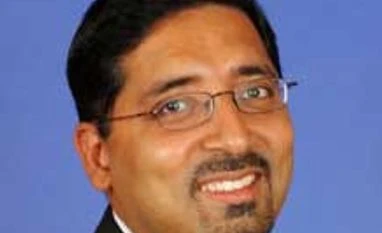 "New launches drive 40% of our incremental revenues: Vivek Gambhir")

