Posco will have to bid for iron ore mines
Posco has previously been promised Khandadhar mine by Odisha govt for mega steel plant but the actual allocation never happened due to delays in regulatory nods
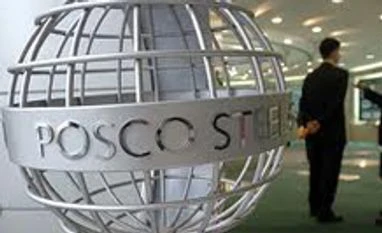
Agencies New Delhi/Kolkata/Bhubaneswar South Korean steel maker Posco will have to bid in the upcoming auction to get an iron ore mine for its $12 billion steel project in Odisha, steel and mines minister Narendra Singh Tomar said today.
Posco was previously promised the Khandadhar iron ore mine by the state government for its mega steel plant but the actual allocation never happened due to delays in regulatory approvals.
Now, with the Centre deciding to use the auction route for allocation of all minerals, the South Korean firm will no longer have the first right on the mine and will have to bid for it. When asked about the fate of the Khandadhar iron ore mine given to Posco by the state on dispensation route, Tomar told reporters on the sidelines of an event here that all firms will have to participate in the auction process to get a mining lease.
"Even I will have to bid to get a mining lease," he said, putting a lid on Odisha's demand that commitments should be honoured under the new dispensation to avoid sending a wrong signal to international investor community by completely ignoring such commitments. Posco's India-based spokesman I G Lee said the company would wait for more clarity before deciding on the next course of action, and that nothing had changed as of now. The 12 million-tonne-a-year plant would be the biggest foreign direct investment the country and had been seen as a test case for Prime Minister Narendra Modi's 'Make in India' manufacturing push.
Posco has a memorandum of understanding with the Odisha government that assures allocation of mining leases. However, following the promulgation of the Ordinance which makes allocation of all mines through the auction route only, the MoU will not make any sense now.
Mines can be allocated even now through the dispensation route in case the Centre had already given concurrence or the state government issued a letter of intent "by whatever name it is called". This is not the case with Posco.
"Now, with the MMDR Amendment Ordinance 2015 is in public domain, it is not possible to offer the Khandadhar mine to Posco on preferential basis and this chapter is now closed. It will have to secure this mine by bidding," a source in the mines ministry told PTI. "We are sympathetic toward the mega project and it is the Centre which is keen to facilitate the allocation as recommended by the state for sake of such large project. But, by the time they (read Odisha government) could send the proposal meeting the required technicalities, the Ordinance was already in public domain for feedback," he said.
"Now, Khandadhar iron ore mine like any other mine has to go for bidding as we have decided to put all future allocation of minerals through auction route. Government can not compromise on transparency overlooking Supreme Court's observations on mine allocations in the past," the source said. The Centre blamed the Odisha government for its failure to meet the technical requirements before the Ordinance as was sought by the Centre on notified and non-notified areas of the block spread over 2,500 hectares which state had decided to offer to Posco in 2009.
Reportedly, there were more than 200 applicants for the Khandadhar iron ore deposits, but the state government had recommended the lease for Posco, calling the project the biggest FDI in the state.
It had invoked Section 11 (5) under the previous MMDR Act, 1957 for making the special recommendation for Posco.
In 2013, Posco had scrapped the 6-million-tonne steel project in Karnataka over land and mineral hurdles. The Odisha steel project was also scaled down to 8 million tonnes after the project failed to acquire the desired quantity of land.
Amid the delay in setting up the Odisha plant, Posco's India Deputy Managing Director Ho-Chan Ryu has been asked to go back to Seoul by next week after spending almost seven years in the country in two stints. Spokesman Lee said Ryu's departure had nothing to do with the state of the project, though a company source said there may have been some connection. "The situation is not favourable, things have become more difficult and we will have to start from scratch," the top Posco India official said, declining to be named.
Last month Posco inaugurated a $709 million steel mill in western India to gradually scale up its presence in the emerging market even as its mega project stays stuck.

 "Posco will have to bid for iron ore mines")


 Connect with us on WhatsApp