RB's India growth flattens in spite of PM Modi's Swachh Bharat boost

The company saw sales growth slowing to 1.8% in FY18
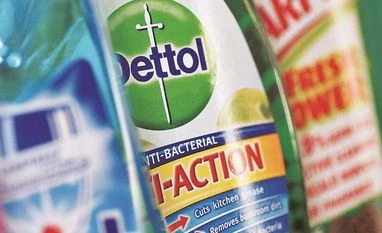
RB India, Dettol, Reckitt benckiser
Arnab Dutta New Delhi
Last Updated : Nov 09 2018 | 5:30 AM IST
RB India, the local arm of British consumer goods giant Reckitt Benckiser, hit a slow lane in 2017-18.

The maker of widely used hygiene brands Dettol, Lysol and Harpic registered a 1.8 per cent rise in revenue from the year before, to Rs 58.1 billion (data from the office of the registrar of companies). This was much below the rise for the earlier two years, of 13 per cent in 2016-17 and 16 per cent in 2015-16.

The profit numbers for FY18 and FY17 were not available. In FY16, the net profit jumped 105 per cent to a little over Rs 15.1 billion.

RB’s India business depends heavily on its health and hygiene related products. Since 2014, this had been riding on the growing awareness on these subjects. In line with Prime Minister Narendra Modi’s flagship Swachh Bharat Mission, it had launched a Rs 1-billion campaign to further promote hygiene products. 

Dettol contributes an estimated 60 per cent of RB’s revenue here; Harpic generates a little over 10 per cent.

Rival Hindustan Unilever that sells hygiene products under the Lifebuoy and Domex brands, had raised a pitch on similar lines. It had begun a drive to educate consumers in Bihar about the importance of hygiene. It then expanded this in early 2018 with a Swachh Aadat, Swachh Bharat programme, targeting children across India. 

Kolkata-based ITC that owns rival brads Savlon and Nimyle is also trying to lure consumers.

Reckitt’s performance in FY18 might be showing the impact of the then newly introduced goods and services tax (GST), which took effect from July 1, 2017. The firm had noted a loss of sales in mid-2017, when businesses were struggling to realign operations with the new tax regime. The third-party distribution system, comprising mostly the wholesaler and stockist channels, had come to a near halt.

RB’s global management had said in July 2017 that “sales have been hit by the (GST introduction), which has prompted retailers to slash their prices”, referring to its June quarter business. “The company has suffered lower orders from some customers in June because of the new GST”.


One subscription. Two world-class reads.

Already subscribed? Log in

Subscribe to read the full story →
*Subscribe to Business Standard digital and get complimentary access to The New York Times

Smart Quarterly

₹900

3 Months

₹300/Month

SAVE 25%

Smart Essential

₹2,700

1 Year

₹225/Month

SAVE 46%
*Complimentary New York Times access for the 2nd year will be given after 12 months

Super Saver

₹3,900

2 Years

₹162/Month

Subscribe

Renews automatically, cancel anytime

Here’s what’s included in our digital subscription plans

Exclusive premium stories online

  • Over 30 premium stories daily, handpicked by our editors

Complimentary Access to The New York Times

  • News, Games, Cooking, Audio, Wirecutter & The Athletic

Business Standard Epaper

  • Digital replica of our daily newspaper — with options to read, save, and share

Curated Newsletters

  • Insights on markets, finance, politics, tech, and more delivered to your inbox

Market Analysis & Investment Insights

  • In-depth market analysis & insights with access to The Smart Investor

Archives

  • Repository of articles and publications dating back to 1997

Ad-free Reading

  • Uninterrupted reading experience with no advertisements

Seamless Access Across All Devices

  • Access Business Standard across devices — mobile, tablet, or PC, via web or app

Next Story


