Review of RERA rules likely to save home buyers from errant builders

As state after state diluted rules to regulate real estate, SC ordered a relook
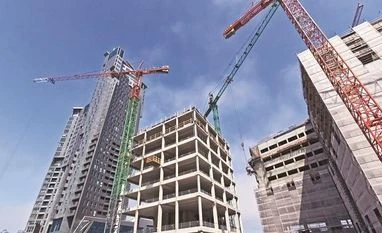
Housing market, Homes, Real estate, Realty
Raghavendra Kamath
4 min read Last Updated : Feb 28 2022 | 6:10 AM IST
If homebuyers are forced to do even more extensive due diligence for an under-construction project than earlier, one reason is that states have diluted the 2016 Real Estate (Regulation & Development) Act or RERA, allowing developers to flout the rules.

With each state having diluted the rules differently, the task has become even more complex for home buyers. This is why the Supreme Court recently asked the Ministry of Housing and Urban Affairs to undertake a detailed scrutiny of RERA rules in every state.

All ongoing construction projects which have not received a completion certificate prior to commencement of the Act are meant to come under the RERA. The rules were meant to be applied uniformly across the country. But seven key states including Haryana, Uttar Pradesh, and Maharashtra have waived this rule, according to analysis by Anarock Property Consultants.

Uttar Pradesh has excluded ongoing projects which have applied for an occupancy certificate or received a partial completion certificate or sale deed for 60 per cent of the flats executed before the act was notified from the purview of the RERA.

Haryana has excluded all ongoing projects and Maharashtra has excluded ongoing projects if any building has received an occupancy or completion certificate.

In Karnataka, ongoing projects in which 60 per cent of the work has been completed or which have a partial occupancy certificate, are not subject to RERA rules.

“If different states have different versions of the RERA, it creates confusion in the minds of buyers who are forced to do their own due diligence in every state they want to buy in,” said Prashant Thakur, director and head of research, Anarock.  

The study showed that among key states,  only Gujarat has followed this RERA clause  in spirit as formulated by the Centre.

This dilution of clauses has made RERA less stringent, say analysts, and allowed developers to circumvent the rules designed to protect home buyers.


Even punishments have been lightened. The RERA prescribed a fine of up to 10 per cent of the project cost and imprisonment for up to three years for repeated offences.

Yet Uttar Pradesh provides for a fine of a maximum of 10 per cent in lieu of imprisonment. Haryana prescribes a fine of 5 to 10 per cent, Karnataka has a fine of up to 10 per cent in lieu of imprisonment and Maharashtra’s version of RERA talks about 5 to10 per cent fine in lieu of imprisonment.

On changing the sanctioned plan, RERA said the consent of two thirds of the allottees is required. Again, in Uttar Pradesh, this clause is not even mentioned. In Haryana, the minimum number of allottees required to make changes is not specified.

Maharashtra has changed the phrase ‘sanctioned plan’ to ‘last sanctioned plan’ which made all earlier changes done to the plan in ongoing project without the consent of two third of allottees legal.

Finally, RERA’s model sale agreement stipulated a 10 per cent advance payment or the charging of an application fee from buyers at the time of entering into a written agreement for sale. Moreover, if any structural defect appeared within five years of buyers taking possession, developers would be liable to rectify the defects free of cost.

Gujarat and Madhya Pradesh have watered down this provision and some other states do not even mention it. Rajasthan’s rules have no clarity on the number of years while Uttar Pradesh has completely ignored this requirement, according to a study by Knight Frank.

Thakur has welcomed the Supreme Court’s order that the Ministry of Housing & Urban Affairs must review how the states have diluted the law.

“The apex court seems to be laser-focused on safeguarding homebuyers’ interests and such moves will go a long way in improving homebuyers’ confidence in the real estate sector," said Thakur.

One subscription. Two world-class reads.

Already subscribed? Log in

Subscribe to read the full story →
*Subscribe to Business Standard digital and get complimentary access to The New York Times

Smart Quarterly

₹900

3 Months

₹300/Month

SAVE 25%

Smart Essential

₹2,700

1 Year

₹225/Month

SAVE 46%
*Complimentary New York Times access for the 2nd year will be given after 12 months

Super Saver

₹3,900

2 Years

₹162/Month

Subscribe

Renews automatically, cancel anytime

Here’s what’s included in our digital subscription plans

Exclusive premium stories online

  • Over 30 premium stories daily, handpicked by our editors

Complimentary Access to The New York Times

  • News, Games, Cooking, Audio, Wirecutter & The Athletic

Business Standard Epaper

  • Digital replica of our daily newspaper — with options to read, save, and share

Curated Newsletters

  • Insights on markets, finance, politics, tech, and more delivered to your inbox

Market Analysis & Investment Insights

  • In-depth market analysis & insights with access to The Smart Investor

Archives

  • Repository of articles and publications dating back to 1997

Ad-free Reading

  • Uninterrupted reading experience with no advertisements

Seamless Access Across All Devices

  • Access Business Standard across devices — mobile, tablet, or PC, via web or app

Topics :RERAhomebuyersSupreme CourtHousing market

Next Story



