RIL row apart, oil price plays a spoiler in ONGC's KG plans
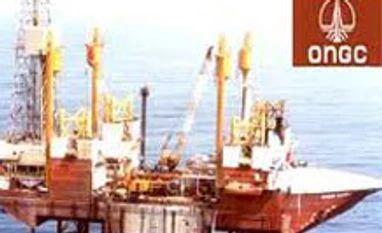
ONGC was planning to start gas production at 98/2 block of the Krishna Godavari basin from April 2018
Kalpana Pathak Mumbai The slide in crude oil prices might push back development of the 98/2 block in the Krishna-Godavari basin, the most ambitious programme of state-run Oil and Natural Gas Corporation (ONGC), by at least two quarters.
ONGC was planning to start gas production here from April 2018. Oil production is slated to begin after that.
“Our programme might be delayed... at the current oil prices, it looks difficult. Our teams are revising the cost and we would have a report by the end of this financial year,” said an official.
In KG 98/2, there are three clusters. In Cluster-1, ONGC is in a dispute with Reliance Industries on migration of gas. Cluster-2 is in the centre and is divided into 2A for gas and 2B for oil. The company is re-working its capital expenditure plan and officials said all the cost optimisation schemes implemented would result in a 10-15 per cent reduction in overall cost and nearly 10 per cent in that of a particular project. “We might see tangible impact on cost reduction in the next two quarters,” the official added.
| HIT BY BRENT CRUDE OIL SLIDE |
- ONGC was to start gas production at the Krishna-Godavari basin from April 2018; oil production was to begin after that
- But an official said the timeline was likely to be pushed back by at least a few quarters because of the slide in crude oil prices
- Most of the projects were awarded when oil was trading around $70-75 a barrel; now it is below $40 a barrel
|
Around 70 per cent of ONGC’s production comes from nominated blocks. Production sharing contracts and value-added products account for the rest. For nominated blocks, the realisation is close to $40 a barrel. It would be the same level as last year, on an annual basis. For the other 30 per cent, the decline in price is adverse. This is partly offset by favourable foreign exchange variation and the reduction in cost of service.
All of ONGC’s projects are in the implementation stage, except for KG 98/2. “You need to know how to also do business at $34 a barrel. Now that we know the slide in crude oil price is continuing and there is no respite, we have started taking serious steps and prioritising various work programmes,” an official added.
Said another: “Much of our projects were awarded last year, when oil was trading around $70-75. Nothing can be done about this now but we are looking at how we can optimise cost for projects. No project has been set aside.”
ONGC has already asked the government to take a relook at the gas price for future development from deepwater fields. “We are asking for extension of premium to deepwater fields which are discovered but to be developed in the future. We are sure the government would look at our request positively. The (plan) we have submitted is for 17 mscmd (million standard cubic metres a day) of gas and 75,000 bpd (barrels a day) of oil,” Chairman and Managing Director D K Sarraf had told this newspaper last month. He’d said the company was not withholding investment. “Whatever cut in capital expenditure will happen, it will be because of cost saving. In this business, investments are not done based on today’s price but on a long-term one. We will invest more than our commitment in the minimum work programme. Our capital expenditure is likely to be higher at Rs 31,500 crore this year from Rs 29,997 crore last year,” he added.

 "RIL row apart, oil price plays a spoiler in ONGC's KG plans")


