Rural market turns positive for carmakers on the back of good monsoon

Rural sales of the country's largest passenger car maker Maruti Suzuki India Ltd (MSIL's) increased by 2 per cent and accounted for 38 per cent of company's sales during the quarter ended Dec, 2019

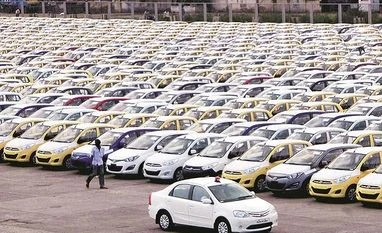
Representative image
T E Narasimhan Chennai
4 min read Last Updated : Jan 30 2020 | 6:21 PM IST
While the price sensitive rural markets turned positive for major carmakers on the back of improved sentiment thanks to a good monsoon and better crop, the question is whether the momentum will continue during the BS-VI era, which will see an increase in prices.

Rural sales of the country's largest passenger car maker Maruti Suzuki India Ltd (MSIL's) increased by 2 per cent and accounted for 38 per cent of company's sales during the quarter ended December, 2019. During the same period, however, the urban market grew by 0.6-0.7 per cent, said Shashank Srivastava, executive director, marketing & sales, MSIL.

Speaking on the way forward, Srivastava said that the challenge lay in converting enquiries into sales once prices went up after the introduction of BS-VI norms.

Meanwhile, Tarun Garg, director, sales and marketing division, Hyundai Motor India Ltd, added that things were really improving in the rural market. "One year back there was a lot of stress. In the Indian market, for the last four five years, all the growth was coming from the rural market. Then for 6 to 8 months things were quite bad. However, this year the monsoon was quite good and we are seeing some kind of a turnaround," he said.

The entire industry, in the April to June and July to September periods, showed a double-digit degrowth both in rural and urban markets. However, this has become more flattish in the December quarter. "We are now witnessing a flat growth in rural areas," Garg said, adding that the industry is expected to see an improvement in growth by the second half of this year.

"We are positive about the near future, but at the same time we cannot expect double-digit growth or something like that. We are looking at low single-digit growth in rural markets," added Garg.

According to Motilal Oswal, initial signs of rural sector bottoming out are emerging, as indicated by return of food inflation, favourable 'terms of trade' for farmers, multi-year high rural spending by the Centre, unusually good water reservoir levels and good start to the Rabi season.

Importance of the rural market has been increasing consistently - especially in the last 2-3 years - when rural market growth was around twice that of the urban market. This is reflected in increasing contribution of rural markets to auto volumes (40%/45% of volumes for two-wheelers/passenger vehicles), said an anlayst from Motilal Oswal.

Faster rural growth was driven by expansion in the distribution network and increasing finance penetration, resulting in easy product accessibility for the rural customer. However, 2HFY19 onwards saw auto volume momentum in the rural market get impacted due to culmination of several headwinds.

In the normal course, two-wheelers would have benefitted the most from rural recovery. However, 10-15% cost inflation in mainstream two-wheelers would dilute benefit of rural recovery. The two-wheeler segment should get impacted by the 7-15% increase in ex-showroom price. Also, there is a risk of value migration within the segment (down trading from Executive 100cc to Economy segment, 125cc Scooter to E-Scooter, etc.). While MOSL estimate around 6% volume growth for the two-wheeler industry in FY21, there is a risk of mix deterioration as well as a change in competitive dynamics.

Tractors are best placed to benefit from the rural recovery due to high correlation with farm economics as well as no BS-VI related challenges. Tractor volumes are expected to recover from the nearly 11% decline in 9MFY20, driven by favourable farm economics and positive sentiment in the on-going Rabi season. MOSL expects volume recovery to reflect from March 2020 and estimates 8-10% volume growth in FY21 for the tractor industry.

Passenger vehicles (PV), particularly petrol PVs, should be the least impacted due to BS-VI transition.

One subscription. Two world-class reads.

Already subscribed? Log in

Subscribe to read the full story →
*Subscribe to Business Standard digital and get complimentary access to The New York Times

Smart Quarterly

₹900

3 Months

₹300/Month

SAVE 25%

Smart Essential

₹2,700

1 Year

₹225/Month

SAVE 46%
*Complimentary New York Times access for the 2nd year will be given after 12 months

Super Saver

₹3,900

2 Years

₹162/Month

Subscribe

Renews automatically, cancel anytime

Here’s what’s included in our digital subscription plans

Exclusive premium stories online

  • Over 30 premium stories daily, handpicked by our editors

Complimentary Access to The New York Times

  • News, Games, Cooking, Audio, Wirecutter & The Athletic

Business Standard Epaper

  • Digital replica of our daily newspaper — with options to read, save, and share

Curated Newsletters

  • Insights on markets, finance, politics, tech, and more delivered to your inbox

Market Analysis & Investment Insights

  • In-depth market analysis & insights with access to The Smart Investor

Archives

  • Repository of articles and publications dating back to 1997

Ad-free Reading

  • Uninterrupted reading experience with no advertisements

Seamless Access Across All Devices

  • Access Business Standard across devices — mobile, tablet, or PC, via web or app

Topics :Maruti Suzuki IndiaMaruti Suzuki

Next Story





