Russia's Rosneft criticises India's withholding tax, calls it a hurdle

Rosneft also raised concerns about the GST regime, saying that it is unable to claim credit of tax it pays on inputs in its Vadinar refinery
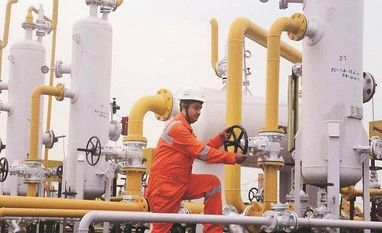
Led by Rosneft, Essar Oil sees retail expansion, new oil supplies
Shine Jacob New Delhi
Last Updated : Oct 06 2018 | 12:05 AM IST
Russian oil giant Rosneft on Friday called for a change in India's tax structure and sought a review on double taxation of foreign investors.  

"India should look into streamlining of its tax system. If an Indian company invests in Russia, it has to give tax and dividends in Russia. On the other side, when we invest in India, we have to give all of this and on top of it, we are being charged a withholding tax of 20 per cent. For us, this is really not symmetrical," Pavel Fedorov, Rosneft's first vice-president for economics and finance, said at an India Russia Business summit on Friday. He added that the issue was being taken up at a bilateral level.  

Rosneft and its partners had acquired Essar Oil in 2017 for $12.9 billion; the name of Essar was changed to Nayara Energy this April. Indian companies such as ONGC Videsh and Oil India, too, have acquired considerable stakes in oil and gas assets in Russia in the past two years. Rosneft also raised concerns about the goods and services tax (GST) regime, adding that it is unable to claim credit of tax it pays on inputs in its Vadinar refinery. This is mainly because the government has kept five petroleum products -- crude oil, petrol, diesel, natural gas and aviation turbine fuel -- outside the GST ambit.      

"We see India as an important market and it is geographically well placed. Hence, we see logistical, infrastructural and trading hub potential for investment," Fedorov added. He also expressed the willingness of the company to increase investments in Nayara Energy. "We are also going to expand our retail network," he added. The statement of retail expansion comes a day after oil marketing companies such as Indian Oil Corporation (IOC), Hindustan Petroleum Corporation (HPCL) and Bharat Petroleum Corporation (HPCL) absorbed Rs 1 each on petrol and diesel prices, which forced private companies in India, too, to take the hit, which might affect their marketing margins. The marketing margin by companies on petrol has now come down to Rs 0.7 a litre and that of diesel has come down to Rs 1.3 a litre.     

Out of the total 56,999 fuel outlets in India, only 6,276 are owned by private companies. Out of this, Nayara Energy runs 4,756 outlets. The other major private companies include Reliance Industries and Shell.    

One subscription. Two world-class reads.

Already subscribed? Log in

Subscribe to read the full story →
*Subscribe to Business Standard digital and get complimentary access to The New York Times

Smart Quarterly

₹900

3 Months

₹300/Month

SAVE 25%

Smart Essential

₹2,700

1 Year

₹225/Month

SAVE 46%
*Complimentary New York Times access for the 2nd year will be given after 12 months

Super Saver

₹3,900

2 Years

₹162/Month

Subscribe

Renews automatically, cancel anytime

Here’s what’s included in our digital subscription plans

Exclusive premium stories online

  • Over 30 premium stories daily, handpicked by our editors

Complimentary Access to The New York Times

  • News, Games, Cooking, Audio, Wirecutter & The Athletic

Business Standard Epaper

  • Digital replica of our daily newspaper — with options to read, save, and share

Curated Newsletters

  • Insights on markets, finance, politics, tech, and more delivered to your inbox

Market Analysis & Investment Insights

  • In-depth market analysis & insights with access to The Smart Investor

Archives

  • Repository of articles and publications dating back to 1997

Ad-free Reading

  • Uninterrupted reading experience with no advertisements

Seamless Access Across All Devices

  • Access Business Standard across devices — mobile, tablet, or PC, via web or app

Next Story


