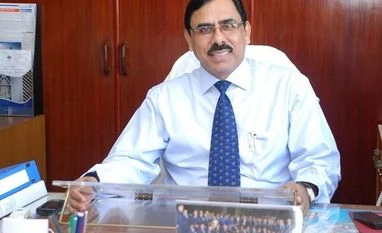
The turnaround of SAIL from several quarters of losses was one of the most challenging experience, said Anil Kumar Chaudhary, the outgoing Chairman of the country's largest steel maker.
The Chairman said he also wants to see SAIL paying back at least 50 per cent of its debt in the near future.
Chaudhary who had joined SAIL as a Junior Manager in 1984 would be superannuating from the top post on December 31, 2020 after serving the company for almost 36 years in various roles.
"I have been associated with SAIL almost from the beginning of my career and have seen several ups and downs traversed by the company... I was the Director Finance and then the Chairman during SAIL's recent turnaround saga. SAIL emerged from the consecutive losses incurred since FY16 and turned around," Chaudhary told PTI while replying to a question related to the most challenging phase of his career.
On February 18, 2018 SAIL posted a standalone net profit of Rs 43.16 crore for the October-December quarter of 2017-18 fiscal, after remaining in losses for several quarters back to back.
From 2011 onwards, Chaudhary was serving as Director Finance of the company till September 2018, when he took charge as Chairman of SAIL.
Chaudhary further said in the last financial year 2019-20, SAIL became the largest steel producing company along with the largest miner of the steel making input materials.
"I want to see this glory touch new heights and I have full faith on the entire SAIL collective that it will take the Maharatna to newer heights," the Chairman said, sharing his expectations from the company after his retirement.
At present, SAIL, under the Ministry of Steel, is the country's largest steel maker having a total installed capacity of about 21 million tonne per annum (MTPA). The company has set up a target to more than double its capacity to 50 MTPA by 2030.
From a debt level of Rs 50,638 crore in September 2020, the company aims to bring it down to around Rs 45,000 crore by the end of this month, and Rs 40,000 crore by the end of the ongoing fiscal, he said.
Replying to a question seeking a reason as to why SAIL's plan of setting up a joint venture with ArcelorMittal (AM) could not bear fruits, Chaudhary said even though the discussions with the Luxembourg-based global steel giant had reached an advanced stage, "the same took a back seat when AM got engaged in acquisition of (erstwhile) Essar Steel under the NCLT (National Company Law Tribunal) mechanism."
In December 2019, ArcelorMittal announced that it had completed the acquisition of Essar Steel and formed a 60:40 joint venture with Nippon Steel (AM/NS India) to own and operate the debt-ridden firm. The deck for acquisition of Essar Steel for Rs 42,000 crore by L N Mittal-led company was cleared by the Supreme Court.
Not defaulting on its part, SAIL had also written several letters to the Lakshmi Mittal-owned ArcelorMittal asking to expedite the process for signing a definitive agreement to set up a joint venture.
However, the technology for making auto-grade steel is available with other steel companies as well for which SAIL is exploring different options, he said.
Earlier, two separate delegations of Indian Steel PSUs led by Ministry of Steel visited Japan and South Korea for deliberations with the steel firms in these countries for further expansion and probable areas of technological collaboration towards manufacturing of high grade steel including steel for auto-body sheets, Chaudhary informed.
The Centre had approved outright sale of loss making Alloy Steels Plant (ASP) in West Bengal, Salem Steel Plant (SSP) in Tamil Nadu and Visvesvaraya Iron and Steel Plant (VISP) in Karnataka.
Sharing the status of SAIL's three plants which were up for sale, he said "Preliminary information memorandum/expression of interest request for ASP, VISP and SSP were issued on July 4, 2019 and the last date for submission of EoI requests after granting three extensions was September 10, 2019.
The bids were received for VISP and SSP for which bidders have been shortlisted and the process is underway. The Chairman did not provide any information with respect to ASP.
In the steel industry, rising prices of the metal is something which is a matter of concern for the consumers these days.
When asked for his comments on the prices, the industry veteran said "domestic steel prices are guided by international steel prices. In the past, the steel prices had really touched the low and it was indeed a tough time for the domestic steel industry. Any industry follows its own dynamics confirming to the market situations and it operates accordingly.


 "SAIL turnaround most challenging phase in 36-yr career: Outgoing chairman")

