Conventional wisdom suggests that a rising rate cycle is generally bad for lenders. First, a portfolio of earlier loans at lower rates becomes less valuable. Second, higher rates generally lead to lower demand for loans so banks can also suffer loss of credit volume.
However, the current scenario has other macro-variables playing out and those may be more favourable. A recovering economy may lead to higher credit demand from corporates, despite rising rates and there are signs that retail consumption is picking up.
Loan growth has accelerated – it is up 15 per cent year-on-year (YoY) -- and the fastest growth segments are high-yield retail and small and medium enterprises. Within retail, unsecured loans are up 30 per cent YoY in the first quarter for the 2022-23 financial year (Q1FY23), and growth is expected to accelerate through the next three quarters. Credit costs are coming down because asset quality is improving. Overall, system credit costs are estimated to fall below 1 per cent.
At least for a while, net interest margin (NIM) trends for banks could also be getting stronger as lending rate hikes have outpaced deposit rate hikes and there is a shift in the loan mix towards higher-yield segments. Yields on externally benchmarked loans have increased by 140-190 basis points (bps) in the year to date and by 60-90 bps for MCLR or marginal cost of funds based lending rate-linked loans.
SBI could be one of the biggest gainers. SBI (along with ICICI Bank, IndusInd Bank and Bank of Baroda) is likely to see double-digit earnings per share gains due to higher NIM. Bank lending spreads have bounced back as the 90-basis-points repo-rate hike flows through. Lending rates on new loans have increased by 26 bps month on month (MoM) in August 2022 (up 55 basis points since March 2022), while new loan spreads are up 5 basis points MoM.
By Aug 2022, bank credit growth was at 14.2 per cent YoY. Retail loan growth has improved 19 per cent YoY with a focus on secured loans (69 per cent of retail loans). Card receivables have also bounced back with around 28 per cent YoY. Home loan growth has improved to 16.2 per cent YoY.
However, liquidity is getting tighter, and the credit spread has increased for A/BBB-rated bonds versus AAA-rated bonds and the spread between 5-year and 1-year maturity bonds, has collapsed and money supply is growing slower. Hence, with deposits lagging loan growth, banks will have to hike deposit rates and NIM could tighten by the end of 2022 calendar year or by Q4FY23.
On the positive side, payments data from the daily settlement systems which is a proxy for retail spending, suggest an excellent trend. Annualising, the three-year compounded annual growth rate (CAGR) of all retail payments is about 15 per cent, while that for digital payments is about 27 per cent. Banks have disbursed 6.7 million credit cards in the first four months of the current financial year as against 11.6 million in all of 2021-22. In July 2022, the number of cards grew 26.6 per cent YoY, while receivables grew 28.3 per cent YoY. This could indicate a stronger bounce in retail consumption.
SBI, with its very large retail base and network is witnessing accelerated retail loans, specifically in the unsecured segment. Unsecured loan products such as personal loans, credit cards, micro finance, etc., are likely to see even faster growth while declining bounce rates and improvement in consumer sentiment could drive faster growth in the retail segment, which is the highest-yield.
SBI has ‘buy’ recommendations with valuations ranging between Rs 660-Rs 700 from various analysts implying a decent upside.

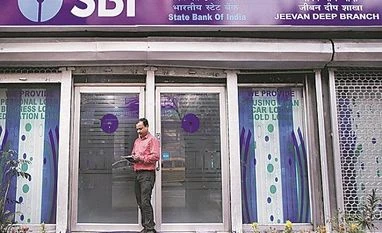 "Gains ahead for SBI: Higher NIM could lead to double digit earnings growth")












 Connect with us on WhatsApp