Siemens Sept quarter numbers instil hope, but core segments remain laggards

As these core businesses are likely to remain the mainstay of the listed entity, their performance will assume greater relevance in the coming quarters
graph
Hamsini Karthik
Last Updated : Nov 20 2018 | 1:22 AM IST
What lies ahead for Siemens India in the ongoing restructuring exercise of its German parent is a key question for Indian investors. 

In March 2016, when the health care unit was hived off into a wholly-owned subsidiary of Siemens AG, investors were worried about the role of the listed Indian company: Was it only a facilitator to nurture businesses, only to sell them to its parent later? The question resurfaced in February this year, when Siemens India's mobility business was being hived off.

Multiple restructuring measures left investors confused. "It is becoming tough to assign values to the subsidiaries as we don't know how long they will be left with the Indian company," says an analyst.

This is why despite the July-September quarter (Q4; Siemens' financial year starts from October) being operationally strong, the Street didn't give it a thumbs-up. Its Q4 revenue, at Rs 39.4 billion, grew by 25 per cent year-on-year (YoY), while core operating profit rose by 32 per cent YoY to Rs 4.2 billion. Adjusted for the year-ago period's one-off gain of Rs 5.6 billion, Q4 net profit grew by 39 per cent to Rs 2.7 billion. Order inflows also rose 4 per cent.

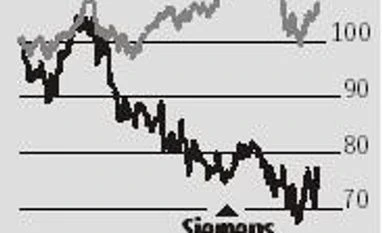
Yet, Siemens' stock discounted these positives, and fell by about 4 per cent on Monday, because its core businesses - energy management and power segments - are not providing comfort. While revenues of energy management and power segments rose by 21 per cent and 38 per cent, respectively, their Ebit (earnings before interest and tax) margins remained under stress. The energy segment saw 40 basis points (bps) YoY shrinkage in Ebit margins, and power division's margins too were under pressure - down 190 bps in Q4.

As these core businesses are likely to remain the mainstay of the listed entity, their performance will assume greater relevance in the coming quarters.

For now, analysts at Antique Stock Broking say, "the bigger upside is a recovery in growth, and profitability improvement is expected over the next two-three years." 

Valuations are also more attractive at 33x 2018-19 earnings after the 24 per cent year-to-date correction. If no fresh surprises unfold, Siemens India may find increased appeal among investors.

One subscription. Two world-class reads.

Already subscribed? Log in

Subscribe to read the full story →
*Subscribe to Business Standard digital and get complimentary access to The New York Times

Smart Quarterly

₹900

3 Months

₹300/Month

SAVE 25%

Smart Essential

₹2,700

1 Year

₹225/Month

SAVE 46%
*Complimentary New York Times access for the 2nd year will be given after 12 months

Super Saver

₹3,900

2 Years

₹162/Month

Subscribe

Renews automatically, cancel anytime

Here’s what’s included in our digital subscription plans

Exclusive premium stories online

  • Over 30 premium stories daily, handpicked by our editors

Complimentary Access to The New York Times

  • News, Games, Cooking, Audio, Wirecutter & The Athletic

Business Standard Epaper

  • Digital replica of our daily newspaper — with options to read, save, and share

Curated Newsletters

  • Insights on markets, finance, politics, tech, and more delivered to your inbox

Market Analysis & Investment Insights

  • In-depth market analysis & insights with access to The Smart Investor

Archives

  • Repository of articles and publications dating back to 1997

Ad-free Reading

  • Uninterrupted reading experience with no advertisements

Seamless Access Across All Devices

  • Access Business Standard across devices — mobile, tablet, or PC, via web or app

Next Story



