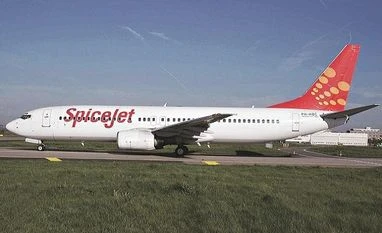
SpiceJet posts Rs 67 cr net loss in Q3 vs Rs 78 cr profit a year ago

While revenue from operations halved, SpiceJet gained due to Rs 209 crore of other income, including claims due from Boeing towards grounding of 737 Max and concessions in lease rent from lessors

spicejet
SpiceJet is currently operating 329 daily flights which is around 72 per cent of its pre-Covid capacity.
Aneesh Phadnis Mumbai
2 min read Last Updated : Feb 10 2021 | 11:35 PM IST
SpiceJet posted Rs 66.7 crore consolidated net loss in third quarter of FY21 as the aviation and travel sector continues to face the adverse impact of the Covid-19 pandemic. In the same quarter last year, the airline had posted a net profit of Rs 77.9 crore.

While revenue from operations halved, SpiceJet benefitted due to Rs 209 crore of other income. This included claims due from aircraft manufacturer Boeing towards grounding of 737 Max aircraft and concessions in lease rent from lessors.

Total income for the reported quarter halved to Rs 1,901 crore from Rs 3,926 crore in same period last year.

“We have successfully managed to trim down our losses considerably with each passing quarter despite limited operations and muted demand,” airline’s chairman Ajay Singh said in a statement.
“With our cargo business proving its true potential, the passenger business getting back on track significantly and a tight control on costs, we have managed to reduce our losses significantly in this quarter. There has been a remarkable recovery from where we were a few months back and with the world’s biggest vaccination drive underway I see a strong revival across sectors,” he added.

SpiceJet is currently operating 329 daily flights which is around 72 per cent of its pre-Covid capacity. Despite muted demand loads sequentially increased from 75 per cent to 78 per cent in third quarter of FY21, the airline said.

Cargo business revenue increased 36 per cent sequentially, it said. On a year on year basis cargo revenue was up nearly six fold to Rs 308 crore.

SpiceJet said continues to engage with Boeing to recover damages incurred by the company due to the grounding of the Max aircraft and the re-induction of these planes in the fleet.

One subscription. Two world-class reads.

Already subscribed? Log in

Subscribe to read the full story →
*Subscribe to Business Standard digital and get complimentary access to The New York Times

Smart Quarterly

₹900

3 Months

₹300/Month

SAVE 25%

Smart Essential

₹2,700

1 Year

₹225/Month

SAVE 46%
*Complimentary New York Times access for the 2nd year will be given after 12 months

Super Saver

₹3,900

2 Years

₹162/Month

Subscribe

Renews automatically, cancel anytime

Here’s what’s included in our digital subscription plans

Exclusive premium stories online

  • Over 30 premium stories daily, handpicked by our editors

Complimentary Access to The New York Times

  • News, Games, Cooking, Audio, Wirecutter & The Athletic

Business Standard Epaper

  • Digital replica of our daily newspaper — with options to read, save, and share

Curated Newsletters

  • Insights on markets, finance, politics, tech, and more delivered to your inbox

Market Analysis & Investment Insights

  • In-depth market analysis & insights with access to The Smart Investor

Archives

  • Repository of articles and publications dating back to 1997

Ad-free Reading

  • Uninterrupted reading experience with no advertisements

Seamless Access Across All Devices

  • Access Business Standard across devices — mobile, tablet, or PC, via web or app

Topics :CoronavirusSpiceJetQ3 resultsAviation industryIndian airlinesCargo industry

Next Story