Startups to drive India's quest for a chunk of small satellite launch pie

Frugal innovations by the Indian startup community are bringing down the cost of launching small satellites into space
Trai bats for private players in satellites
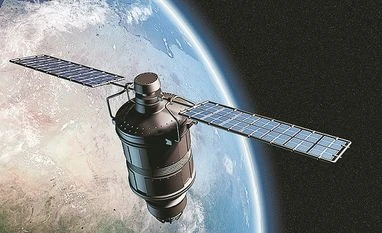
Representative image
T E Narasimhan Chennai
6 min read Last Updated : Mar 09 2021 | 2:14 PM IST
A space-faring nation for over five decades now, India is set to become the hub for the small satellite launch market, which is projected to be valued at about $38 billion by 2027. Startups will be the key drivers in this space, with a few among them on the final stages of developing low-cost solutions that conform to global standards.

The recent reforms by the Centre will further accelerate private sector participation in the sector. Market researchers estimate that 190 small satellites have been launched globally over the past five years. This number is projected to leapfrog to about 7,000 smallsats between 2018 and 2027, with a total value of $38 billion, according to Niti Aayog. And India is expected to grab a major slice of this pie.

Startup ecosystem eyes space industry

Today, the country's share is less than two per cent of the $350 billion global space industry. The total number of satellites launched till February 10 this year is 328 from 33 different countries and the revenue earned is $25 million and €189 million.

But this number is expected to grow with Indian startups eyeing the space industry. There are over 40 enterprises working in India with funding, teams and structure on space and satellite projects complimenting the efforts of the government, says Economic Survey 2020-21.

For the first time in India's space programme, a handful of entrepreneurs have come forward to develop end-to-end launch vehicles and satellites with the aim of providing space-based services and contributing to the space economy.

Isro has been encouraging the PPP model in the Indian space sector in multiple areas like component manufacturing and satellite AIT. These activities are rightly positioned to help private players mature technologically and adopt the technical and process requirements of space systems. It will be cost effective also.

New paradigms in manufacturing as well as the advances made in Artificial Intelligence & Machine Learning are being maximally exploited to realise the next generation of space systems. 5G connectivity is at the horizon and the role of satellites in facilitating the 5G ecosystem as well as the Internet-of-Things (IoT) have been established, he said.

According to experts, launching from India will be 20-30 per cent cheaper due to technological advancements that have increased the accuracy rate to almost 100 per cent. 

Pawan Kumar Chandana, CEO & Co-founder, Skyroot Aerospace, a Hyderabad-based startup that builds small satellite launch vehicles, said India will emerge as the hub for Small satellite launches with private companies joining the Isro platform. Strong technical expertise and ecosystem, and also the highly competitive cost will drive this emergence.

“We also have a great geography for launching to various inclinations. By next year we'll have one more launch range (at Tuticorin) which will be mainly dedicated to small sat launches.

His company is getting ready to launch its first rocket later this year to put commercial satellites into space. The launch vehicle ‘Vikram-I’ is under manufacturing and is targeted for launch in December.

While refusing to comment on cost, he said, “we have vehicles that are low cost and mass producible, and hence are quickly available for a reliable launch. Availability and cost are the main attractions for customers.” Chandana added that technology-wise, India is on par with global space majors.

Skyroot and other startups are using new-age technologies to keep launch cost low. For example, IIT Madras-incubated Agnikul fired its higher stage semi-cryogenic rocket engine, Agnilet. This is a unique rocket engine, completely 3D printed as a single component in one run of the printer.

This goes to prove the engineering architecture behind Agnikul’s orbital class vehicle’s (Agnibaan’s) propulsion systems. This entire engine-Agnilet-is just one piece of hardware from start to finish and has zero assembled parts.

"We don’t think anyone (else) in the world has ever pushed 3D printing of a rocket engine to this extent and we couldn’t be happier to have conceived, designed, realised and test fired this engine, fully in India,” said Srinath Ravichandran, CEO and co-founder of Agnikul Cosmos.

Skyroot manufactured India’s first 3D printed Cryogenic rocket engine, which will run on high-performance Cryogenic propellants liquefied natural gas (LNG) and liquid oxygen.

The company demonstrated India’s first 100 per cent 3D-printed bi-propellant liquid rocket engine injector. Compared to traditional manufacturing this reduced the overall mass by 50 per cent, reduced total number of components and lead time by 80 per cent. The engine is capable of multiple restarts enabling them to insert various satellites into multiple orbits in a single mission.

Isro jumps into the fray

Isro will also join the race for the small satellite market. The space agency is developing a small rocket with a capacity to carry satellites weighing 500-700 kg to low earth orbit (LEO). Till now Isro realised five generation of launch vehicles - SLV-3, ASLV, PSLV, GSLV, and GSLV-MkIII.

It had taken up development of the mini rocket - Small Satellite Launch Vehicle (SSLV) - to cater to emerging global small satellite launch service market. SSLV-D1 is targeted to be launched in the next few months.

K Sivan, chairman, Isro and Secretary, Department of Space (DOS) added the last decade was a decade of many firsts in almost all the verticals of ISRO. For example, operationalisation of GSLV with indigenous cryogenic stage and GSLV MkIII, Mars Orbiter Mission, Astrosat, the NavIC constellation, heaviest high throughput satellite, and technology demonstration missions of winged body Reusable Launch Vehicle & Scramjet engine.

According to him, low cost launch of smallsats to LEO will be the focus of global satellite communications. The smallsat revolution was possible due to the new technological platforms, reduced life cycle, up-to-date technology and other factors.

The concept of constellation formation in flying of smallsats, shorter development time may convince investors to back such ventures.

Operators of bigger geo-communication satellites may be forced to bring down their rages for customers. However there are challenges in the form of telemetry, tracking, micro-propulsion and the objections from the defence sector as large numbers of smallsats may hinder the operation of their military satellites. 

One subscription. Two world-class reads.

Already subscribed? Log in

Subscribe to read the full story →
*Subscribe to Business Standard digital and get complimentary access to The New York Times

Smart Quarterly

₹900

3 Months

₹300/Month

SAVE 25%

Smart Essential

₹2,700

1 Year

₹225/Month

SAVE 46%
*Complimentary New York Times access for the 2nd year will be given after 12 months

Super Saver

₹3,900

2 Years

₹162/Month

Subscribe

Renews automatically, cancel anytime

Here’s what’s included in our digital subscription plans

Exclusive premium stories online

  • Over 30 premium stories daily, handpicked by our editors

Complimentary Access to The New York Times

  • News, Games, Cooking, Audio, Wirecutter & The Athletic

Business Standard Epaper

  • Digital replica of our daily newspaper — with options to read, save, and share

Curated Newsletters

  • Insights on markets, finance, politics, tech, and more delivered to your inbox

Market Analysis & Investment Insights

  • In-depth market analysis & insights with access to The Smart Investor

Archives

  • Repository of articles and publications dating back to 1997

Ad-free Reading

  • Uninterrupted reading experience with no advertisements

Seamless Access Across All Devices

  • Access Business Standard across devices — mobile, tablet, or PC, via web or app

Topics :space technologySatelliteSmall satsISROstartups in IndiaStartupsInternet of Things IoTNiti Aayog

Next Story



