In the next two years, at least 13 million tonnes (mt) of capacity is likely to be added by the country's top steel and iron ore producers in a market that is currently growing at 3 per cent.
In the private sector, JSW Steel is likely to complete its 5 mt expansion at Maharashtra's Dolvi next year; Tata Steel's second phase of expansion is underway at Odisha's Kalinganagar and is expected to be completed between the end of calendar year 2021 and financial year 2022. State-owned NMDC, the single largest iron ore producer, is targeting to complete its 3 mt greenfield plant in FY21 and Steel Authority of India Ltd (SAIL), which has expanded capacity to 21.4 mt in FY19, is now in the process of ramping it up.
AM/NS India is committed to growing shipments to 8.5 mt in the medium term and 12-15 mt in the long-term. The exact timeframe, however, is not known. In any case, AM/NS India has a nameplate capacity of 9.6 mt though it is producing 7.5 mt. Taking it to 8.5 mt would, therefore, not entail capacity expansion.
While 13 mt is likely to be the addition in the next two years, by FY25, the ministry is expecting 28-30 mt from the current planned capacity expansions of existing players.
The only chink in India’s steel story right now is the slowdown facing the industry. This has prompted most companies to shift the goalpost for expansion plans by a few months.
“Domestic steel production and consumption grew at a compound annual growth rate (CAGR) of around 7.9 per cent during FY01-FY16. However, during FY17-FY20, steel production and consumption grew at a CAGR of 3 per cent and 7 per cent. The year-on-year growth for Q2 was slightly over 3 per cent in FY20,” said Jayanta Roy, senior vice-president, ICRA.
Roy, however, explained that if domestic capacity increases by 20 mt in the next 3-4 years, all that would be required is a 4-5 per cent growth in consumption to maintain the current level of 78-80 per cent capacity utilisation.
Jayant Acharya, director (commercial and marketing), JSW Steel, said, “India is on a trajectory of growth. One year of lower GDP growth will not change fundamentals. Growth will come back.”
According to Acharya, there is already some improvement in the demand scenario that is reflected in passenger car numbers. From the consumer appliance perspective, too, seasonal demand is visible, he said.
G H Bang, managing director of Korean firm Posco’s India operations, also corroborated that there was some recovery in demand, though not massive. “Carmakers are increasing production numbers. There is also some recovery from the home appliances end,” he said.
CAPACITY ADDITION
Consumer appliance companies are, in fact, expecting discretionary spending to come back.
Kamal Nandi, business head and executive vicepresident, Godrej Appliances, said, the ACE (appliances and consumer electronics) industry as a whole expects to end the year with 9-10 per cent growth. “Floods in various parts of the country and low economic sentiments overall have affected 2019. We expect discretionary spending to help drive demand for ACs when summer kicks in,” Nandi said.
Though 2019 started off well with cooling products showing traction in the first half, Nandi said, demand started tapering off in the second half.
However, the expectation is that on the back of a slight recovery at the user end, steel prices would maintain an upward trend. Steel prices are projected to increase by 1 per cent for the next quarter and may go up to 6 per cent in the beginning of the next financial year, said Nandi.
The past two months have seen price hikes of around Rs 1,000 a tonne each round and companies are expecting to hold on to the trend.

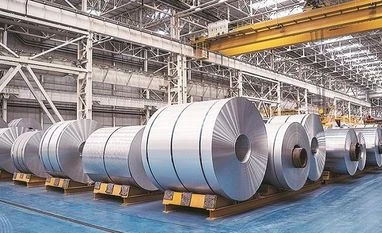 "Steel, iron ore companies likely to add 13 mt of capacity by FY22")












