Mutual fund management firm T Rowe Price has reduced he value of its stake in Flipkart by 15 per cent, becoming the second investor to mark down the online retailer's estimated worth.
It has also cut valuations in taxi aggregator Uber, file-sharing app Dropbox and accommodation aggregator Airbnb.
T Rowe Price had participated in Flipkart's $700-million funding round in December 2014.
In February, Morgan Stanley, another minority investor in Flipkart, downgraded the value of its stock, cutting the company's valuation from $15.2 billion to $11 billion.
Experts had then attributed the drop to growing competition from global e-commerce giant Amazon and Flipkart's inability to reach goals set by investors.
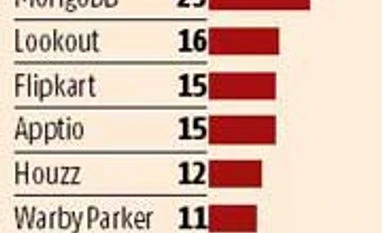
T Rowe Price has fixed the per-share value of Flipkart at $120.69 in its March 2016 quarterly filing - down from $142.26 in the previous quarter. As a result, Flipkart's value would fall to $13 billion from a peak of $15.2 billion.
The markdown this time is not as drastic as the one by Morgan Stanley, which had cut share prices of Flipkart by 27 per cent.
However, the lowering of the valuation comes at a time when global investments in start-ups has, for the first time in two subsequent quarters, dropped.
According to a KPMG and CB Insights report early this week, in the March quarter of the previous financial year, investments in start-ups dropped to $25.5 billion from the peak of $39 billion in the September quarter last year.
Flipkart is not the only one to be affected by this bearish mood. Investors have cut their valuations in taxi-aggregator Uber as well as popular file-sharing app Dropbox.
T Rowe Price joined other firms, such as Fidelity Investments, BlackRock, and Morgan Stanley, to mark down values of their investments in companies that have been using technology to disrupt traditional businesses, such as Uber and Dropbox.
While the former is facing stiff competition from local players such as Ola, Amazon and Google are challenging Dropbox's disruption.
Experts are of the opinion that going public would be "moment of truth" for these firms.
"Public markets look favourably upon sustainable business models. That means steady growth in revenues, profitability and better RoI (return on investments). In contrast, private markets look at impact of technologies and try to value the company based on future impact. There is a huge disconnect," said V Balakrishnan, the founder and chairman of Exfinity Ventures, a private equity fund that invests in technology firms in India and the US.
He added: "The moment of truth for these companies will come when they actually go public."
In India, investments in startups by global venture capital firms dropped 24 per cent to $ 1.15 billion over the previous three months, Mint newspaper said on April 15 quoting the KPMG-CB Insights report.
For Flipkart, the drop in valuation by global mutual funds comes at a time when Flipkart has undergone a massive restructuring of its top management.
Sachin Bansal was elevated to the position of executive chairman, while co-founder Binny Bansal (not related) became the CEO. There is also a focus on bringing operational efficiency to the company and become profitable from a unit economics perspective within the next six months. It also has seen key executives such as Mukesh Bansal, Punit Soni, Manish Maheshwari and Ankit Nagori quit in recent months.
A trend of corrections to valuations of unlisted companies across the globe has seen billions of dollars in market cap being eroded. The reason for this is largely due to a wide variance between the perceived value of these companies by private and public investors. This has been demonstrated in the IPOs of companies such as Box and GoPro in the US.
"There have been a lot of excesses that have happened in the B2C space. Depending on how much clientele they have, they have received unpteenth investments. Now reality is kicking in because liquidity is a concern everywhere. For instance if you see in the US, all the companies are remaining private, none of them are going public," added Balakrishnan.

 "T Rowe Price cuts Flipkart value by 15%")


 Connect with us on WhatsApp