The days of building easy business models are over: Rahul Chowdhri
Interview with Partner, Helion Venture Partners
Anita Babu Venture capital firm Helion Ventures has spotted young firms such as Redbus, Makemytrip, BabyOye and BigBasket and nurtured them to grow big. It invested in 23 companies this year, including follow-ons. As India's digital and e-commerce opportunity grows bigger,
Rahul Chowdhri, partner, Helion Venture Partners, in an interview with
Anita Babu says the market will expand, but success would be for those who build interesting business models. Edited excerpts:
How do you see digital commerce shaping next year in India? Most larger companies like ShopClues, Snapdeal and Flipkart will continue to expand. You will get to see some pieces of their businesses being created outside their platform and, maybe, in a mobile-first experience. We're already seeing people move away from Quikr (horizontal online classifieds portal) to a (verticalised) used-vehicle or used-electronic e-commerce business. So, you'll see Version 2.0 of mobile-first e-commerce companies. In some sense, these will be the next version of the current horizontals. They will get started and take their own time to scale.
There are also new front-ends coming out. For instance, companies like Wooplr, a social commerce front-end for fashion. We have seen similar models in groceries and electronics. Here, the commerce will still happen on the e-retail sites.
Third, bringing offline retailers to online. The hyperlocal commerce play comes in here.
How do you see the hyperlocal space evolving? The challenge in hyperlocal space is that there are many business models. Hence, it is hard to make a generic statement. There are some with an obvious advantage. The businesses that bring offline merchants online have strong value propositions, but more around differentiated products. Selling a toothpaste might not be a well initiated model because of skewed margins, but that of fashion is interesting because it gives decent margins and their retailers face the issue of discovery to attract more customers. A front-end that allows some of these smaller players to connect with customers will be very interesting and there is enough margins. I'm upbeat about such models.
In hyperlocal grocery and delivery space, it could become more of a horizontal model than a vertical-specific one.
What are your sector predictions in the start-up space for 2016?
E-commerce will continue to grow. There's enough scope there. Hopefully, we will see new services model. It could be in the form of a subscription model like, maybe, your milkman delivering services. Health care also looks promising where you might see new models emerging. There are other markets not well penetrated like the wedding market. It is a $10-billion one, outside jewellery. If someone can find ways to organise it and tech-enable it, that could be interesting. The days of building easy business models are over. You have to innovate on what you do next to gain investor and customer interest. Digital enablement of SMBs (small and medium sized businesses) is not a well-explored business model in India, though we have seen this globally. In the next five years, we'll see companies emerging that also focus on Indian SMBs.
How was year 2015 for Helion ventures on the investment front?
This year has been very exciting. What was very positive is there was an upswing in demand from many services. The fact that a lot more people are comfortable using smartphones also proved to be very positive for us.
Is food delivery an ideal business model?
Although we haven't invested in any, as far as the unit economics is concerned it is a convincible business model because it is solving a real pain-point. The unit economy is also real because given the margins in the business, restaurants are willing to pay 15-17 per cent to someone who gets new customer and delivers. Challenges are there because people have raised margins under pressure, increased salary of delivery boys, etc. Right now, it is a murkier situation but in the long-term, it is an interesting and evolving model if you are good in execution.
What have you learned from your investment strategies?
There has been a lot. Most importantly, the more you use technology, the better is the scaling and delivery.
Is there a fund-crunch?
At the seed stage, the number of investors and investments have gone up. This is good for the start-ups. The crunch is in the Series A and B space. We have not seen much increase in the number of investors in this segment. It is about the same as it was 10 years ago. There are 10-15 investors in that space. When you have a proven business model, the number of investors would be better than a few years ago thanks to the global tech investors, who want to back industry leaders.
What is your rejection rate? Has it increased this year?
Our ratio is always in the one per cent range. We see 100 deals and do one. I would be surprised if anybody is not in that range. Hopefully, for every 100 new companies, around 10 are getting funded.

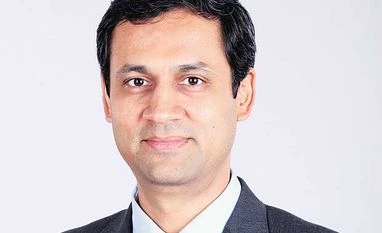 "The days of building easy business models are over: Rahul Chowdhri")


