This could be one of the best years for PE in India: Sri Rajan
Interview with chairman, Bain & Company
Abhineet Kumar Mumbai When global management consultancy firm Bain & Company set up its office in India nine years ago, it looked for business from its multinational clients. But it found good business coming from promoter-led domestic companies that were looking for global practices. This helped it build its largest office in Asia with 240 people. Sri Rajan, part of the founding team in India, took over as chairman last month. He spoke to Abhineet Kumar on the economic challenges and how the rise in private equity investment this year is hinting at growth revival. Edited excerpts:
What are the broader challenges for economic revival and how is it affecting investment? It is going to come down to getting the investment cycle going again. We have to find ways to improve the ease of doing business, make exports competitive, and get (more) foreign investment in India. Given our aspiration for 8-10 per cent annual growth, it is not going to come from domestic growth alone; we have to increase foreign investment in different sectors.
We need to get people comfortable that India is an attractive investment destination as well. We are certainly seeing that on the private equity (PE) side. India has clearly become a very attractive destination for PE with a very good first half in terms of deployment of funds. Based on the current trend, this could be one of the best years for PE in India in terms of investing. We are seeing a lot of interest in limited partners (LPs) that are willing to put money into India. It is primarily because India is a relatively better investment destination compared to other emerging market (EM) choices.
Why do you think India has become a better destination for PE investment? First, improved sentiment over last year. The efforts of the government to improve the sentiment of foreign investors have played a big role. And, there is a belief that when India comes out of this downturn, it will have very attractive fundamentals. Strong demographics and a high consumption rate will play a very important role in India’s growth.
When you compare India with other parts of the world such as Russia, Brazil and even China, it is better placed for growth. Over past month, Chinese stocks have lost significant value. Because of that, people are looking for alternative investment destinations.
What kind of money is coming to India through PE and why are PE players not bothered about the execution challenges India has? The money coming is long-term money. It is coming from pension funds in the US, Canada and elsewhere. Money is also coming from sovereign funds in West Asia and southeast Asia. These funds are investing in India because of their relative perspective. Look across the world — if you’re interested in investing in high-growth EMs, it is not that you have many choices.
What are the other emerging trends in Indian PE? In the past year or so, a lot of money has gone from PE funds into e-commerce start-ups. So, we are seeing a significant increase in e-commerce firms’ valuations. This period is also different from 2007-08, when there was a large amount of activity in PE. At that time, it was going more into consumer, health care, financial services and information technology. We are still seeing money going into those sectors but a significant amount is also going into e-commerce.
The monsoon session of Parliament ended without passing the goods and services tax (GST) Bill. Do you see a correction in the industry’s expectations from the Narendra Modi government? There is certainly an expression of impatience and we have seen instances of this over the past month. The industry wants not only the government to work, but different parties to come together to make things work. GST implementation has been the single-most important expectation from the government. So certainly, there is disappointment. And it is not only for Indian industry but also for foreign investors who are looking at movement in the regulatory framework to be favourable for doing business in India.
What is the trend you see in the kind of consultancy work you are getting from your clients? When we started, our expectation was to meet the needs of many of our multi-national company (MNC) clients, who were looking for support in India. In the past nine years, we have seen significant interest from local companies for using our services. Many of these companies are trying to get global best practices to be competitive vis-a-vis MNCs.
A lot of the work in the beginning was around growth strategy, which has come down now. Then there was a phase when there was a lot of interest in outbound growth strategy. There is not much interest in moving out of India now. It could be because they are conserving management bandwidth to focus on India, or conserving capital. So a lot of work that we have done in the past few years is in the area of performance improvement. Some of this is to take out costs, but in many instances, it is about finding out a way to increase productivity.

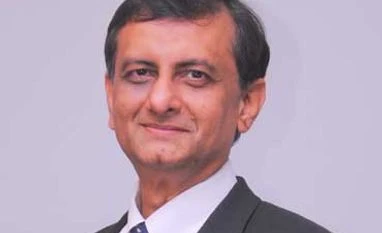 "This could be one of the best years for PE in India: Sri Rajan")


